Iran Urges Iraq to Fully Lift Flight Ban as US Aviation Sanctions Disrupt Regional Air Travel
Why It MattersThe episode shows how extraterritorial sanctions can paralyze regional air links not through direct bans but by pressuring ground-handling and dollar-clearing intermediaries into withdrawing service.
What happened
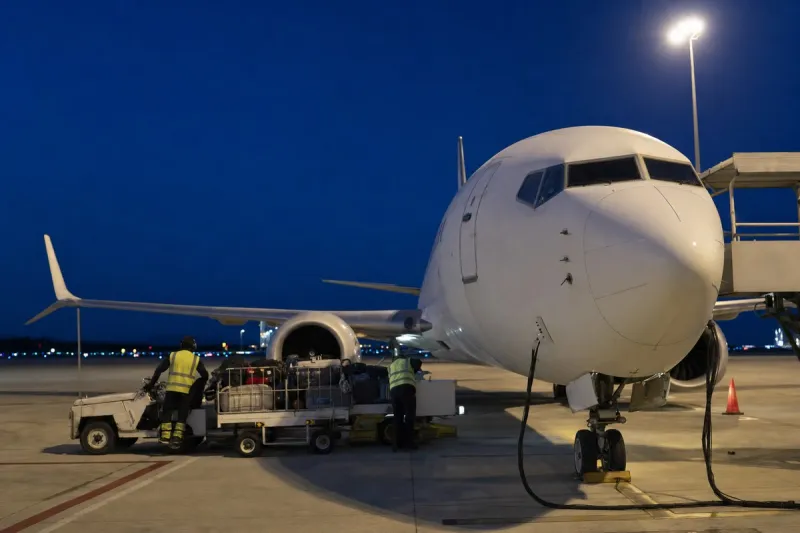
US aviation sanctions that took effect on September 23, 2026 triggered a near-total suspension of flights between Iran and Iraq, prompting Iran's Foreign Ministry and its Embassy in Baghdad to call on October 1, 2026 for Iraq to fully restore bilateral air travel. Foreign ground-handling companies at several Iraqi airports, fearing secondary US sanctions and exclusion from the US dollar system, refused to service Iranian aircraft, resulting in complete flight suspensions at four major Iraqi airports: Baghdad, Najaf, Erbil, and Sulaimaniyah.
Hundreds of thousands of passengers were grounded, including religious pilgrims, students, medical patients, and businesspeople, forcing many onto overland journeys of up to 12 hours and prompting public protests. Commercial flights partially resumed on September 28, 2026, when state-owned Iraqi Airways restarted operations on the Najaf pilgrimage route connecting Iranian cities to the holy city of Najaf, though Iranian airlines remain banned from receiving ground services at Iraqi airports and routes out of Baghdad, Erbil, and Sulaimaniyah remain largely frozen.
The US Treasury issued a narrow temporary license, valid only until October 28, 2026, applying exclusively to Iraqi Airways and restricting operations to Najaf International Airport for Iranian religious pilgrims only. The terms require Baghdad to guarantee passenger screening and data-sharing with the US, and prohibit the carriage of bulk cash, sanctioned individuals, or cargo destined for Iranian military and intelligence agencies, while all Iranian commercial carriers remain banned from flying into Iraq. Iran's Foreign Ministry and Embassy in Baghdad condemned the restrictions as "illegal and inhumane" economic terrorism by the United States and called on the Iraqi government to assert its national sovereignty and bypass the US unilateral embargo. Beyond Iraq, the sanctions' reach has disrupted air corridors between Iran and Dubai, Oman, Georgia, and Azerbaijan, and according to aviation trackers, total international flights out of Tehran's Imam Khomeini International Airport have fallen by 42 percent.
How it unfolded
The US Treasury's temporary license permitting limited Iraqi Airways pilgrim flights to Najaf is set to expire.
Iran's Foreign Ministry and its Embassy in Baghdad condemn the restrictions as "illegal and inhumane" and urge Iraq to fully restore bilateral air travel.
Iraqi Airways partially resumes commercial flights on the Najaf pilgrimage route connecting Iranian cities to Najaf.
Flights between Iran and Iraq are suspended at Baghdad, Najaf, Erbil, and Sulaimaniyah, grounding hundreds of thousands of passengers and prompting public protests.
US aviation sanctions take effect, prompting ground-handling firms at Iraqi airports to refuse service to Iranian aircraft.
Industry impact & what to watch
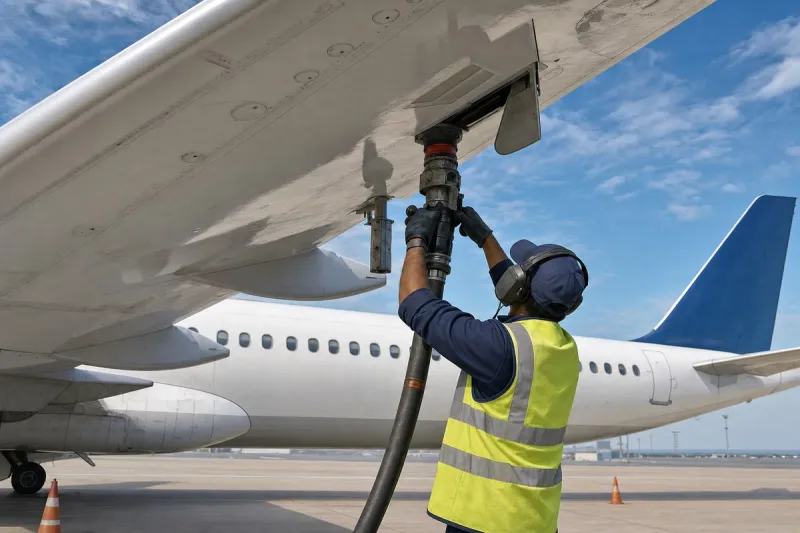
This case illustrates how sanctions aimed at a single country can freeze an entire bilateral air corridor without a direct flight ban, simply by making ground-handling and dollar-linked services too risky for third-party vendors to provide. Airport operations in this segment depend on a chain of intermediaries — fuel suppliers, handlers, clearing banks — and when any link in that chain fears secondary exposure, capacity can vanish even where no aircraft is formally barred.
The narrow license covering only Iraqi Airways flights to Najaf International Airport for pilgrims shows how such carve-outs can keep a politically sensitive route alive while leaving the broader network, including Baghdad, Erbil, and Sulaimaniyah, frozen. Iran's warning that it could impose reciprocal disruptions across regional airspace if its aircraft are denied fueling and handling elsewhere signals the dispute's potential to spread beyond Iraq into Dubai, Oman, Georgia, and Azerbaijan corridors already showing reduced Iranian traffic.
What happens at the October 28, 2026 license expiry will determine whether pilgrim flights to Najaf continue, lapse, or are expanded, and whether Baghdad meets the screening and data-sharing conditions the US Treasury has attached to that access.