Middle East Airspace Remains Principal Risk for Business Aviation as Gulf Commercial Capacity Partially Recovers and Pacific Weather Compounds Disruption
Why It MattersOperators are learning that legal access to airspace and operational advisability are separate questions, forcing charter planners to treat threat statements and infrastructure damage as routing inputs alongside formal notices.
What happened
A European aviation regulator extended advisories covering the Jeddah FIR, Lebanon, Iran, Iraq and the territorial Gulf waters of Bahrain, Kuwait, Qatar, the UAE and Oman through November 16, following a marked increase in Houthi attacks reaching into areas of Riyadh, Tabuk and Yanbu in Saudi Arabia. The advisory covers all flight levels within specified navigation points in the Jeddah FIR and cites misidentification, overflight exposure, interception activity and debris impact as concerns. Earlier bulletins had recommended avoiding those countries' entire airspace.

The Tehran FIR has repeatedly closed and partially reopened, and most foreign operators are avoiding it regardless of its nominal status. Iraq's Baghdad FIR is technically open but European regulatory advice is against using it. On September 28, Kataib Hezbollah threatened to shoot down hostile aircraft operating in Iraqi airspace. Erbil International continues to operate despite being a consistently struck target.
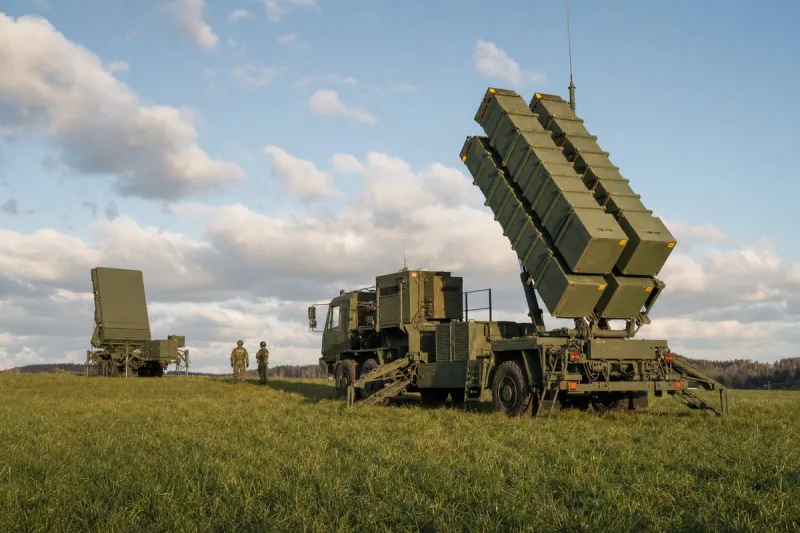
Unspecified forces, likely Saudi, struck Houthi weapons depots in Saada and Amran governorates to degrade the group's capability against Saudi oil infrastructure, including the East-West Pipeline, which only resumed operations on September 22 following attack damage. Iran is reported to be preparing harder retaliation if struck again. In Lebanon, September was the heaviest month of the conflict so far by air and drone strikes, while strikes in Gaza returned in September to roughly July levels. The US military is withdrawing from its last bases in Iraq, with significant damage reported at Al Udeid air base in Qatar, and a retired senior US commander has described regional bases as no longer viable.
US sanctions have effectively halted the worldwide operations of Iranian airlines, with Iranian flights barred from Oman, the UAE and Iraq, and Najaf, Erbil and Sulaimaniya among destinations restricting Iranian connections. Turkish Airlines has no Iran flights scheduled before March 2027, Emirates has suspended Tehran service, Lufthansa and Austrian are suspended through October 24, and Qatar Airways has tentatively listed November 29 as a restart date. India-GCC capacity is reported nearly back to pre-war levels against a baseline of over 2,000 weekly flights each way, with additional capacity expected when the winter schedule begins October 25. British Airways resumes Dubai service on November 3 but will not restart Abu Dhabi until winter 2027, Virgin Atlantic, Air Canada, Air France and Cathay Pacific have extended suspensions, and Doha travel waivers now cover journeys through January 6, 2027, with rebooking permitted to January 13. A flydubai service to Tel Aviv was diverted to Saudi Arabia on September 30. Outside the Middle East, Typhoon Dujuan has disrupted operations along Japan's eastern coast, flooding has been declared a disaster in Bangkok, and Nepal has suffered destructive flooding, with the 2026/2027 El Niño described as record-breaking and peaking around November to December.
Overflight risk versus notice status
The gap between a corridor's formal status and its practical usability runs through nearly every zone named here. Baghdad FIR is open on paper, yet carriers are advised against it; Erbil keeps operating despite being struck repeatedly; Tehran stays nominally available while nearly everyone avoids it. A direct threat such as Kataib Hezbollah's September 28 statement against aircraft over Iraq becomes a planning input in its own right, independent of whatever the airspace's charted status says.
The contraction of US military infrastructure in the region adds a layer separate from the airspace advisories themselves: fewer forces based in Iraq and reported damage at Al Udeid in Qatar mean search, rescue and contingency assumptions along Gulf routings carry more uncertainty than the advisories alone would suggest.
Industry impact & what to watch
This is a case where published advisories, physical infrastructure damage and spoken threats all carry independent weight, and none substitutes for the other two. Jeddah FIR's full-flight-level advisory, the Tehran FIR's pattern of closing and reopening, and Erbil's repeated strikes despite remaining operational each demonstrate that a corridor's legal status is only one input among several that charter and business-aviation planners have to weigh before committing a routing.
Commercial recovery is proceeding unevenly rather than uniformly: India-GCC capacity is nearly back to its pre-war baseline of over 2,000 weekly flights each way ahead of the October 25 winter schedule, while British Airways is withholding Abu Dhabi service until winter 2027 and several other carriers have simply extended suspensions. That divergence shows route-by-route risk assessment replacing any single regional read, which raises the operational cost of planning multi-leg itineraries across the Gulf and into Asia.
November 16 is the fixed point to watch, when the advisories covering Jeddah FIR, Lebanon, Iran, Iraq and Gulf territorial waters expire; whether they are extended, narrowed or widened will reset routing economics for the winter season. Also worth tracking: further Houthi reach into western and central Saudi Arabia, any Iranian non-military action against regional airport services, and whether the Strait of Hormuz navigation dispute feeds into airspace policy. Separately, the record-breaking El Niño peaking around November and December adds a weather layer that planners need folded into winter alternate and de-icing planning alongside the geopolitical picture.