Gulf Airspace Disruption and Record-Strength El Niño Shape Private Aviation Planning Through 2027
Why It MattersLayered advisory zones rather than blanket closures now force operators to continuously revalidate routing, fuel-stop and crew-duty assumptions on Europe-Asia legs, while insurance renewal terms through 2026 price in persistent regional risk.
What happened
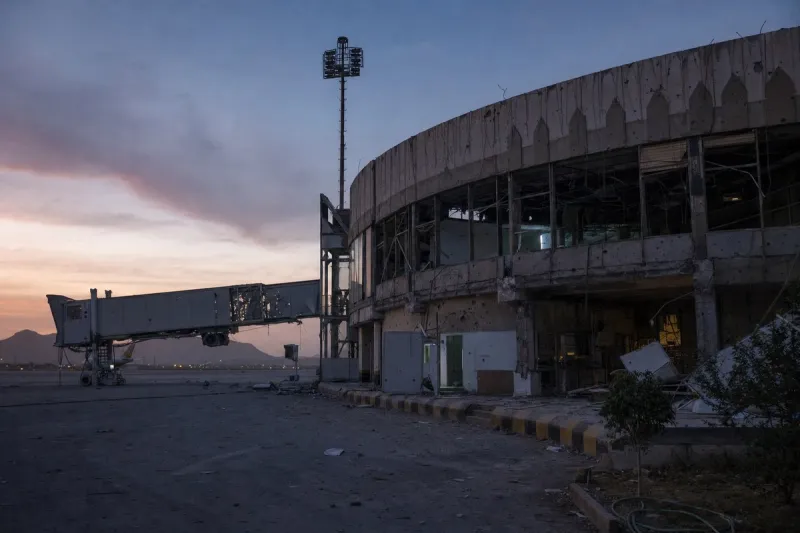
Houthi forces attacked Riyadh's international airport, killing at least 12 people and wounding more than 300, an incident described as the deadliest of its kind in Saudi Arabia in more than a decade; airlines cancelled further flights in response. Separate debris from an intercepted missile damaged a kindergarten and a medical complex in Riyadh. The Houthis had warned airlines on 5 October against using Saudi airspace, and insurance-sector reporting cites drone and missile impacts at Saudi international airports with multiple fatalities.

EASA's Middle East conflict zone bulletins advise operators to avoid the flight information regions of Iran, Iraq and Lebanon at all levels. Since a July update, that avoid-at-all-levels advice has extended to the airspace of Bahrain, Kuwait, Qatar, the UAE and the Gulf of Oman west of 58 degrees east. On 30 September, EASA issued a further bulletin advising against flight at any altitude in a designated part of the Jeddah flight information region near the Yemeni border, with caution elsewhere in that FIR; that bulletin runs until 16 November.
Washington and Tehran have exchanged proposals on ending the conflict and restoring security in the Strait of Hormuz but remain divided; the US president has stated he no longer seeks a deal, with reporting that the US military is preparing for possible renewed strikes, potentially including heavy bombing of Iranian energy, infrastructure and nuclear targets. Gulf crude exports excluding Iran have recovered to roughly 18.5 million barrels per day, pre-conflict levels, though prices remain elevated and a renewed surge in tanker attacks has pushed Hormuz traffic down again. South Africa has reinstated temporary visa concessions, valid until 30 November or until travel resumes after a ceasefire, for nationals affected by airspace closures across Iran, Iraq, Syria, Qatar, Bahrain, Kuwait, Lebanon, Saudi Arabia, the UAE, Israel, the Palestinian Territories, Jordan and Oman. UK advice remains against all travel to Iran, Iraq, Syria and Yemen, with no-go zones in Israel and Lebanon.
Business aviation movements in the Gulf have fallen further according to the latest flight-activity records. One low-cost operator cancelled all Abu Dhabi and Dubai flights for the winter season, and a Seoul–Dubai service was suspended until further notice pending a review of Dubai's normalisation. Rebooking waivers for Doha cover travel from 28 February to 6 January, with rebooked journeys accepted to 13 January. Hull war insurance capacity is reported as still plentiful, but renewal negotiations are expected to be harder through 2026, with increases of 10 percent or more cited even for lower-risk carriers and steeper rises for operators on Middle East routes.
NOAA puts the probability of the current El Niño reaching historic strength at 83 percent. The WMO forecasts an October–December Niño-3.4 anomaly of approximately plus 3.7 degrees Celsius, the highest since observations began and above the previous record of plus 2.6 degrees recorded from November 2015 to January 2016. Near-certain persistence through February 2027 is forecast, with a peak around December. UNICEF expects more than 347 million children in nearly 100 countries to face unusually wet or dry conditions through December. The most acute named exposures for flight planning are Peru's northern and central coast, where heavy rainfall, flooding, landslides and mudslides are expected from late 2026 to April 2027, and Ecuador, which has issued a red alert and where UK travel advice warns of disruption from heavy rain, flooding and higher temperatures; Ecuador also carries a general aviation dimension, with military operations destroying airstrips suspected of use by illicit aircraft.
Routing pressure on Europe-Asia tracks
The two principal Europe-Asia routings — the southern track via Egypt, Saudi Arabia and Oman or the UAE, and the northern track via the Caucasus and Afghanistan — are both under pressure. The Jeddah FIR exclusion area and Houthi threats against Saudi overflight make the southern option narrower and less predictable, pushing longer sectors toward additional fuel stops and eroding crew duty margins on ultra-long-range legs. GPS jamming and spoofing remain among the most significant day-to-day operational risks across the region, and alternate selection should assume that a Gulf diversion field can become unavailable with little warning.
Industry impact & what to watch
The pattern here is fragmentation rather than closure: operators are not facing a single blocked corridor but a shifting set of advisory zones, intermittent disruption and short-notice routing changes that compound across both the southern and northern Europe-Asia tracks at once. That compounding is what erodes crew duty margins and pushes long-haul planning toward additional fuel stops even when no single sector is formally closed.
War-risk insurance pricing is moving in the same direction as the operational picture: capacity remains available, but renewal terms are hardening, with increases of 10 percent or more now appearing even for carriers judged lower-risk and steeper increases for Middle East-route operators. That pricing signal, together with Hormuz tanker traffic and jet fuel costs, functions as a running proxy for how escalation is being read by markets closer to real time than government advisories update.
Three variables will determine whether the current advisory-based regime holds or tightens into formal restriction: whether US strikes on Iran resume and what retaliation follows, whether Houthi attacks on Saudi airports continue and prompt formal rather than advisory flight restrictions, and whether EASA extends or widens the Jeddah FIR bulletin beyond its 16 November expiry. Separately, the record-strength El Niño forecast adds a second, slower-moving planning layer through February 2027, with Peru and Ecuador the named exposures operators serving those regions should track alongside Dubai's capacity normalisation review as a signal for Gulf slot availability.