Attacks on Saudi Airports Kill 20, Injure Hundreds in One Week; Airlines Cancel Flights
Why It MattersRepeated strikes on civil airports show how quickly a regional conflict can close a whole country's airspace-access corridor, turning airline schedules and traveller advisories into the first-order operating variables.
What happened
Ten attacks targeted five Saudi airports between Oct. 5 and 11, killing 20 people and injuring hundreds, according to an Anadolu tally based on official statements. Three other attacks targeted airports in Abha, Jazan and Najran.
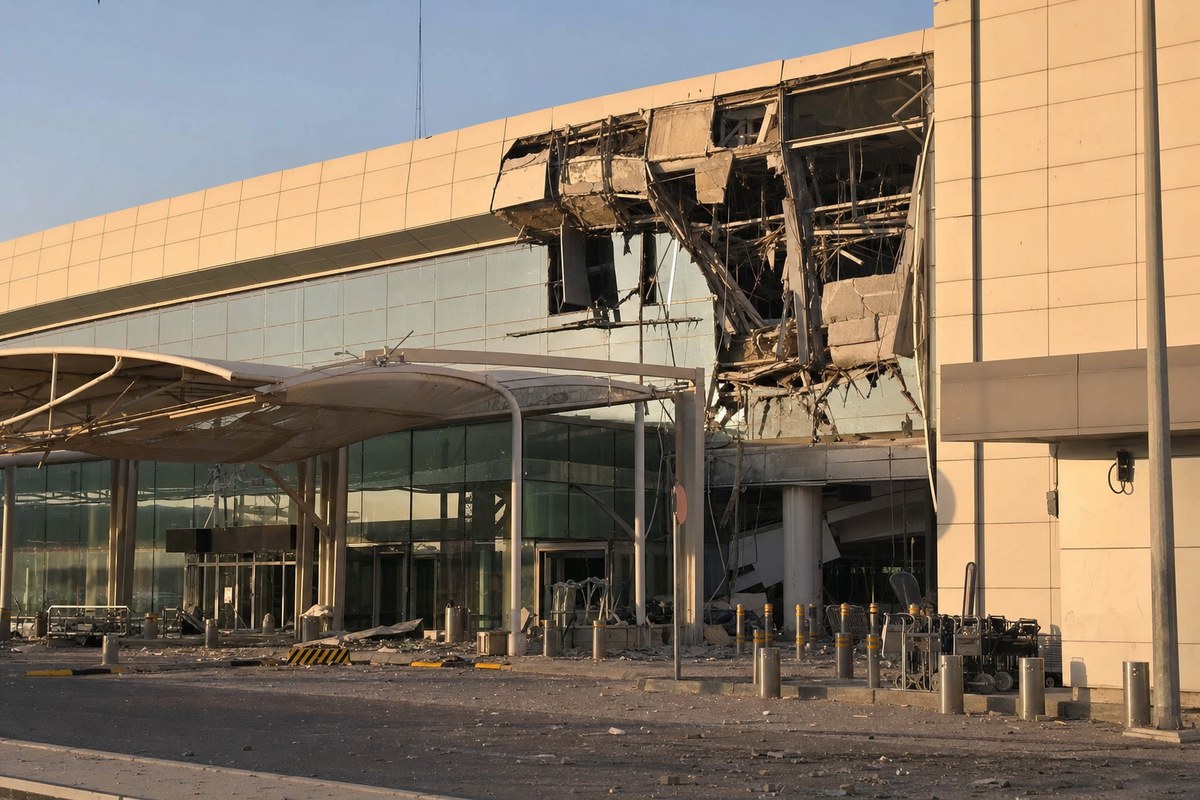
The deadliest incident was a Saturday attack on King Khalid International Airport in Riyadh, which killed 13 people and injured 309 others. Saudi Arabia's General Authority of Civil Aviation (GACA) initially reported 12 fatalities, including four Saudi citizens, two Bangladeshis and one national each from the US, Egypt, Jordan, Syria, Palestine and Sudan. The Indian Embassy in Riyadh announced Sunday that an Indian national injured in the attack had died, raising the toll to 13. The authority said the injured were receiving treatment at several hospitals. Coalition spokesman Turki al-Maliki said an unidentified projectile struck Terminal 4, causing a fire, and the coalition said air defenses had intercepted and destroyed a cruise missile near the airport. GACA said the Riyadh attack caused material damage that was still being assessed.
Fresh attacks followed. Later Sunday, GACA reported an attack on King Fahd International Airport in Dammam, saying damage assessments and safety inspections were underway. The latest casualties were confirmed early Monday. The Houthis renewed their warning Sunday to airlines, passengers and airport workers against using Saudi airports, except those in Mecca and Medina. Saudi Arabia's Foreign Ministry urged citizens abroad whose flights to Riyadh had been canceled or delayed to contact Saudi diplomatic missions for assistance.
Etihad Airways canceled selected flights between Abu Dhabi and Riyadh, Dammam and Jeddah from Oct. 11-13, citing regional disruptions; its schedule listed five canceled sectors Sunday, 10 on Monday and seven on Tuesday, and the airline warned of further changes. SriLankan Airlines suspended all flights to Riyadh until Oct. 18, citing security concerns and ongoing safety assessments, and said services would resume once conditions were deemed suitable for commercial operations. Schools in Riyadh switched to distance learning for the week beginning Sunday, Oct. 11, in an email to parents that Gulf News said attributed the decision to instructions from Saudi Arabia's Education Ministry; it was the second shift to remote learning in the capital in less than a month.
Government and regulator warnings
The UK advised citizens to avoid King Khalid International Airport until it was secure and warned of further attacks, cancellations and airspace closures. Australia advised against travel to the Riyadh airport and urged citizens to reconsider travel to Saudi Arabia. France called for heightened vigilance and advised against nonessential travel to Riyadh. The US urged Americans to reconsider travel to Saudi Arabia and to follow precautions similar to those imposed on US government employees, who require special authorization to use Riyadh's airport.
The European Union Aviation Safety Agency (EASA) advised airlines to avoid specified portions of Saudi airspace and exercise caution elsewhere in the Jeddah flight information region, warning of risks to aircraft from attacks, interceptions, misidentification and falling debris.
Industry impact & what to watch
Airport attacks hit aviation at its most concentrated point: a single terminal strike disrupts every airline that serves it, and the effects spread through crew positioning, aircraft rotations and connecting itineraries well beyond the airport itself. The cancellations by Etihad and SriLankan, each with a different duration and trigger, show carriers setting their own restart conditions rather than waiting for a common all-clear.
The EASA notice matters because it covers risks from interceptions, misidentification and falling debris, not only direct strikes, which means overflight and routing decisions are affected even for flights that never land in the Kingdom. Government advisories from four countries now diverge in tone, and operators, insurers and corporate travel managers typically work from the most restrictive of them.
The nearest dated markers are SriLankan's Oct. 18 suspension date and Etihad's Oct. 11-13 cancellation window, both of which carry explicit warnings of further change. GACA's damage assessments at Riyadh and Dammam are still open, and the outcome of those inspections will determine when normal movements can resume at either airport.