Riyadh's King Khalid Airport Stays Closed After Two Days of Attacks Damaged Terminals 3 and 4 at Site of $7.2B Expansion
Why It MattersA hub shut by consecutive strikes with no reopening date shows how a single airport's inspection timeline can dictate regional airlift and charter routing for an open-ended period.
What happened
Saudi Arabia's General Authority of Civil Aviation (GACA) extended the closure of King Khalid International Airport in Riyadh on Oct. 12 while inspections continued to verify the safety and operational readiness of airport facilities. No reopening date has been announced.
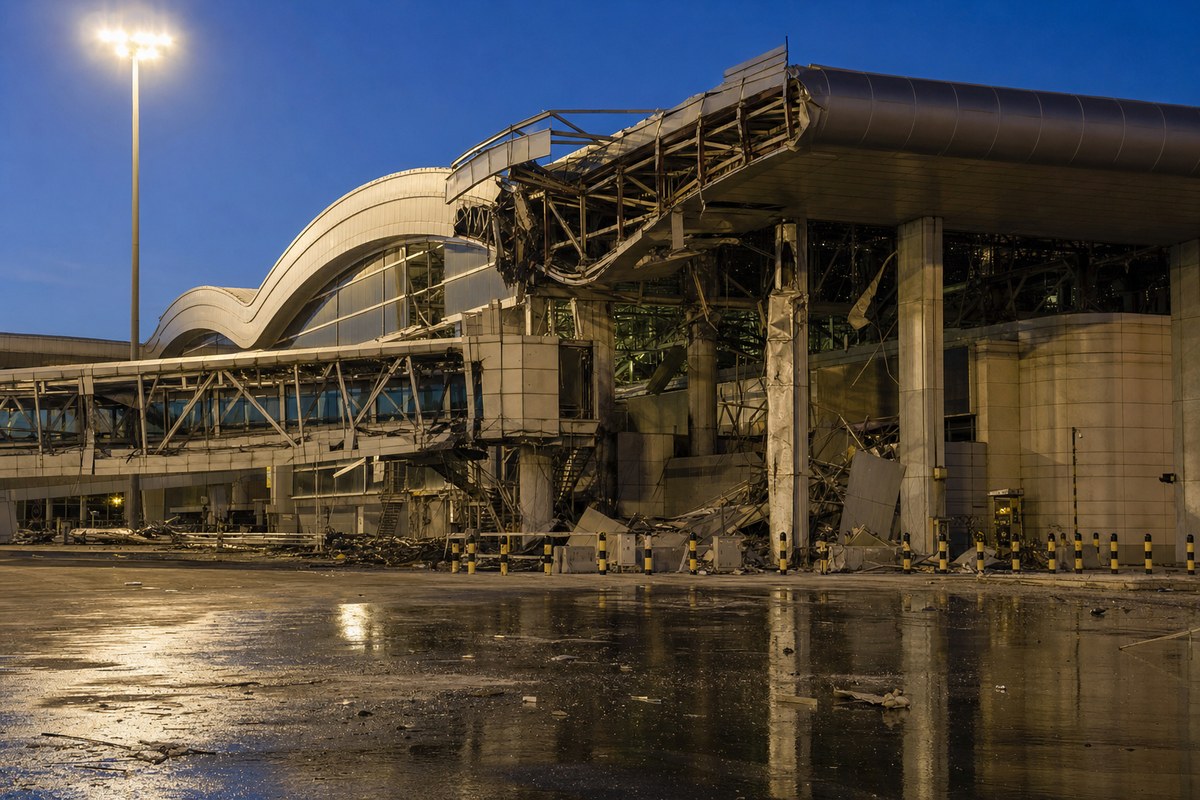
The shutdown followed attacks on consecutive days. On Oct. 10 a missile struck the complex housing Terminals 3 and 4. On Oct. 11 an unidentified projectile struck Terminal 4 and caused a fire.
The two attacks killed 14 people and injured at least 320. Of the Oct. 10 casualties, 13 died and 309 were injured.
Industry impact & what to watch
When a national capital's main airport closes with no stated end date, the disruption is not a single event but an open-ended condition for everyone who plans around it. Scheduled carriers, charter operators and cargo flights that route through the hub all face the same unknown: the airport reopens only when the authority's inspections conclude, and that timetable belongs to the inspectors, not the airlines.
For business aviation, the practical effect is that alternate-airport planning, crew positioning and customs and handling arrangements have to be rebuilt around whatever other fields in the region can absorb diverted traffic. Which airports take that traffic, and how quickly, will show how much spare capacity the regional network really has.
The next fact that matters is a reopening date from GACA, followed by any statement on whether Terminals 3 and 4 return to service together or in stages.