FAA Orders Global 7500 Fuel and Hydraulic Line Clearance Fixes in Right Wing, Citing Lightning Ignition Risk
Why It MattersMandatory clearance rework on a flagship long-range jet, adopted from Transport Canada, shows how lightning-protection findings drive fleet-wide compliance work, with manufacturer warranty coverage shaping who bears the cost.
What happened
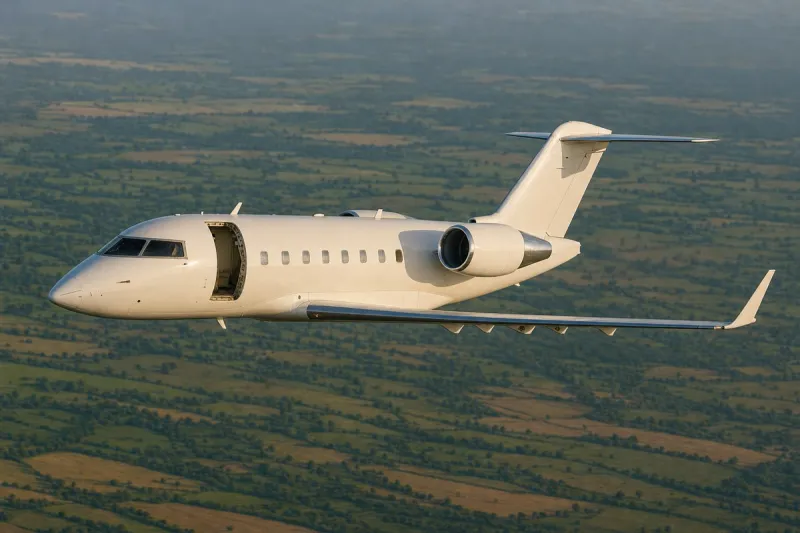
The FAA published airworthiness directive 2026-20-09 in the Federal Register on October 14, 2026, making a right-wing fix mandatory on the Bombardier Global 7500. The rule takes effect on November 18, 2026, and the FAA estimates that 60 US-registered jets are affected.
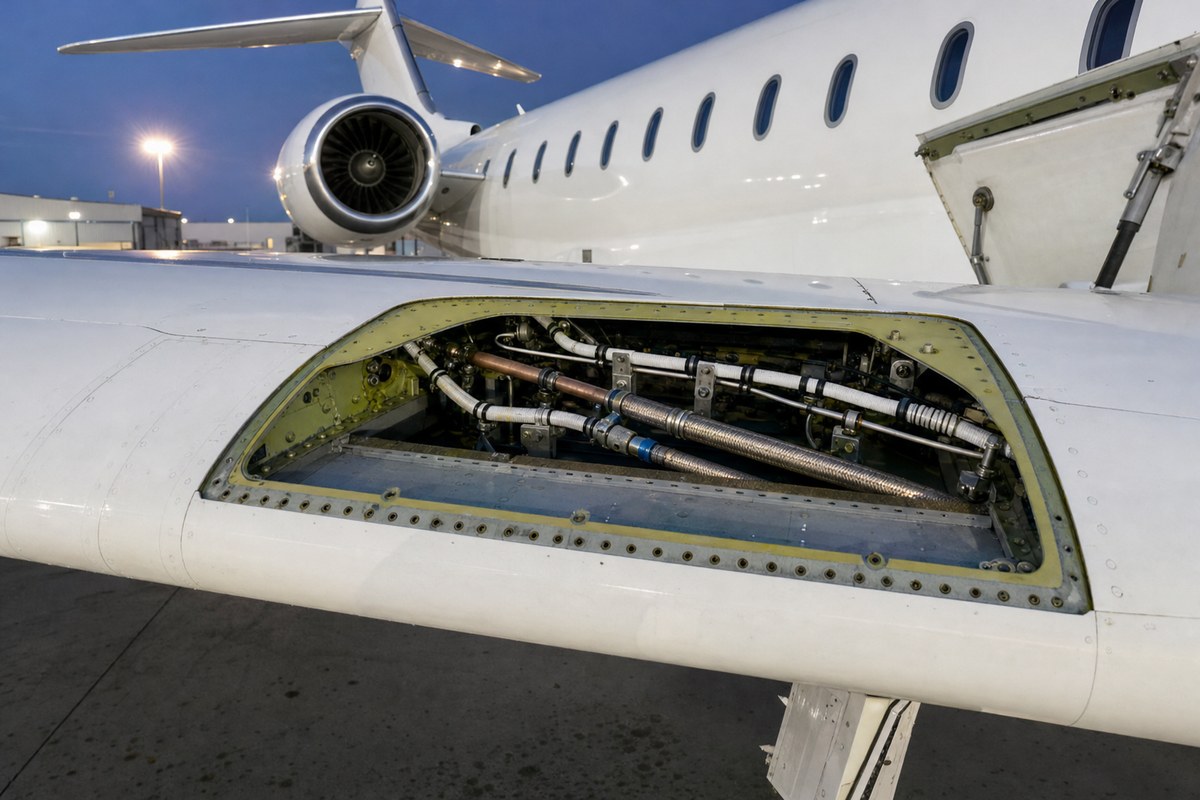
The directive targets three locations in the right wing where low clearance has been reported: between the fuel line flexible coupling and a clip-nut on a wiring harness support bracket in bay 3; between that fuel line coupling and a hydraulic system 3 line in bay 18; and between the hydraulic system 3 lines and the fuel vent tube in bay 20. According to the FAA, the low clearance could result in an ignition source developing in the fuel tank in the event of a lightning strike. The FAA said the condition has no effect on fuel system operation.
Under Bombardier service bulletin 700-57-7537, mechanics replace the clip-nut on the harness bracket between ribs 3 and 4 and replace fuel tube assemblies between ribs 17 and 20. They also inspect the clearance between the hydraulic lines and the fuel vent tube in bay 20; if the gap is too small, the hydraulic system support brackets between ribs 19 and 21 are replaced before further flight.
The FAA rule adopts Transport Canada AD CF-2025-49, covering model BD-700-2A12 airplanes with serial numbers 70005 through 70179. Owners must complete the work within 1,500 flight hours or 72 months of November 18, 2026, whichever comes first. Jets already modified under the original September 2024 issue of the bulletin count as compliant. The Global 8000 shares the BD-700-2A12 type designation, but the directive is written by serial number, and the first delivered Global 8000, C-FPJD, is msn 70240 according to ch-aviation, outside the covered range.
Cost estimate and comments
The FAA estimates the required work at 9 work-hours at $85 ($765) plus $1,928 in parts, or $2,693 per jet and $161,580 for the US fleet of 60. Bracket replacement, if needed, is estimated at $5,772 per jet (14 work-hours plus $4,582 in parts). According to the manufacturer, some or all costs may be covered under warranty.
Transport Canada acted in October 2025, and the FAA proposed its version on March 4, 2026. Seven people commented, and five backed the rule without change. One commenter asked why the FAA had not issued an emergency AD or a shorter deadline; the FAA replied that it had no data to justify cutting the Canadian compliance time and that the low clearance would not contribute to fuel starvation because there is no potential for the vent line to be fouled. A second commenter asked for the comment period to be reopened, arguing the public could not see the referenced material or the basis for the cost estimate.
Industry impact & what to watch
FAA Advisory Circular 25.954-1 explains that a voltage spark can jump between a fuel tube and adjacent structure if separation is insufficient, and that lab tests put the minimum spark energy needed to ignite hydrocarbon fuel vapor at 200 microjoules. It lists insufficient tube or wiring clearance to adjacent systems or structure among the known causes of lost lightning protection. That framing explains why a clearance finding, with no reported effect on fuel system operation, still becomes a mandatory fleet action.
For the segment, the sequence matters: Transport Canada acted first, and the FAA followed with its own rule about a year later after a comment period. Owners of covered serial numbers have a window of 1,500 flight hours or 72 months, and credit for jets already modified under the original September 2024 bulletin issue lowers the remaining workload. Warranty coverage, where the manufacturer applies it, shifts much of the per-jet cost away from the owner.
The date that settles the practical question is November 18, 2026, when the rule takes effect and the compliance clock starts.