Flexjet vs VistaJet: Aircraft Ownership Versus Flight Commitment, With Hypothetical Five-Year Cost Math
Why It MattersThe comparison shows fractional and membership programs sell different things, capital-backed aircraft interests versus pure flight commitments, so total cost depends on resale assumptions and cannot be derived from headline hourly rates.
What happened
Fractional Aviation Advisors published a comparison of Flexjet's fractional ownership Share and VistaJet's Program membership, with sources checked October 14, 2026. The central distinction it draws: the Flexjet Share involves aircraft ownership capital and eventual sale proceeds, while the VistaJet Program is a contracted flight commitment with no aircraft asset. Neither provider publishes a comparable dollar schedule for the two products.
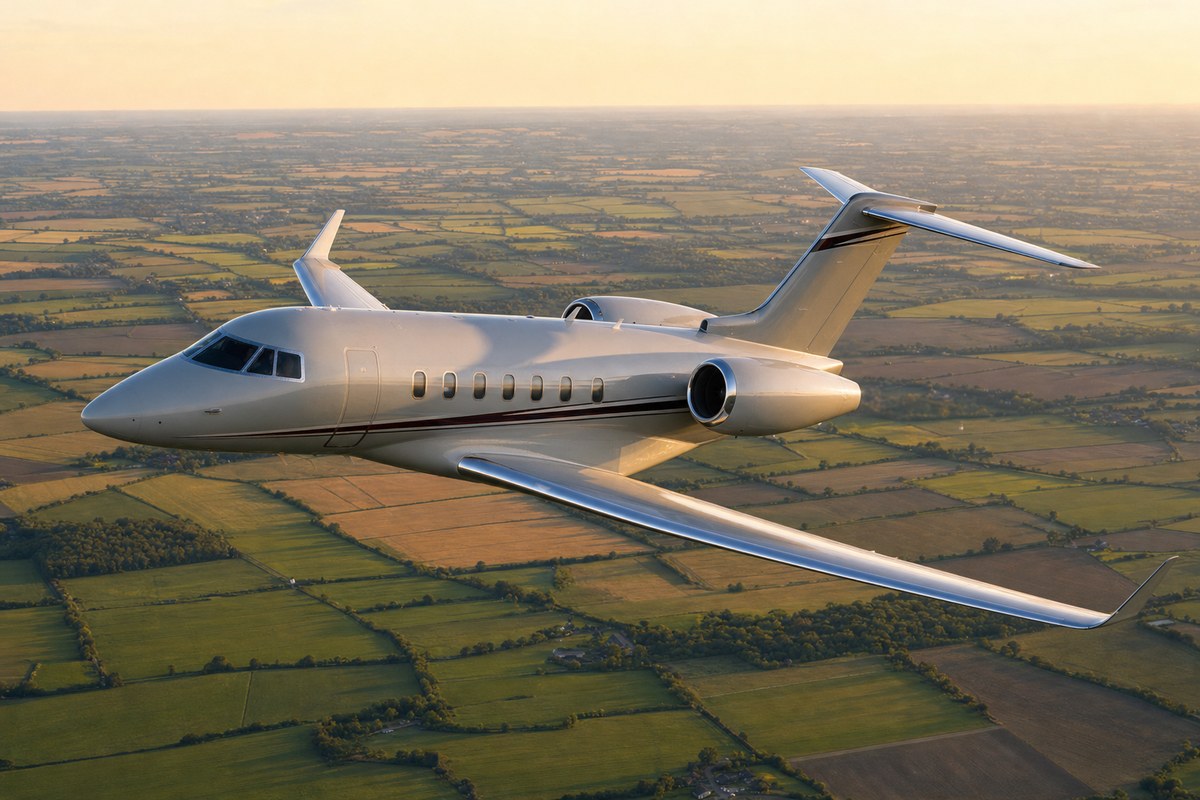
On the Flexjet side, shares begin at 1/16th, equal to 50 hours a year, with more hours available in 50-hour increments. Each share gives access to a percentage of the 800 flight hours allotted per year per aircraft, and the maximum term is 60 months. Costs are described as an acquisition cost for an undivided interest in a specific Flexjet aircraft, a monthly management fee, an occupied hourly rate charged for flight time plus 2/10 of an hour for taxi time, and a monthly hourly fuel variable. Flexjet states that owners can book with a 10-hour response time.
VistaJet's Program is positioned for 50 or more hours annually, with a fixed hourly rate quoted for the commitment and availability on as little as 24 hours' notice. The rate and full inclusions are not published, and the term is not stated on the current Program page. VistaJet's VJ25 is positioned for 25 to 49 annual hours, with guaranteed availability on non-peak and most peak days and carryover of up to 20 percent of hours into the following year. The comparison notes that this carryover is a VJ25 benefit and does not establish the same allowance for the Program.
VistaJet's on-demand quote page lists charter starting at $11,000 per hour, subject to market pricing. The comparison stresses that this is a charter starting point, not a Program or VJ25 membership rate, and that multiplying it by annual hours would not establish a membership cost.
The hypothetical five-year illustration
The comparison includes an illustration that it states is not a Flexjet or VistaJet quote. A membership commits $600,000 a year for 50 hours, all used. A share serving the same hours costs $1.2 million to acquire, plus $150,000 in annual fixed charges and $6,000 per flight hour.
The share's first-year cash payment is $1.65 million, and four further years cost $450,000 each. Assumed net sale proceeds of $900,000, after transaction charges and before loan repayment, reduce the five-year total to $2.55 million. The five-year period is an analytical assumption rather than a VistaJet term.
Industry impact & what to watch
The two products are priced on different logic. A fractional share front-loads capital into an asset and returns part of it on sale, so its true cost depends on the resale value at exit. A membership converts the same hours into a recurring commitment with no asset, so its cost is the sum of what is paid. That is why a headline hourly rate cannot be compared across the two without also modelling acquisition, fixed charges and exit proceeds.
The hypothetical shows how sensitive the comparison is to a single assumption. The share's five-year total falls by the full $900,000 of assumed sale proceeds, so a different resale value would move the result directly. The same logic applies to hours flown: the illustration assumes all 50 are used, and unused hours would change each side differently.
What would settle the comparison is disclosure the providers have not made. A published VistaJet Program rate and term, and a Flexjet-side figure for acquisition at a given aircraft type, would let buyers replace the illustrative numbers with real ones.