FAA Proposes Replacing 53-Year Supersonic Flight Ban With Performance-Based Noise Standard
Why It MattersReplacing a blanket speed ban with a measurable noise threshold shifts overland supersonic access toward aircraft design performance rather than a fixed prohibition, reshaping certification incentives.
What happened
The FAA published a Notice of Proposed Rulemaking on July 2, 2026, proposing to repeal 14 CFR 91.817, the 1973 prohibition on civil supersonic flight over US land, and replace it with a performance-based noise standard. Under the proposal, supersonic flight would be permitted as long as sonic boom overpressure at the ground does not exceed 0.11 lb per square foot, roughly 10 to 20 times below the 1.0–2.0 lb per square foot produced by conventional supersonic aircraft such as Concorde or military jets.
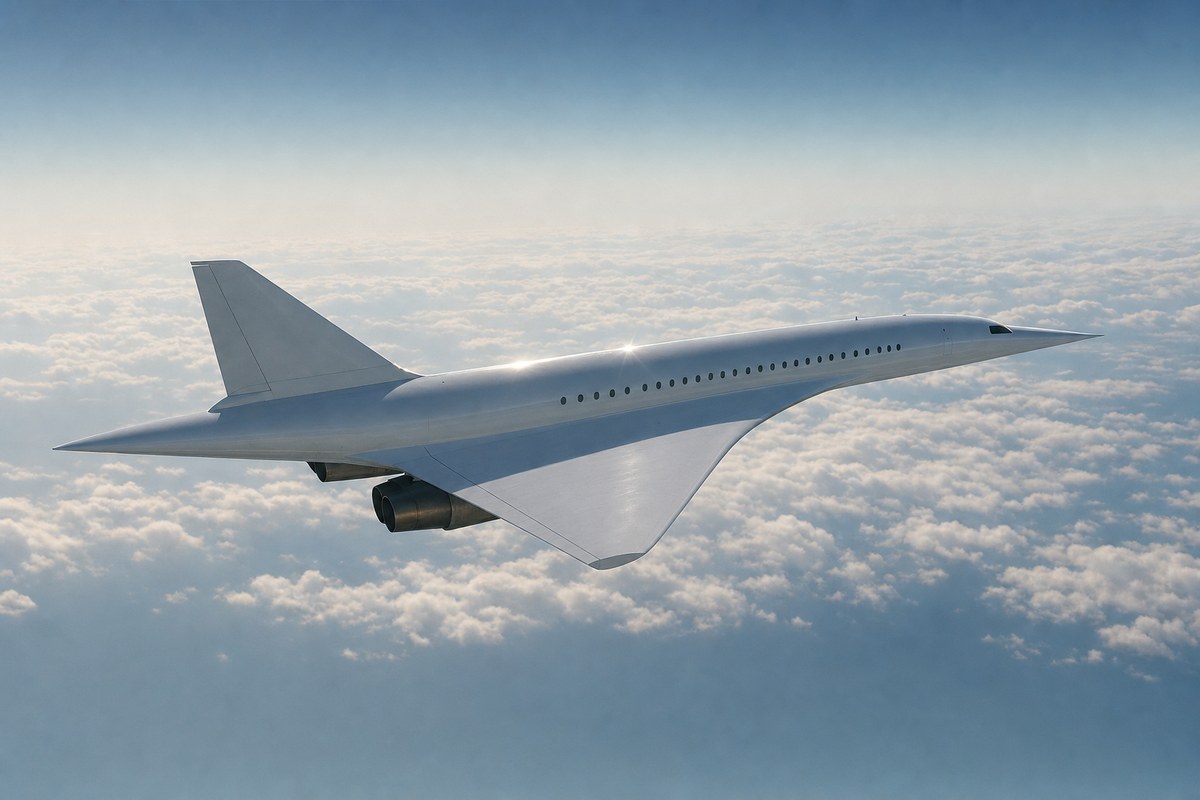
The 1973 rule followed public backlash against sonic booms during military testing in the 1960s, including Operation Bongo II, a six-month FAA and US Air Force experiment in 1964 that flew military jets supersonic over Oklahoma City eight times per day, producing 1,253 sonic booms. The FAA received more than 15,000 formal complaints and 4,629 damage claims totaling $12,845 for broken glass and cracked plaster. The rule forced Concorde, operated by British Airways and Air France, to fly at subsonic speeds over US land and accelerate through Mach 1 only after reaching the Atlantic coast, and it has prevented routine civil supersonic flight over the continental United States for 53 years.
NASA's X-59, built by Lockheed Martin's Skunk Works division, is the experimental aircraft at the center of the rulemaking. The 99.7-foot-long single-seat jet is designed with an elongated nose, contoured fuselage, and top-mounted engine inlet to prevent shock waves from coalescing into a traditional sonic boom. It completed its first supersonic flight on June 5, 2026, reaching Mach 1.077 at 43,400 feet over Edwards Air Force Base in California, and one week later, on June 12, reached its target mission conditions of Mach 1.4 at 55,030 feet.
Researchers at Purdue University submitted comments during the public comment period, which closed August 17, 2026, cautioning that a pressure threshold alone may not reflect perceived annoyance. Professor William Crossley stated that "a simple pressure level is not sufficient to determine how annoying" supersonic overland flights will be, and suggested a decibel-based standard might be more appropriate. Boom Supersonic holds approximately 130 conditional orders from United Airlines, American Airlines, and Japan Airlines for its Mach 1.7 Overture airliner.
How it unfolded
FAA is targeting a final rule.
Public comment period on the NPRM closes, including comments from Purdue University researchers.
FAA publishes the Notice of Proposed Rulemaking to repeal the supersonic ban and set a 0.11 lb per square foot noise threshold.
X-59 reaches target mission conditions of Mach 1.4 at 55,030 feet.
NASA's X-59 completes its first supersonic flight, reaching Mach 1.077 at 43,400 feet over Edwards Air Force Base.
FAA misses the executive order's deadline for repealing the ban.
President Trump signs an executive order directing the FAA to repeal the supersonic ban by December 3, 2025.
The FAA enacts 14 CFR 91.817, banning civil supersonic flight over US land.
Operation Bongo II flies military jets supersonic over Oklahoma City eight times daily for six months, producing 1,253 sonic booms and public backlash.
Industry impact & what to watch
This proposal belongs to a broader shift in aviation noise regulation away from blanket speed prohibitions and toward measurable performance thresholds tied to what an aircraft actually produces at the ground. Setting a numeric overpressure limit rather than banning a speed regime means certification becomes a design and testing question — an aircraft either meets 0.11 lb per square foot or it does not — rather than a categorical prohibition that no civil operator could design around.
That shift matters most for manufacturers like Boom Supersonic, whose roughly 130 conditional orders from United, American, and Japan Airlines depend on a workable overland regulatory path for its Mach 1.7 Overture. The X-59's flight test data, gathered at Mach 1.077 and Mach 1.4 over Edwards Air Force Base, is the technical foundation the FAA is using to justify the specific threshold, and Purdue's comments suggest that pressure alone may still be contested as the right metric before a final rule locks it in.
The FAA's own timeline shows the gap between political direction and rulemaking execution: the December 2025 deadline came from an executive order, but the NPRM did not appear until July 2026, and a final rule is not targeted until mid-2027. Parallel legislation, the SAM Act sponsored by Representatives Nehls and Davids and Senators Budd and Hickenlooper, would impose statutory deadlines on that process. Whether the final rule adopts the pressure-based standard as proposed or shifts toward the decibel-based approach Purdue raised is the specific question the 2027 rulemaking will settle.