Japan bans business jet pilots from Haneda for three years after three ATC violations under new 'three-strikes' rule
Why It MattersThe policy shows regulators tightening oversight of foreign-registered business jets specifically, using operator-level watch lists rather than blanket restrictions, as traffic volumes climb faster than compliance monitoring can otherwise scale.
What happened
Japan's transport ministry has run a "three-strikes" system at Haneda Airport since May, under which business jet and privately owned small aircraft pilots who accumulate three confirmed violations of air traffic control instructions are barred from operating at the airport for three years. Any deviation from ATC instructions, on the ground or in the air, triggers an interview with the captain and a review of ATC records; a confirmed deviation counts as one violation. Pilots who reach three violations are designated "pilots subject to airport access restrictions" and placed on a watch list, with both the captain and the aircraft operator notified. Flying as a co-pilot at Haneda remains permitted, and if a full year passes after the most recent infraction without a further violation the designation can lapse.
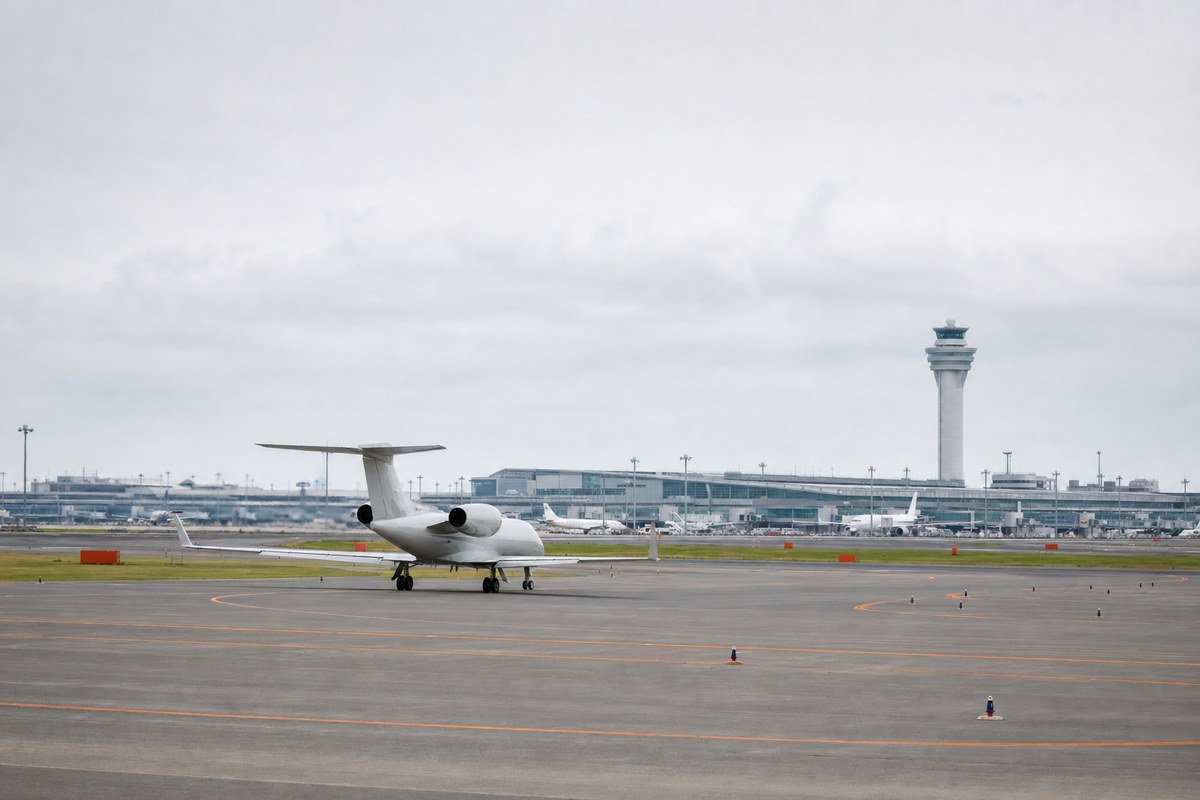
The ministry said it introduced the measure after foreign-registered business jets failed to follow controllers' instructions at Haneda, creating situations that could have led to serious accidents. Last year recorded five cases of business jets deviating from ATC instructions at Haneda, the highest figure in four years, including aircraft crossing a runway without clearance and entering a taxiway closed for inspection work; one case delayed an international departure by 15 minutes. An emergency advisory issued in October had urged operators of foreign private aircraft using Haneda to comply strictly with ATC instructions, but authorities concluded a stronger deterrent was needed. Scheduled commercial carriers, including Japan Airlines Co. and All Nippon Airways Co., are not subject to the new watch-list system.
To make it easier to contact pilots and operators after incidents, the ministry also plans to require that airport use plans submitted before Haneda operations include captains' names, telephone numbers and email addresses. If a watch-listed pilot appears on such a form, the ministry will require the operator to assign a different captain. Business-jet movements in Japan on domestic and international routes grew from 12,921 in 2016 to 23,650 in 2025. In 2016, Haneda eased business-jet access rules, doubling available flight slots and expanding the arrivals cap by up to fourfold.
Industry impact & what to watch
The measure belongs to a broader category of airport-level access controls that regulators reach for when growth in a traffic segment outpaces the compliance behavior of a subset of its operators. By targeting foreign-registered business jets specifically while exempting scheduled carriers, the ministry is treating ATC compliance as an operator-fleet issue rather than an airport-wide one, betting that a credible individual penalty changes pilot and dispatcher behavior faster than advisories alone.
The system also depends on identifying who was flying, which is why the ministry is pairing the watch list with a requirement that airport use plans carry captains' names and direct contact details. That linkage matters for how the rule will actually function: an operator that rotates crews without updating those plans, or that assigns a watch-listed captain unknowingly, creates a compliance gap the rule is designed to close. Whether the one-year reset without further infractions proves lenient or workable will depend on how ATC records and interviews are documented in practice.
What happens next hinges on whether violation counts at Haneda fall from the five recorded last year, and on how operators adjust crew assignment and dispatch procedures once the contact-detail requirement takes effect.