FAA Amends Class D Airspace and Establishes Class E Airspace at Chandler and Phoenix, AZ, Raising Chandler Class D Ceiling to Below 4,000 Feet MSL
Why It MattersArea-wide controlled-airspace reviews that have lapsed for decades force trade-offs between instrument-procedure support and VFR access, and vertical limits near Class B shelves become the contested point.
What happened
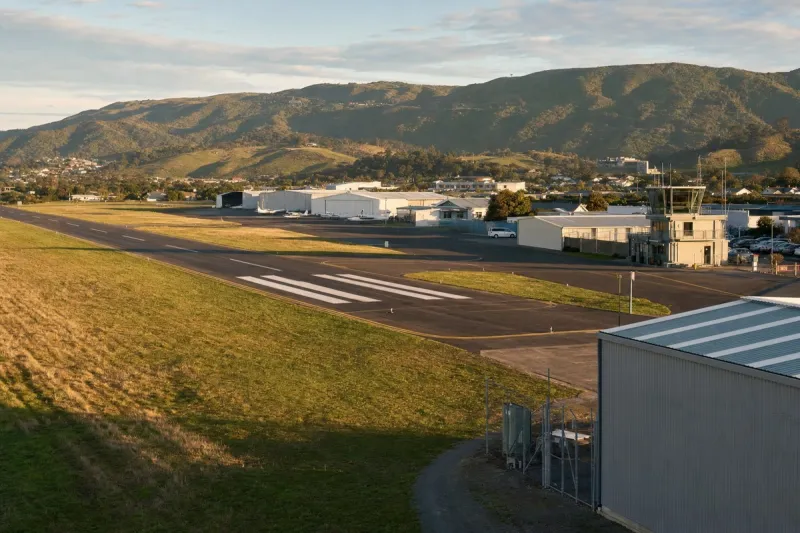
The Federal Aviation Administration has issued a final rule that amends the Class D airspace and establishes Class E airspace at Chandler and Phoenix, AZ. The action results from biennial airspace reviews conducted under FAA Order JO 7400.2R, Procedures for Handling Airspace Matters. The name and geographic coordinates of Mesa Gateway Airport, Phoenix, AZ, are also being updated to match the FAA's aeronautical database.
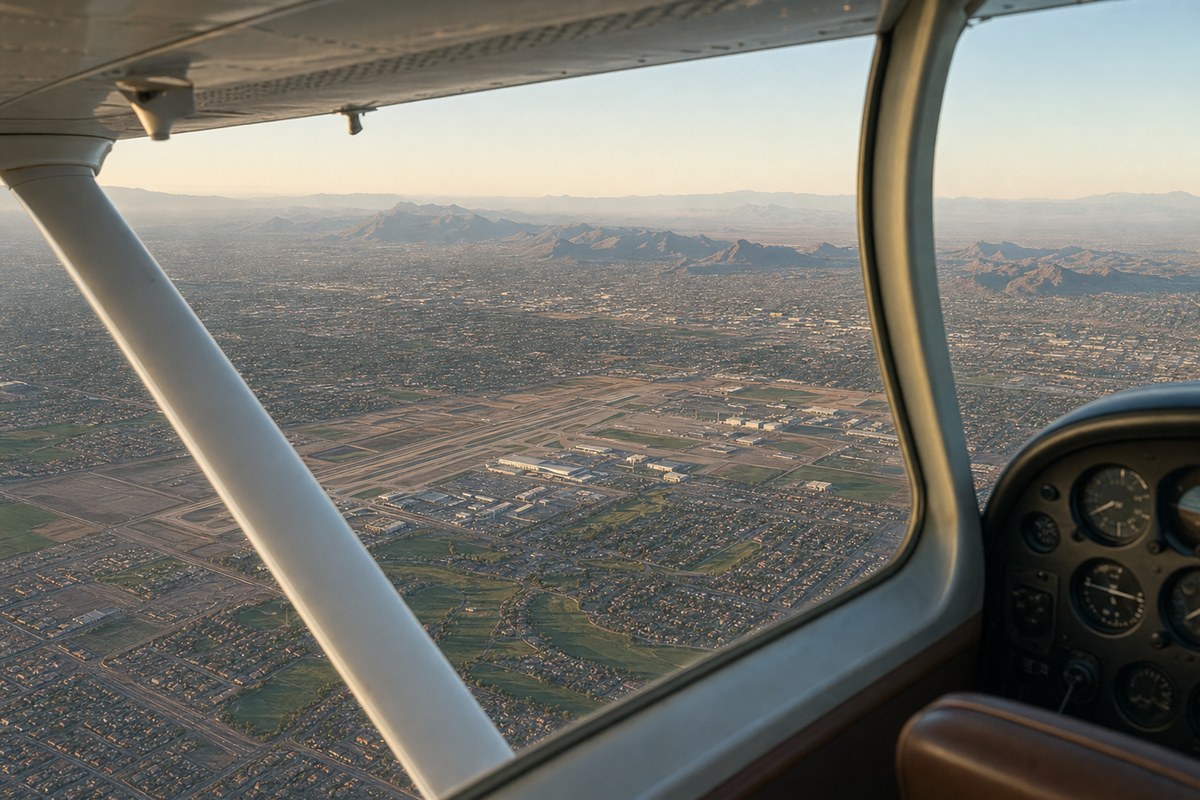
The FAA says the change brings the airspace into compliance with FAA orders and supports instrument flight rule (IFR) procedures and operations. The notice of proposed rulemaking (FAA-2025-5571) was published on December 18, 2025 (90 FR 59081), and 96 comments were received and considered. The FAA said most airports in the Phoenix area had not received a complete airspace review in 25 years or longer, and that changes to instrument procedures and to FAA orders and regulations require the modification and expansion of controlled airspace at Chandler Municipal Airport and Mesa Gateway Airport.
Fifty-nine comments objected to raising the vertical limit of the Chandler Class D airspace from 3,000 feet MSL to 3,700 feet MSL, citing VFR operations and the safety implications of leaving only 300 feet between the top of the Chandler Class D and the bottom of the Phoenix Class B airspace. The FAA said the vertical limit derives from FAA Order JO 7400.2R, paragraph 17-2-8, which states that Class D areas should normally extend from the surface up to and including 2,500 feet AGL. In response to the safety concern, the final rule raises the Chandler Class D limit to up to but excluding 4,000 feet MSL.
Twenty-five comments addressed Pegasus Airpark, most asking to enlarge the proposed 1.2-mile-radius exclusion area from the Mesa Gateway Class D airspace. The FAA kept the proposed exclusion, noting it equals the area currently outside the Mesa Gateway Class D, so available airspace is not reduced. Under Advisory Circular 90-66C, the airport owner is responsible for coordinating nonstandard traffic patterns with the FAA and publishing them in the Chart Supplement, which has not been done, so a standard pattern is assumed.
Twenty-eight comments addressed Stellar Airpark. The FAA said the proposed exclusion area provides a standard cutout for VFR airports and accommodates the public instrument procedures into Stellar Airpark. It added that the airport operator has not published traffic pattern information in the Chart Supplement, so a standard traffic pattern is assumed and the appropriate Class G airspace provided. The Director of the Federal Register approves the incorporation by reference under 1 CFR part 51, subject to the annual revision of FAA Order JO 7400.11 and publication of conforming amendments.
Industry impact & what to watch
Reviews of this kind show how controlled airspace around a busy metropolitan area gets reshaped when instrument procedures change faster than the airspace beneath them. Where many airports have gone a quarter-century or longer without a complete review, the eventual correction tends to arrive as a bundle of changes at once, and the affected user groups, mainly VFR pilots and operators at small airparks, see it as one large adjustment rather than a series of small ones.
The Chandler outcome illustrates the central tension. The ceiling set by FAA Order JO 7400.2R guidance and the instrument-procedure needs pulled upward, while the margin under the Phoenix Class B shelf is what VFR traffic cares about. The FAA responded to the 59 objecting comments by changing the final figure rather than holding the proposal, which indicates that the margin beneath Class B is a lever the agency will move when the safety argument is concrete.
The airparks show the opposite behavior. At Pegasus and Stellar, the FAA held its exclusion areas and pointed to the absence of published traffic-pattern information in the Chart Supplement as the reason a standard pattern is assumed. For airport owners, the practical lesson is that nonstandard patterns carry no weight in airspace design until they are coordinated and published. The next point to track is the effective date and the conforming amendments to FAA Order JO 7400.11.