When the Glass Cockpit Goes Dark: Why Pilots Must Still Be Able to Fly Without Technology
Why It MattersTraining and recurrent-check design in advanced-avionics fleets are shaped by whether automation supports or substitutes for pilot understanding, making degraded-mode proficiency a structural question for operators and instructors alike.
What happened
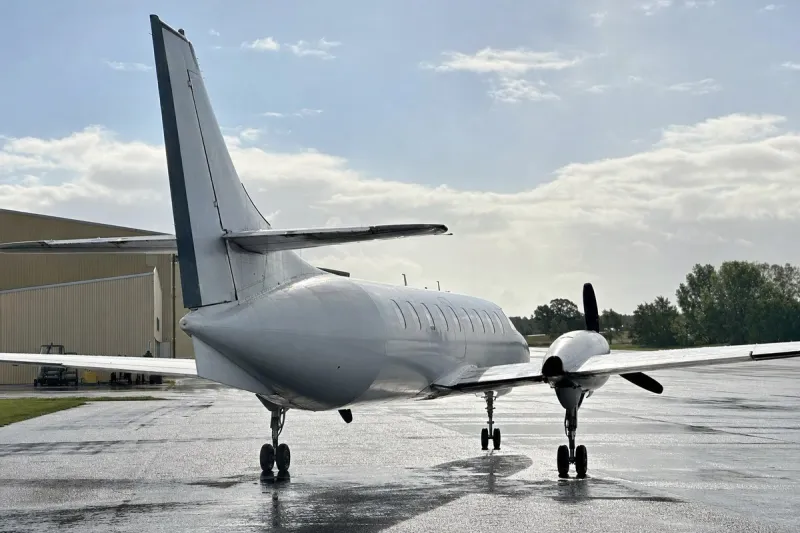
An opinion and analysis piece examines the fragility of technological dependence in modern cockpits. It builds its argument on a hypothetical transfer flight aboard a modern twin-engine aircraft, cruising at altitude in conditions that require instrument flight, with two pilots aboard.
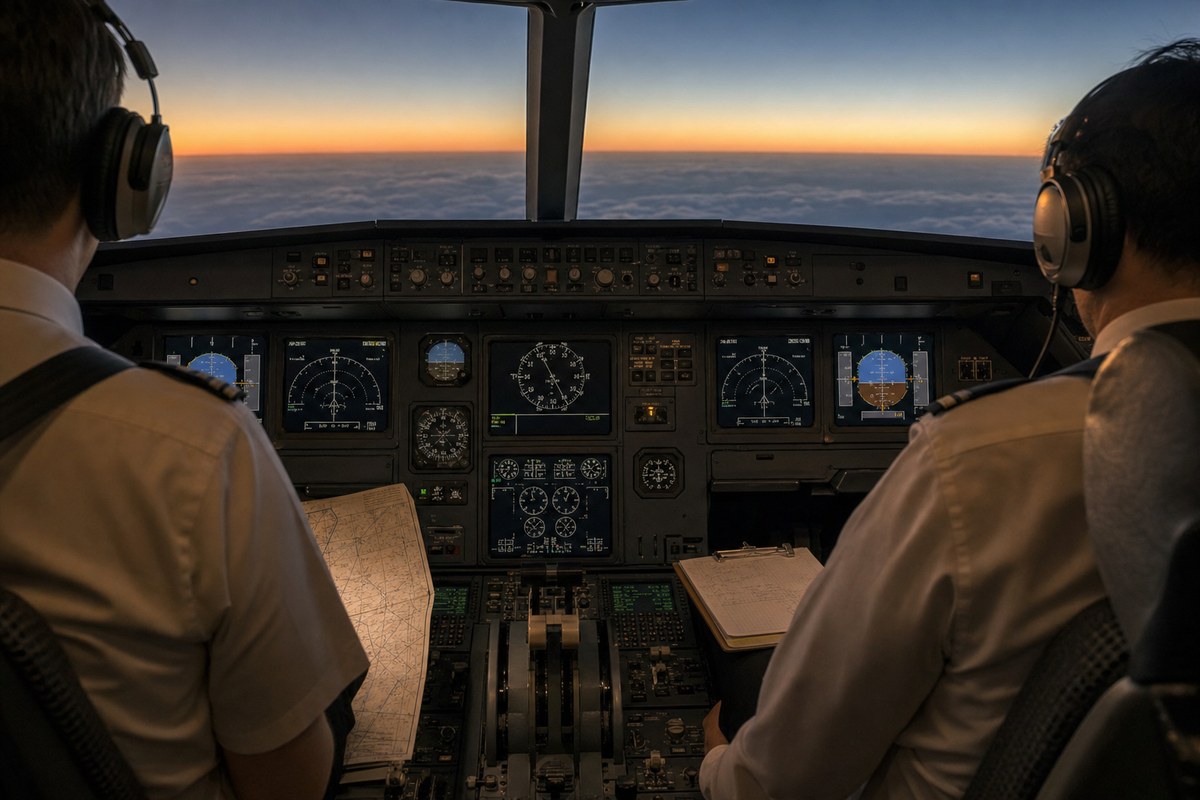
The first pilot began flying when analogue instruments, paper aeronautical charts, the flight computer and manual flight planning were essential parts of training. The second belongs to a generation raised on multifunction displays, digital maps, satellite navigation systems and onboard computers. In the scenario, the main displays suddenly become unavailable.
The author explains that an avionics failure can compromise how a pilot mentally organises information. In an analogue cockpit, parameters are spread across separate instruments that require scanning and cross-checking. In a glass cockpit, information is integrated into a unified graphical representation, which speeds interpretation, correlates data automatically and frees attention for overall flight management. The potential cost is that apparently independent information may depend on common sensors, power supplies, processing units or connections.
The piece calls automation one of the greatest advances in flight safety and says abandoning it out of nostalgia would be absurd. The problem arises when automation progressively replaces an understanding of the processes it performs: programming a route does not mean being able to construct one independently, and following a magenta line does not guarantee the ability to reconstruct one's position without electronic mapping. The difference lies between knowing a procedure and possessing a mental model of the system that executes it.
The author adds that analogue experience is valuable, including reading conventional instruments, paper planning, calculating times and fuel, using independent references and partial-panel flying. It should not, however, be assumed to confer immunity to interpretation errors, spatial disorientation or mental overload. Traditional instruments can also fail or depend on common sources, and a pilot experienced on older aircraft may not understand the reconfiguration logic, degraded modes and procedures of a modern aircraft.
The article also warns of attentional fixation: a pilot concentrating cognitive resources on troubleshooting, such as restoring a display, may miss other more important signals while the aircraft deviates from its trajectory, loses altitude or approaches an operational limit. The initial failure can start a chain of errors: loss of information, increased workload, narrowed attention, delayed intervention and deteriorating situational awareness. The first priority remains maintaining control of the aircraft, followed by assessing the situation and managing the problem in accordance with the procedures.
Industry impact & what to watch
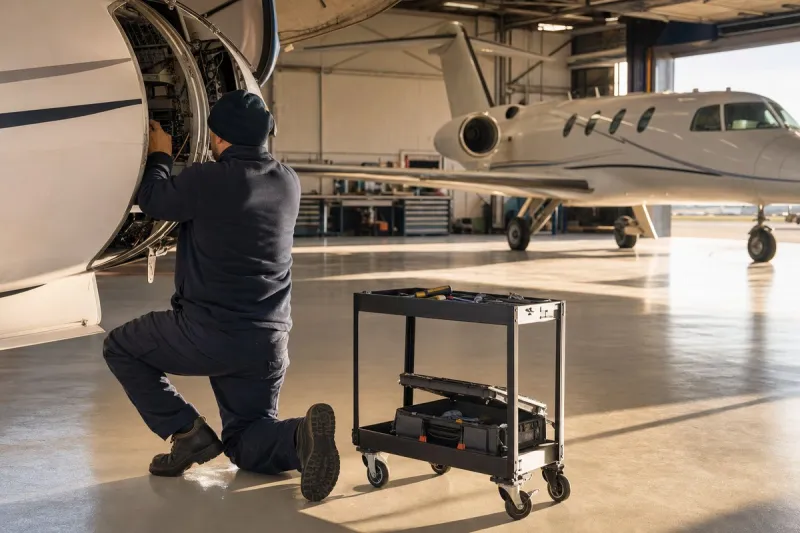
The argument sits at the centre of a long-running training debate in segments flying integrated-avionics aircraft, from owner-flown twins to corporate turboprops and jets. Integrated displays concentrate many functions behind a small number of shared sources, so the question the piece raises is less about nostalgia for older instruments and more about whether a pilot can still build an independent picture of attitude, position and fuel state when the integrated one disappears.
For training providers and operators, the piece points to where proficiency tends to erode: manual flight planning, position reconstruction without electronic mapping, and understanding how a specific aircraft reconfigures in degraded modes. Experience on older aircraft does not transfer automatically, and neither does fluency with a modern system transfer to the failure case. Both generations of pilot carry a gap, just in different places, which is why mixed-experience crews are a useful lens.
The practical test for any programme is whether recurrent training exercises the transition from full automation to partial panel and independent references, and whether it rehearses holding aircraft control before troubleshooting. The piece is an opinion, not a regulatory proposal, so any change would come through operators' own training syllabi and instructor practice rather than from a mandate in the text.