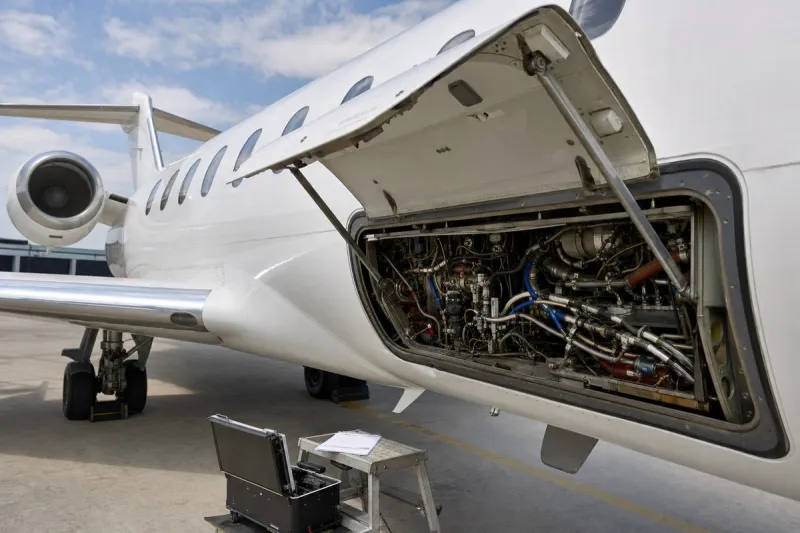
FAA Issues Airworthiness Directive Requiring Inspection and Replacement of Main Transmission Drive Shaft Couplings on MD Helicopters Models 369/500N
Why It MattersA single sub-tier supplier's manufacturing lapse can ground-test an entire legacy rotorcraft population, shifting inspection and parts costs onto operators until traceability gaps for unrecovered components are closed.
What happened
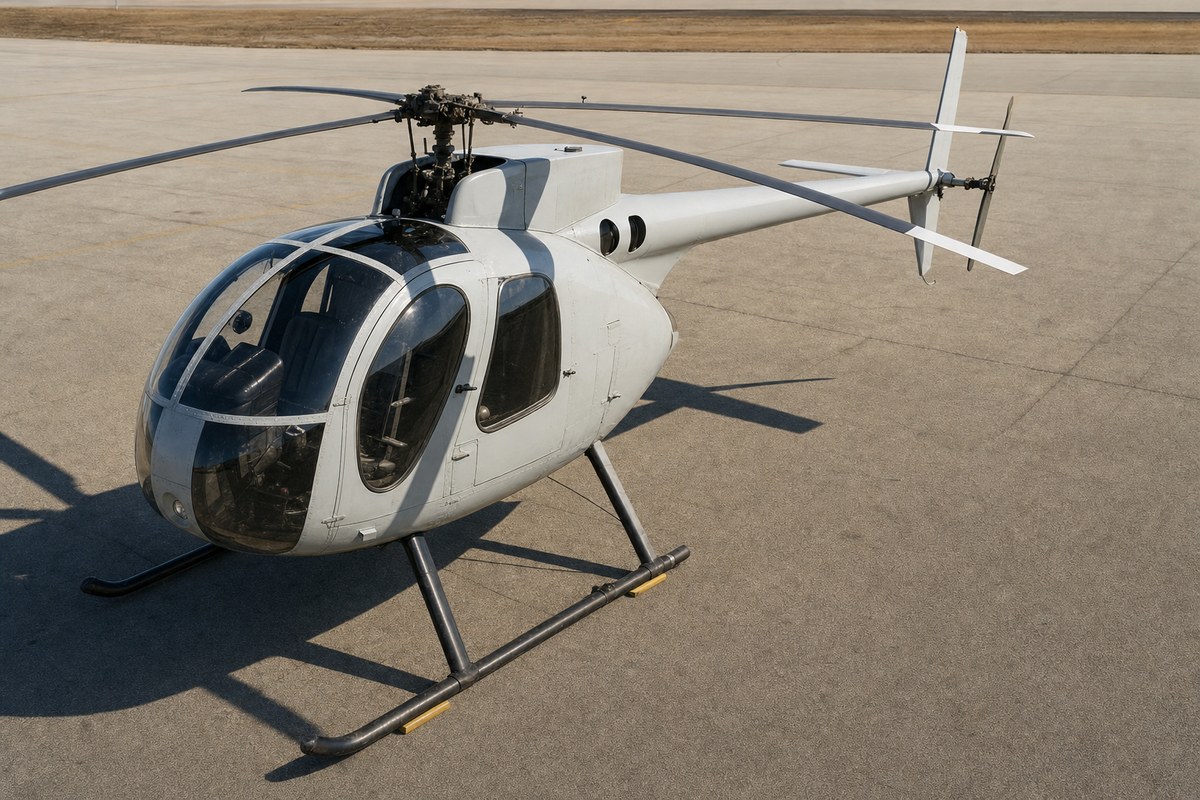
The FAA has adopted airworthiness directive AD 2026-21-05 (Amendment 39-23494), effective November 27, 2026. It applies to certain MD Helicopters, LLC (MDHI) Model 369D, 369E, 369F, 369FF, 369H and 500N helicopters fitted with a main transmission drive shaft coupling, part number 369H5660, serial numbers 8564-0001 through 8564-0308.
The directive was prompted by a report that couplings with P/N 369H5660 were found with mechanical damage to the root fillets, spline faces and major diameter. A new vendor had improperly manufactured certain of these couplings, and 148 were shipped to customers between June 3, 2020, and May 1, 2022. The manufacturer reported that 86 of the affected couplings have been recovered, while the remaining 62 are at unknown locations. The FAA said the damage could lead to fatigue cracks growing from the damaged root fillets and spline faces, which could cause the coupling to fail, resulting in loss of power.
Within 50 hours time-in-service or 6 months after the effective date, whichever occurs first, operators must visually inspect each coupling for spline cracks using a bright light and 10X magnification. If any crack is found, the coupling must be removed and replaced with a serviceable one before further flight. If no cracks are found, the coupling must be replaced within 300 hours time-in-service after the effective date.
The FAA received one comment from an anonymous commenter, who questioned whether a one-time inspection is adequate compared with recurring inspections or time-based replacement. The FAA responded that the AD addresses a manufacturing defect, and that the replacement deadline for uncracked parts is set well before the calculated critical crack propagation threshold. It made no change to the AD as a result. The agency did remove all references to material incorporated by reference, as none was needed, and paragraph (j) now reads "None."
Cost and fleet exposure
The FAA estimates the AD affects 568 helicopters of U.S. registry. The inspection is estimated at 1 work-hour at $85 per hour, or $85 per helicopter and $48,280 for U.S. operators in total.
Replacing a coupling is estimated at 2 work-hours ($170) plus $1,681 in parts per coupling, up to $3,532 per product. The agency cannot determine how many helicopters will need replacement. The manufacturer indicated some costs may be covered under warranty.
Industry impact & what to watch
This directive shows how a quality escape at a single supplier reaches well beyond the parts that were actually defective. The FAA's applicability is defined by a serial-number range of 308 couplings, while the shipped population at issue is 148 and the recovered count is 86. Because 62 couplings are at unknown locations, the regulator chose a fleet-wide inspect-then-replace approach rather than trying to identify individual affected aircraft. For operators of older light turbine helicopters, that is the practical mechanism: traceability gaps in the parts record translate directly into inspection and replacement obligations for everyone holding a part in the range.
The design of the compliance path also matters for planning. Uncracked couplings are not cleared by the inspection; they are only given a runway of 300 hours before mandatory replacement, so even a clean result carries a parts and labour cost. The FAA's stated reasoning is that this deadline sits well before the calculated critical crack propagation threshold, which is why it declined to add recurring inspections.
The figures the agency itself leaves open are the number of replacements and how much warranty coverage will actually offset. Those will determine whether the per-product cost of up to $3,532 lands on operators or on the manufacturer, and the first compliance deadlines fall within 6 months of November 27, 2026.