Airlines at Mumbai Airport Oppose Unilateral Slot Cuts Ahead of Terminal 1 Redevelopment
Why It MattersThe dispute shows how a hub's redevelopment schedule puts slot-allocation rules and an operator's incentive to steer traffic toward its own second airport in direct tension with airlines' network planning.
What happened
Airlines operating at Mumbai airport, which is controlled by the Adani Group, have opposed any unilateral reduction or cancellation of flight slots under a proposed traffic reallocation plan for summer 2027, according to letters seen by ET. They asked the airport operator, Mumbai International Airport Ltd (MIAL), to provide capacity data and details of Terminal 1's redevelopment plan before proceeding.

In a letter sent on Friday, the Airport Operators Committee (AOC) in Mumbai said MIAL must comply with the Ministry of Civil Aviation's May 2013 slot-allocation guidelines and the International Air Transport Association's Worldwide Airport Slot Guidelines, and that traffic reallocation must not be implemented unilaterally without following the applicable procedures. The AOC said no substantiated justification had been provided for reducing or cancelling slots, claiming that Terminal 1 was currently handling less than 10 million passengers per annum (MPPA). It also referred to a capacity addition of 5 MPPA. The AOC added that airlines supported the Terminal 1 refurbishment as a priority and without any further delay.
Ahead of a meeting scheduled for October 28, airlines want MIAL to provide the actual capacity of the airport's two terminals, details of the refurbishment timeline and an update on the planned capacity addition at Terminal 2, before decisions are made on the Summer 2027 transition plan. On Friday, the office of MIAL's chief airport officer sent a second reminder to airlines that had not yet held discussions on the transition plan, asking them to arrange consultations with the airport's network-planning and commercial teams ahead of that stakeholder meeting.
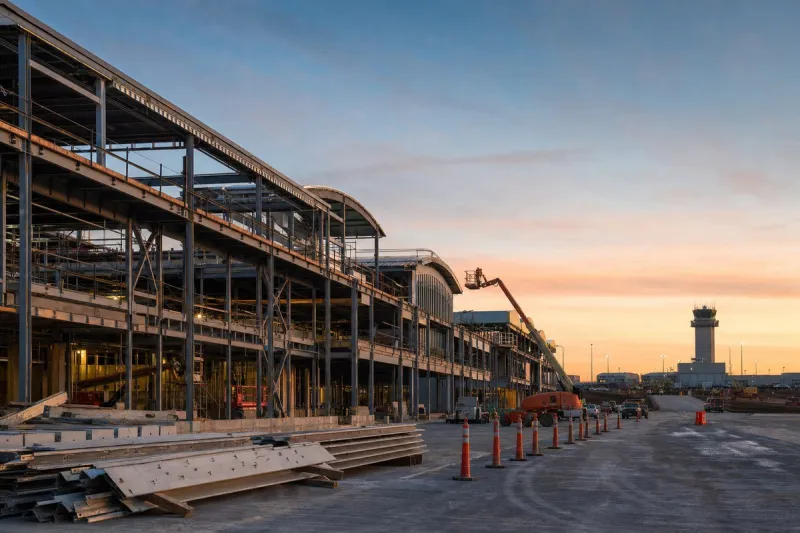
Terminal 1 and the options put to airlines
Terminal 1's current capacity is 15 million passengers, and the operator plans to raise it to 20 million. Earlier this week, MIAL told airlines they were free to shift some or all operations to the new airport in Navi Mumbai, suspend services until Terminal 1 reopens in 2030, or pursue other options from summer 2027. The Navi Mumbai airport is also controlled by Adani Airports Holdings.
Industry impact & what to watch
Slot allocation at a constrained hub rests on procedure as much as on physical capacity. The AOC's reliance on the 2013 ministry guidelines and the IATA slot guidelines frames the dispute as a question of process: whether capacity is being rationed on the basis of disclosed numbers or by the operator's own planning. The two sides also cite different figures, with the AOC pointing to Terminal 1 handling under 10 MPPA against a stated capacity of 15 million, and that gap is what airlines want explained.
The operator's menu of options carries a commercial edge. Moving flights to Navi Mumbai, suspending service until 2030 or taking another route each carries a different cost for an airline's network and for the revenue tied to its Mumbai slots. Because MIAL and the Navi Mumbai airport sit within the same group, airlines' call for transparent capacity data is partly a call to be able to judge whether a reallocation reflects physical limits or a preference for shifting traffic.
The October 28 stakeholder meeting is the next dated checkpoint. What MIAL tables there on terminal capacity, the refurbishment timeline and Terminal 2's capacity addition will show whether the summer 2027 transition plan proceeds on the airlines' terms or on the operator's.