Gulf Airspace Reopens Only Conditionally as Iran Escalation Window Nears; Record El Nino Threatens Asia-Pacific Schedules
Why It MattersFor charter and private operators, airspace being technically open now matters less than advisory, insurance and war-risk conditions, and weather and geopolitical disruption will keep winter schedules volatile.
What happened
Private and charter aviation faces two schedule-disrupting pressures: an unresolved US-Israel-Iran war, whose next escalation window may open within days of the November 3 US midterm elections, and a Pacific warming event that forecasters describe as the strongest on record. Reopening of Gulf airspace does not mean normalisation, because several airports and corridors are technically available while the regulatory and insurance environment around them remains restrictive or unsettled.

The war began on February 28, 2026, when the United States and Israel went to war with Iran in a wider campaign following the 2025 Twelve-Day War. Reporting indicates the US is amassing forces in the region to be ready to attack by early November, after the midterms, though the same reporting notes the preparations may equally be leverage for a diplomatic settlement. The head of Iran's Supreme National Security Council has vowed a response "more devastating" than its answer to the June 2025 strikes, and Iranian commanders have advertised new weapons stockpiles.
Kuwait reopened its airspace to international overflights in October, restoring a Europe-Gulf-Asia corridor through Turkey, Iraq, Kuwait, Bahrain and the United Arab Emirates. The European Union Aviation Safety Agency (EASA), while gradually lowering its general regional risk warnings this month, continues to advise civil operators against using Kuwaiti airspace, and generally recommends European operators avoid Iraqi overflight or confine it to narrowly defined high-altitude corridors.
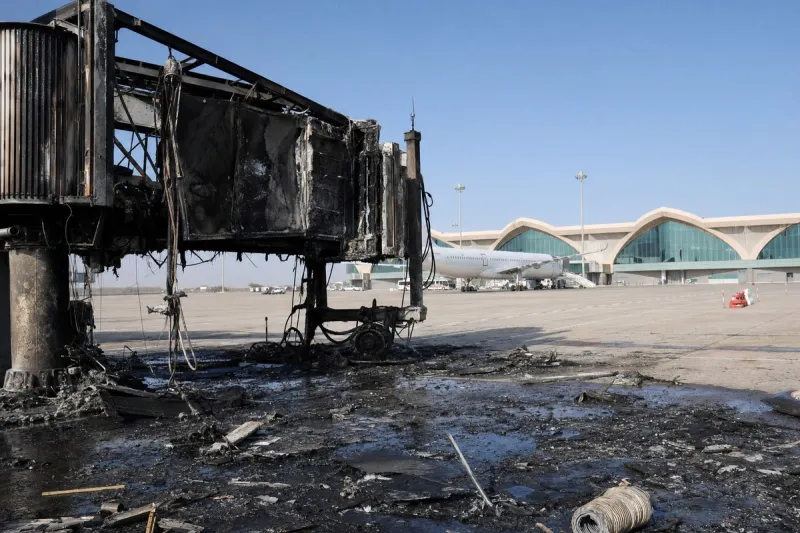
Riyadh's King Khalid International Airport is described as having reopened on October 18 with limited capacity, yet a US Mission security alert dated October 20 stated operations there remain suspended, with the Level 3 travel advisory standing. Flights to Riyadh and Dammam have been cancelled by multiple carriers; Etihad extended Riyadh and Dammam cancellations and selected Jeddah services to October 24.
The crisis is forecast to remove around 110,000 movements from 2026 European traffic against a no-tensions scenario, with recovery to 3.2 per cent growth and 11.6 million flights in 2027 from a lower base. Turkey and the eastern Mediterranean are among the most affected markets, jet fuel prices have risen sharply, and the published low scenario assumes no resolution before the end of the first quarter of 2028.
In Asia-Pacific, the World Meteorological Organization warns the current El Nino may be unprecedented in strength, with central Pacific anomalies potentially reaching 3.8C above average between November 2026 and January 2027 and peaking in December. Typhoon Champi has already cancelled around 1,000 flights and shut down an entire island, with one death, 171 injuries and 1,000 evacuated. China recorded 29.9 billion dollars in direct disaster losses in the first nine months of 2026, with 26 typhoons forming in the Northwest Pacific and South China Sea and seven landfalls, both above average.
Industry impact & what to watch
The Turkey-Iraq-Kuwait axis is sovereign-available but advisory-restricted, and that gap is where charter economics get decided. A corridor can be legally open yet unusable for a European operator whose safety regulator advises against it, or whose insurer prices war risk out of reach. Airspace status, advisory status and insurance status have to be read together, and any one of them can close a sector the other two leave open.
Winter-schedule planning therefore carries two uncorrelated sources of disruption at once. Charter desks should expect volatility, tighter crew availability on reroutes and firmer war-risk pricing on Gulf sectors, while the Pacific side adds typhoon exposure that the forecast El Nino peak in December could intensify. Reroutes lengthen sectors, which compounds the effect of higher jet fuel prices on trip costs.
The next dated milestone is the period after November 3, when the reported US force posture reaches readiness. Other items that would settle questions: any EASA revision of its Kuwaiti and Iraqi airspace advice, confirmation of operating status at Riyadh against the conflicting October 18 and October 20 accounts, the pace of Jeddah and Dammam restoration, further Houthi strikes on Saudi airports, and the December El Nino peak and its typhoon record.