FAA's Bedford Says Added Training and STC Modifications for Single-Pilot Jets Merit Scrutiny
Why It MattersThe exchange shows that single-pilot exemptions for light jets are judged on equivalent-level-of-safety evidence, so any lasting route back to those operations depends on data and certification changes rather than advocacy alone.
What happened
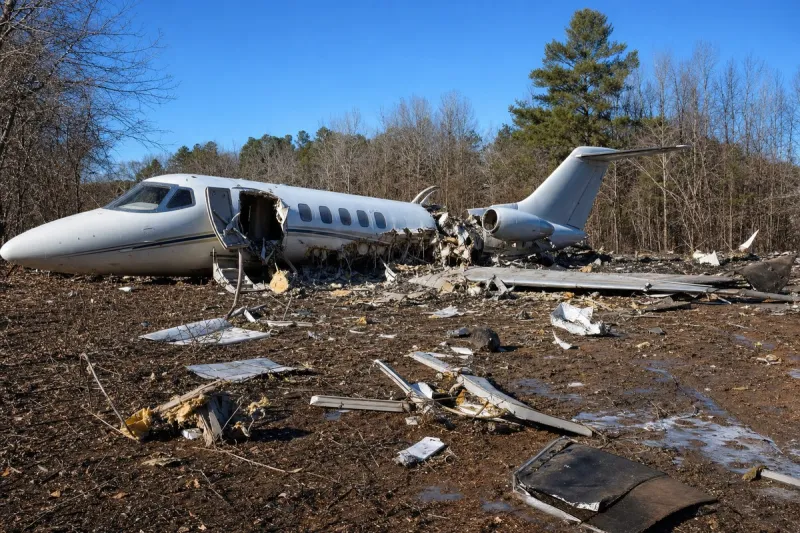
FAA Administrator Bryan Bedford spoke with NBAA's Johnson in an interview held at the NBAA Business Aviation Convention & Exhibition (NBAA-BACE) in Las Vegas. He said the FAA's decision on single-pilot exemptions followed the agency's review of training compliance concerns and of accident data. According to Bedford, aircraft operating under the exemptions had an accident rate more than twice that of comparable dual-pilot operations.

Bedford described the single question the FAA asks when it considers an exemption: whether an alternative can be found that provides an equivalent level of safety. He said that if the agency cannot reach at least that equivalent level, it should not grant the exemption.
Johnson stressed NBAA's commitment to enhancing safety while seeking workable solutions for operators affected by the decision. She pointed to ongoing collaboration with the Citation Jet Pilots Association and to potential resolutions such as additional training or a supplemental type certificate (STC). In her words, NBAA believes there is compelling data that might provide a path to allowing single-pilot operations with some training and an STC.
Bedford welcomed continued discussions. He called the STC approach "an interesting process" that was "worthy of scrutiny."
Industry impact & what to watch
The exchange sets out the terms on which single-pilot jet exemptions are decided. The FAA frames the matter as an equivalent-level-of-safety test, and it cites accident data and training compliance as the basis for its position. An association arguing for relief therefore has to bring evidence that meets that test, because appeals to operator need do not answer the question the agency says it asks.
The STC route Johnson raised would move the discussion from a blanket exemption toward a certified modification paired with training. That is a different regulatory instrument, and it places the burden on demonstrating, aircraft by aircraft, that the added equipment and instruction close the safety gap Bedford described. Bedford's remark that the process is worthy of scrutiny signals openness to examine it, which is not the same as agreement.
What would settle the question is the data NBAA says it holds: whether it shows an equivalent level of safety under training and an STC, and how the FAA responds once the Citation Jet Pilots Association and NBAA bring it forward.