Global Business Jet Departures Near 4 Million in 12 Months to August, Up 4.5%, as Order Backlogs Reach $61.6bn
Why It MattersFlying growth is concentrating in fractional and foreign-registered fleets while corporate departments shrink, a split that suggests ownership structure now matters as much as aggregate demand for how the segment moves.
What happened
Global business jet departures reached almost 4 million (3.99 million) in the 12 months to August 2026, up 4.5% year on year, according to JETNET's JIQ Market Barometer, which combines JETNET asset data with WINGX flight-activity data. North America accounted for 71.6% of that activity. Average global utilization this year is 21.0 hours per tail per month, 10.4% above 2019, with Super Midsize jets the busiest at 30.2 hours. Monthly active aircraft are approaching 20,500.

Fractional departures grew 10.3% over the 12 months, while Corporate Flight Departments shrank 7.5% and Branded Charter slipped 1.2%. NetJets holds 13.3% of global activity, up 10.2%, and Flexjet grew 12.5%. Wheels Up fell 26.7% and sits below its 2019 traffic.
By region, Africa (+10.3%) and Latin America (+5.8%) posted the fastest growth. The Middle East remains down 7.0% over the year after the early-2026 Iran-related energy shock, though its monthly declines have narrowed from more than 20% early in the year to -5.7% in August.
The four largest manufacturers hold a combined order backlog of $61.6bn, with Gulfstream at $24bn and Bombardier at $21.8bn, according to Forecast International. Full-year 2025 deliveries reached a post-GFC high of 814 aircraft, and the 2026 baseline forecast of 830 would be another record. In February, VistaJet placed a firm order for 40 Bombardier Challenger 3500s worth $1.18bn at list prices. Bombardier's services revenue rose 25% in the first quarter.
Pre-owned market and resale values
Transaction growth in the pre-owned market that ran above 15% year on year in December has slowed to the low single digits. Asking prices are falling, and large-cabin values are back to roughly 2019 levels.
Heavy jets available for resale make up 5.2% of the active fleet versus a ten-year average of 7%, with median resale values up 13% in a year.
Taxation and regulation in Europe
France introduced a 'solidarity tax' in March 2025 of €420 per passenger on flights within Europe and up to €2,100 on long-haul departures, according to IBC Aviation. Flights by French-registered business aircraft fell almost 22% in the third quarter of 2025, while flights by foreign operators rose 4%.
Since April, the higher UK air passenger duty rate for private jets has risen 50% to £1,141 per passenger on the longest flights. Brussels has so far resisted an outright ban on private jets.
Industry impact & what to watch
The activity split points to a segment where growth is being captured by shared-access models. Fractional programs are adding departures at double-digit rates while corporate flight departments contract, which is consistent with users preferring flexible access to owning and staffing an aircraft. A large manufacturer backlog alongside a cooling pre-owned market is a combination in which new-build slots carry the scarcity, while used large-cabin pricing normalises toward 2019 levels.
The French experience shows how tax design redirects activity rather than simply removing it: French-registered flights fell almost 22% in the third quarter of 2025 while foreign-operator flights rose 4%. A levy tied to registration or departure point changes where aircraft are based and flown from, and the UK's higher duty on the longest flights applies the same logic.
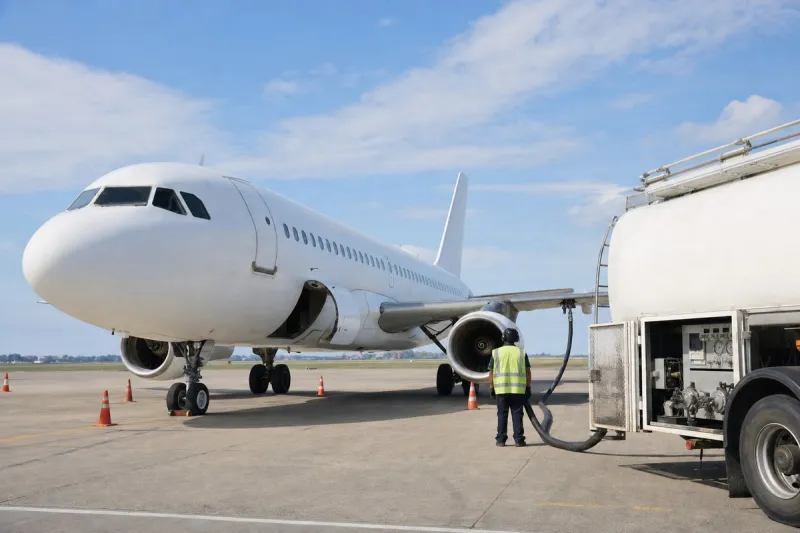
Fuel is the clearest downside named in the data, with crude and jet fuel prices spiking around the Strait of Hormuz disruption. The Middle East's narrowing monthly declines, from more than 20% early in the year to -5.7% in August, are the next indicator of whether that region's traffic is stabilising, set against a 2026 delivery forecast of 830 aircraft that would be another record.