GAMA's In-House Lobbying Spend Falls to $190,000 in Q3 2026 as Modern Skies Act Introduced, ROTOR Act Fails House Vote
Why It MattersLobbying spend at the manufacturers' association fell even as air traffic control funding and ADS-B equipage bills moved through Congress, showing legislative activity and in-house lobbying cost do not move in step.
What happened
The General Aviation Manufacturers Association (GAMA) reported $190,000 in in-house lobbying expenditures for the third quarter of 2026. That is $45,000 below the $235,000 reported for the second quarter of 2026 and $70,000 below the $260,000 reported for the third quarter of 2025. The filing covers aviation infrastructure modernization, Federal Aviation Administration (FAA) certification standards, Automatic Dependent Surveillance-Broadcast (ADS-B) equipage, aviation safety, supply chain, and trade and tariffs.
Archie Miller is new to the in-house team on the filing, joining Amanda Joyner, managing director of government affairs, and Paul Feldman, vice president of government affairs. Marc Ehudin, who appeared on the second-quarter filing, does not appear on this one. Outside firms Mehlman Consulting Inc. and O'Keeffe Shahmoradi Strategies LLC each filed separately and reported the same amounts as in the second quarter, $40,000 and $30,000. Mehlman's lobbyist list added Sean Brady.
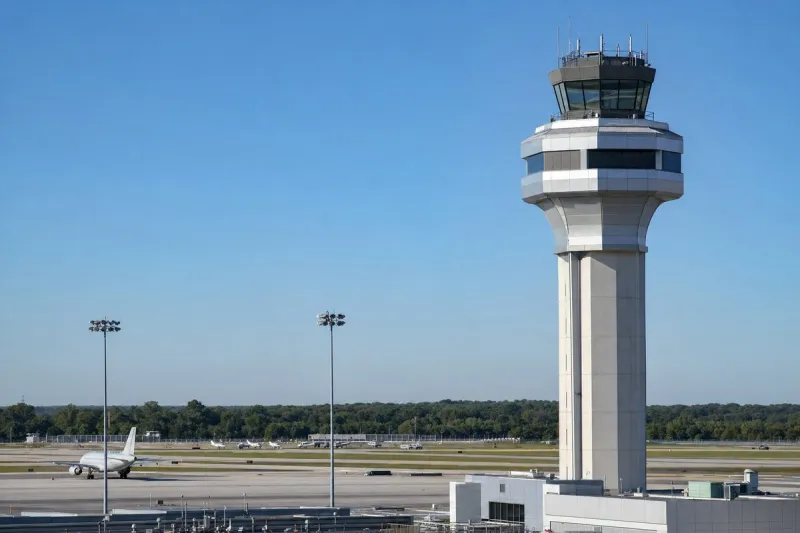
On Sept. 28, 2026, the U.S. Department of Transportation said Transportation Secretary Sean P. Duffy joined Sen. Eric Schmitt (R-MO) in calling on Congress to pass the Modern Skies Act, introduced that day. The bill would invest $30 billion: $10 billion to complete the digital architecture underlying air traffic control, $10 billion to replace air traffic control towers, airport facilities and runways, and $10 billion for a new pilot grant program for transitional airports serving between 5 million and 25 million passengers annually.
The ALERT Act, sponsored by Rep. Sam Graves (R-MO-6), passed the House and was placed on the Union Calendar on April 9. It would require the Department of Defense and the Department of Transportation to agree on collision prevention technology for military aircraft, make ADS-B Out the default for DOD helicopters, and require the FAA to mandate ADS-B In on civil aircraft by Dec. 31, 2031. GAMA is among the organizations listed on the bill. The ROTOR Act, sponsored by Sen. Ted Cruz (R-TX), failed a two-thirds suspension vote in the House on Feb. 24 by 264 to 133.
A separate Senate bill backed by Sens. Ted Budd (R-NC), Peter Welch (D-VT), Ben Ray Luján (D-NM) and John Curtis (R-UT) would enhance transparency and predictability in FAA type certification for advanced air mobility aircraft. GAMA is among its supporting organizations. Sen. Jerry Moran (R-KS) announced a hearing on near collisions in the national airspace for June 22, 2026, listing GAMA's James Viola as a witness.
Where the money goes
The third-quarter filing shows the outside lobbying lines unchanged at $40,000 and $30,000, so the quarter-over-quarter drop sits entirely in the in-house figure. Staff turnover accompanied that drop: one name left the filing and one joined. The filing itself lists issue areas but does not break the $190,000 down by issue or by bill.
Industry impact & what to watch
Lobbying expenditure and legislative activity are different measures. This quarter GAMA's in-house spend fell while a $30 billion air traffic control funding bill was introduced, an ADS-B In mandate sat on the Union Calendar, and a type-certification bill for advanced air mobility gathered Senate sponsors. For a manufacturers' association, the in-house line reflects staffing and the cost of a standing government-affairs team, while a campaign on any one bill can be carried by coalition letters, hearing testimony and outside firms.
The three live bills touch different parts of a manufacturer's business. Funding for towers, runways and digital air traffic control architecture shapes the airspace and airports aircraft operate into. The ALERT Act's ADS-B In mandate, dated to Dec. 31, 2031, would set an equipage requirement for civil aircraft. The advanced air mobility certification bill bears on how new aircraft types move through FAA type certification. Each carries a different cost and timing consequence for OEMs and their customers.
The dated markers are the ones already on the record: the ALERT Act's position on the Union Calendar and the 2031 equipage date it would set. The next quarterly filing will show whether the in-house line stays near $190,000 or moves back toward the $235,000 to $260,000 range of the prior periods.