Hermeus CEO Says Pentagon Has Spent Tens of Billions on Hypersonics With Nothing Fielded; Startup Plans Unmanned Supersonic Aircraft First
Why It MattersA self-funded startup flying early and accepting crashes challenges the slow, expensive defense-prime development model, and ties any future hypersonic civil aircraft to military revenue and test-range access.
Hermeus, a venture-backed aerospace startup building hypersonic aircraft since 2018, plans to sell the Pentagon an unmanned supersonic "bomb truck" first and use the revenue to fund a Mach 5 passenger jet later. In an interview on the Core Memory podcast, co-founder AJ Piplica and newly appointed CEO Zach Shore said the United States has spent "tens of billions of dollars" on hypersonics "and really haven't fielded anything yet." Piplica attributed this not to difficult physics but to the slow way America builds aircraft.
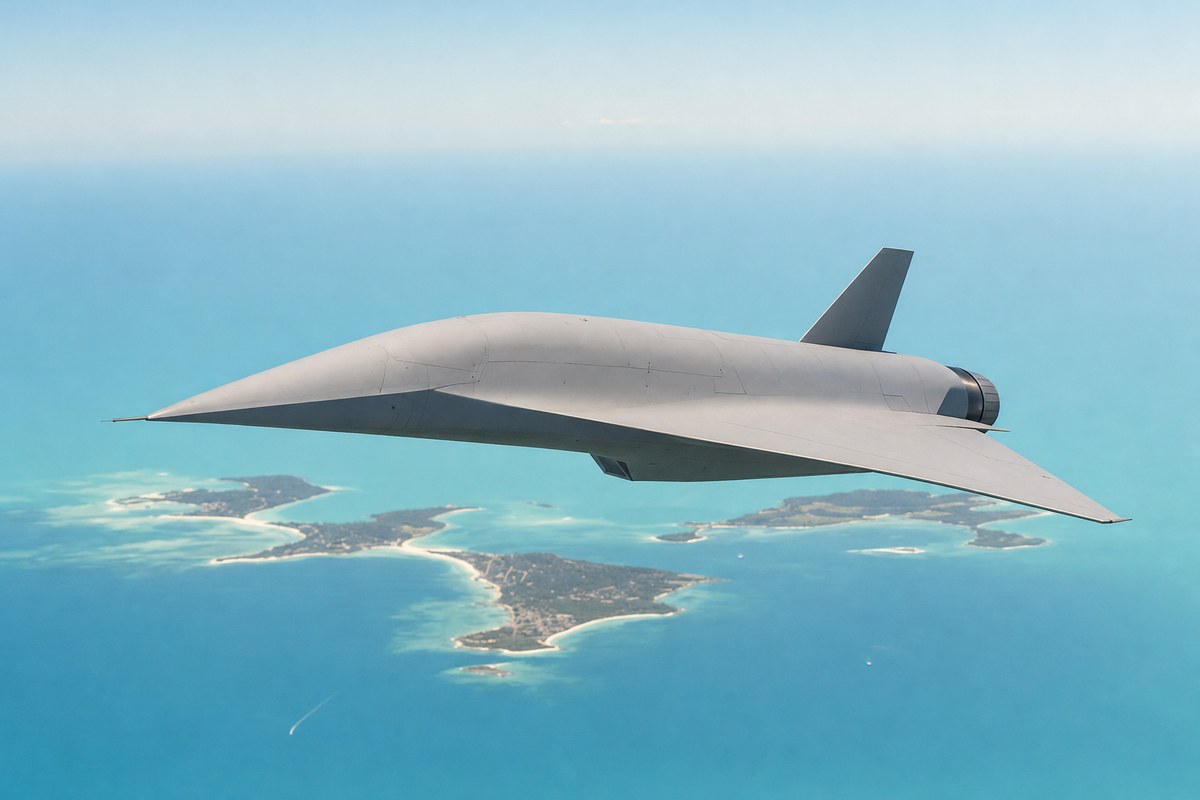
Hermeus funds its own aircraft, flies them early and accepts crashes as a way to learn faster. Its Quarter Horse Mark 2.1 reached Mach 1.21 on its third flight, with 45 minutes of total flight time on the airframe, and a fourth flight was scheduled for the day of the recording. A second airframe, Mark 2.2, was due at Spaceport America the following Monday. Shore, a former Marine signals-intelligence officer and Anduril alumnus who became CEO about six weeks before the recording, described the approach as being "hardware rich": if one plane is lost, the next is rolled out. The stated roadmap is a Mach 1.5+ dash on Mark 2.1; the first pre-cooler flight test on Mark 2.2, expected "next month or so"; a turbine stable at the ramjet transition speed of about Mach 3 on Mark 2.3, "maybe like middle of next year"; and first ramjet flights on later aircraft.
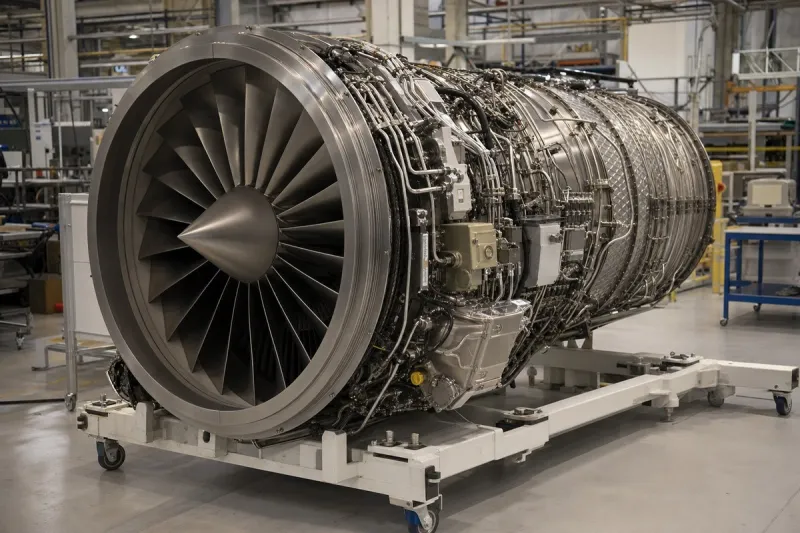
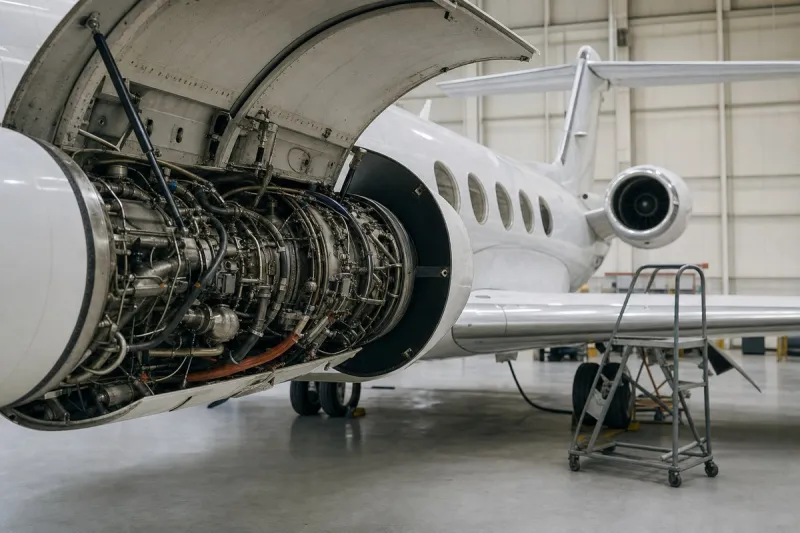
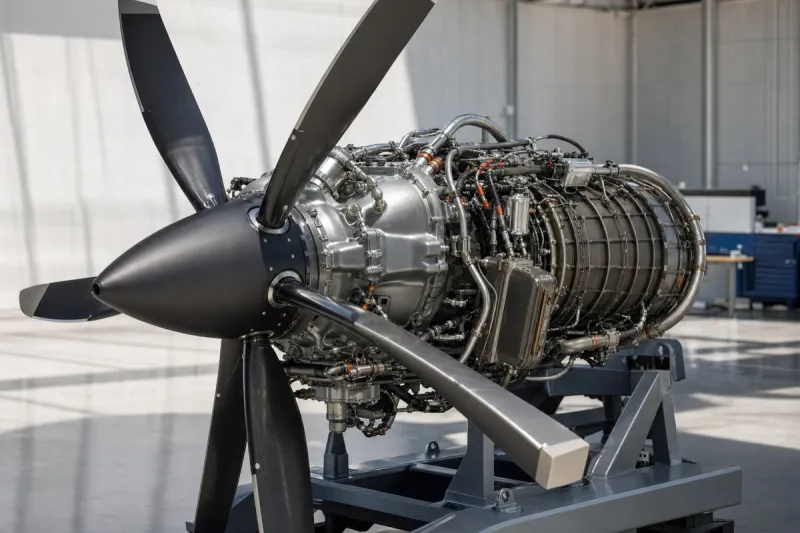
The propulsion design is a hybrid. It uses a Pratt & Whitney F100 turbine, the engine family used in the F-16, with a pre-cooler in front that chills incoming air so the turbine can keep producing thrust at higher speed and altitude. Around Mach 3 the aircraft would switch to a ramjet for high-speed cruise. The ramjet is built in-house; the turbine is purchased. Piplica said the choice shares supply chains, maintenance, logistics and training with the Air Force, Navy and foreign air forces. The airframe is about the size of an F-16 with seven hard points, according to Shore.
Shore said the aircraft fills a gap between the MQ-9 Reaper, with about 3,000 pounds of payload, and the F-15, which carries two pilots and costs roughly $140 million apiece. He argued that an unmanned supersonic aircraft lets the military treat losses like those of an MQ-9, speeds up weapons integration by allowing more risk in store-separation testing, and acts as a first stage that could double or even triple the range of some standard munitions when released at Mach 2 to 3. Hermeus is not part of the Air Force's Collaborative Combat Aircraft program, in which Anduril and General Atomics are flying Increment 1 prototypes; Shore described the relationship as "both and" and called Hermeus "more of an independent platform." The company's main partner is the Defense Innovation Unit, though Shore said work at this scale requires some Air Force concurrence.
The executives named test ranges and procurement culture as the real bottleneck. Spaceport America offers unrestricted commercial airspace, while at White Sands Missile Range the range controls flight termination and grants limited windows — about two hours on the day of recording. Piplica said federal ranges have been "underfunded for years," with old infrastructure and a workforce depleted by deferred retirement.