NTSB Cites Lack of Situational Awareness in Night Rooftop Takeoff Crash of Air Evac Lifeteam Bell 407 in Dallas
Why It MattersNight departures from rooftop helipads leave little visual reference, so hospital medevac operations depend on disciplined hover technique and a clear departure procedure when radio contact with controllers is unavailable.
What happened
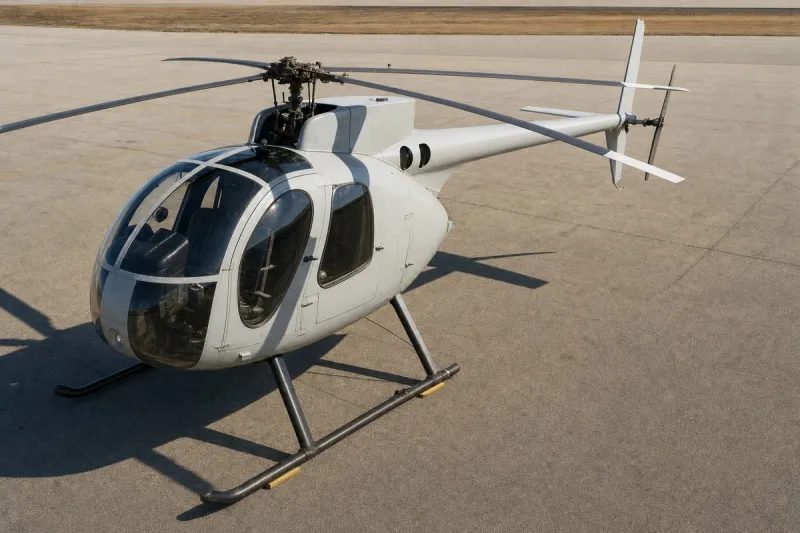
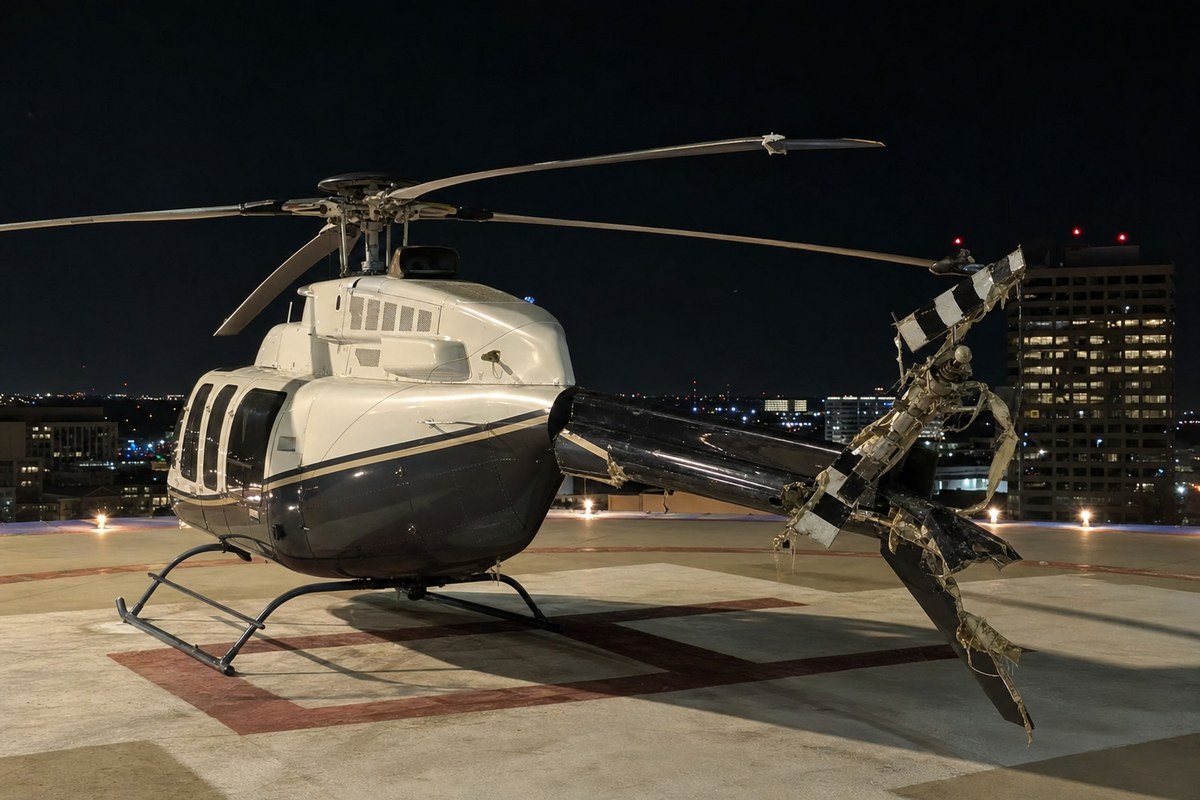
The National Transportation Safety Board (NTSB) cited a lack of situational awareness during a night takeoff from a rooftop helipad as a causal factor in the May 13 accident involving a medevac helicopter in Dallas. The Bell 407, operated by Air Evac Lifeteam, had three people on board. No injuries were reported, but the helicopter's tail rotor sustained substantial damage.
According to the NTSB final report, the 60-year-old pilot held a commercial pilot certificate with airplane and helicopter ratings. His total flight time was listed as 6,451 hours, of which 5,219 were in rotorcraft and 855 in the accident make and model.
The crew had dropped off a patient and was preparing to depart again. Night visual meteorological conditions prevailed, with 10 miles of visibility and winds from the south at 3 knots. After completing checklists on the pad, the pilot radioed Dallas Love Tower to request a departure clearance, as the hospital heliport lies in Class B airspace. Receiving no reply, the pilot lifted into a hover to gain altitude for better radio reception, rotated the aircraft 90 degrees into the wind, and climbed to approximately 20 feet.
Post-event inspection found substantial damage to the tail rotor blades and left landing skid, as well as to a security camera mounted on the rooftop. Video from a rooftop surveillance camera showed the helicopter drifting backward as it lifted off and began a right turn. The climb, turn and backward drift continued until the tail rotor struck a helipad surveillance camera, which ended the footage.
The pilot reported no mechanical malfunctions or failures that would have precluded normal operation. The pilot also noted the accident might have been prevented by holding a hover of no more than 5 feet and maintaining visual reference with the helipad environment before departure, to avoid unintended lateral and backward drift.
Industry impact & what to watch
Rooftop helipads at hospitals combine several demands on a single departure: darkness, obstacles close to the pad edge, and a tight turnaround between patient drop-off and the next call. When the visual cues a pilot relies on are limited at night, small unintended movements can go unnoticed until something is struck. This case shows how that risk concentrates in the first seconds after liftoff, well before the aircraft is clear of the structure.
The sequence also shows how an airspace requirement can shape cockpit decisions. A heliport inside Class B airspace calls for a clearance, and when the controller does not answer, the crew has to choose between waiting on the pad and moving to improve radio reception. The pilot's own account points toward the more conservative option: a low, steady hover with continuous visual reference to the pad.
For helicopter emergency medical services as a segment, the finding is a reminder that procedures for lost-communication departures, hover height limits and obstacle awareness on rooftop pads are where night operations are most exposed. No injuries occurred here, which keeps the focus on technique and procedure rather than on any aircraft failure, since the pilot reported none.