Indonesia Says No Airports Closed Despite Wildfire Haze, as 3,030 Flights Affected Since August
Why It MattersHaze-driven disruption in Indonesia shows up as rescheduling and cancellation on thin regional and pioneer routes rather than airport closure, so exposure concentrates on small-aircraft services in outlying provinces.
What happened
Indonesia's Transportation Ministry said no airports have been closed because of forest and land fires, although weather and poor visibility have forced flight-schedule changes. Lukman F. Laisa, the ministry's director general of civil aviation, said in Jakarta on Monday, October 26, that all airports remained open, with schedules adjusted to weather conditions in affected areas. At Pontianak Airport, flights that previously operated during the day were moved to nighttime, when clearer weather allowed operations to continue.
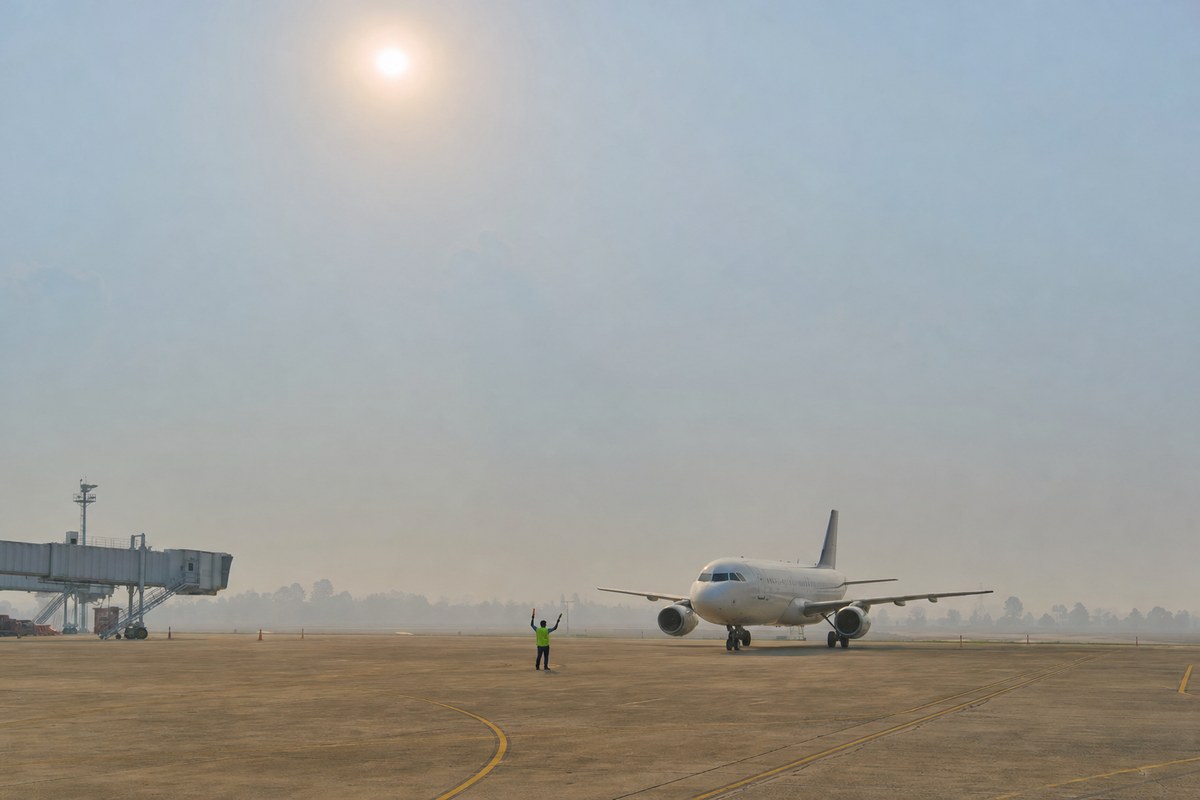
From October 18 to 25, forest and land fires affected 78 airports under various national airport management arrangements. Of these, 70 were managed by airport operating units or regional technical implementation units, seven by Angkasa Pura and one by a private operator. Between August 14 and October 25, a total of 3,030 flights were affected across 154 routes, with about 1,700 flights canceled. The hardest-hit routes served Pontianak, Singkawang, Palangkaraya and Pangkalan Bun. In addition, 617 pioneer flights were affected in Papua, Kalimantan and Maluku.
The ministry has issued all necessary permits for 42 helicopters to support wildfire response operations. The number of affected airports in Papua has fallen from 12 to seven as weather improves, and Lukman said the start of the rainy season should allow flights to operate more smoothly.
The ministry has also issued SE MHB 4 of 2026, urging greater vigilance against wildfire risks to transportation facilities and infrastructure, and SE 19 of 2026 on mitigating the effects of forest and land fires on flight operations. The latter circular was distributed to flight operators, airport managers, domestic and international airlines, and private airport operators.
Industry impact & what to watch
Smoke and low visibility rarely shut an airport outright; they erode operations at the margins. Visual-flight-dependent and thinly scheduled services are the first to lose slots, which is consistent with the reported concentration of cancellations on routes into Kalimantan towns and on pioneer flights in Papua, Kalimantan and Maluku. Keeping every airport formally open while moving flights to clearer hours means disruption is absorbed through retiming, and the cost lands on schedule reliability rather than on the airport's status.
The move of Pontianak flights from day to night illustrates how operators and airport managers trade one constraint for another. Night operating windows depend on available crew duty time, lighting and airport staffing, so a retiming that keeps a route alive can still leave some departures unworkable. The ministry's two circulars, one aimed at infrastructure vigilance and one at flight operations, push the burden of planning for haze onto airlines, airport managers and private operators.
The next marker is the onset of the rainy season, which the ministry expects to ease operations. The count of affected airports in Papua, down from 12 to seven, is the figure that would show whether that improvement is spreading to Kalimantan, where the hardest-hit routes sit.