Learjet History: BizJet Journal Traces 33 Models from Bill Lear's Model 23 to the Learjet 75
Why It MattersThe record shows how a single Wichita light jet grew into a family spanning turbojets, turbofans and new light-jet designs, and how ownership changes shaped each generation until production ended.
BizJet Journal has published an illustrated history of Learjet aircraft covering 33 model and variant profiles, from Bill Lear's first Wichita jet to the 85 prototype and the final Learjet 75. The directory includes one aircraft that flew but never reached a customer.
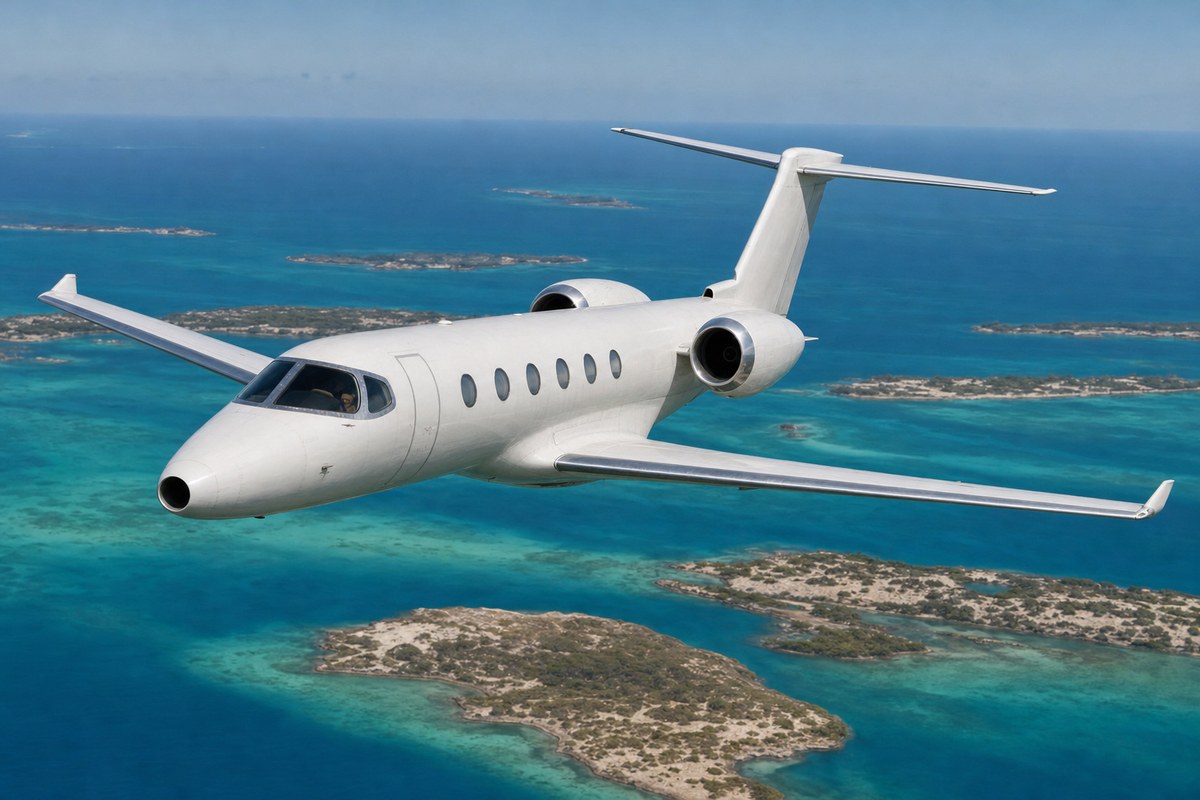
The Learjet 23 first flew on October 7, 1963. The prototype, N801L, was lost in a forced landing during testing on June 4, 1964; both crew members survived. FAA type certification followed on July 31, 1964, and on October 13, 1964, Chemical & Industrial Corporation of Cincinnati took delivery of the first Learjet 23, serial number 23-003, which is now the subject of a restoration project in Wichita. The Museum of Flight archives, which hold Lear Jet Corporation records, add that the FAA awarded the Model 23 its production certificate on September 28, 1965. The Smithsonian's Model 23 measures 43 feet 3 inches long, with two General Electric CJ610 turbojets of 2,850 pounds of thrust each and a listed top speed of 561 mph. A February 1966 aircraft survey listed the Learjet 23 at $595,000 with electronics and interior, and in 1968 Clay Lacy started his charter company with a Learjet at Van Nuys.
The Model 24 was the first Learjet certified in the transport category, and the stretched 25 gave occupants more cabin space. Published usable auxiliary fuselage tank capacities were 195 and 388 U.S. gallons on the 25B and 25C. NASA used a Learjet 25 for research flights that gave experimenters brief periods of reduced gravity. By the time the Learjet 35 and 36 won approval in 1974, Bill Lear had sold control of the business: Gates Rubber bought his controlling interest in 1967, and Gates Learjet Corporation was formed in 1969. The new models used Garrett TFE731 turbofans. According to the New Zealand Civil Aviation Authority, the 35 and 35A seat up to eight passengers plus two crew, versus six passengers plus two crew for the 36 and 36A, which use cabin space for additional fuel. In May 1976, Arnold Palmer and his crew flew from Denver around the world and back in 57 hours, 25 minutes and 42 seconds.
The Model 28 prototype first flew on August 27, 1977 and brought upward-pointing winglets. The 28 and 29 were approved in January 1979 and still used CJ610 turbojets; the FAA data sheet lists 269 usable U.S. gallons in the 28's auxiliary fuselage tank and 375 in the 29's. The Learjet 55 enlarged the fuselage cross-section and combined turbofan power with a longer wing and winglets instead of tip tanks. The Learjet 31, certified in 1988, kept the narrower 35-series fuselage with turbofans and the Longhorn wing, and the 31A followed in 1991 with an updated flight deck.
Integrated Acquisition bought Gates Learjet in 1987, and Bombardier acquired Learjet in 1990. The Model 60 grew from the 55C, with its fuselage stretched 28 inches, the cabin door moved forward and Pratt & Whitney Canada PW305A engines replacing the TFE731s; the 60XR added an updated cabin and Collins Pro Line 21 avionics in place of Pro Line 4. The Learjet 45, certified in 1997, was a new light-jet design that Bombardier later shortened to create the 40. According to the UK Civil Aviation Authority's type certificate data sheet, the Learjet 40, 45, 70 and 75 are commercial designations for different configurations of the certified Model 45. Bombardier took the family forward as the 70 and 75, with revised winglets, engine upgrades and a Garmin G5000-based flight deck, and the 75 received FAA certification in November 2013.
According to the Museum of Flight archives, Swiss American Aviation Corporation changed its name to Lear Jet Corporation in August 1962 and relocated from St. Gallen, Switzerland to Wichita, Kansas. The company became Gates Learjet Corporation in 1969, was acquired by Integrated Acquisition in 1987 and renamed Learjet Corporation the next year, and was bought by Bombardier Aerospace in 1990. As of 2021, the company had announced an end to production of all Learjets.