Large-Cabin Jet Sales Fell 25% in Q3 2026 Even as Trailing-Year Turbine Market Rose 11%
Why It MattersThin, price-opaque secondary markets can post strong trailing-year growth in one segment while quarterly comparisons swing sharply against a tough prior-year base and a handful of aged legacy types skew supply.
What happened
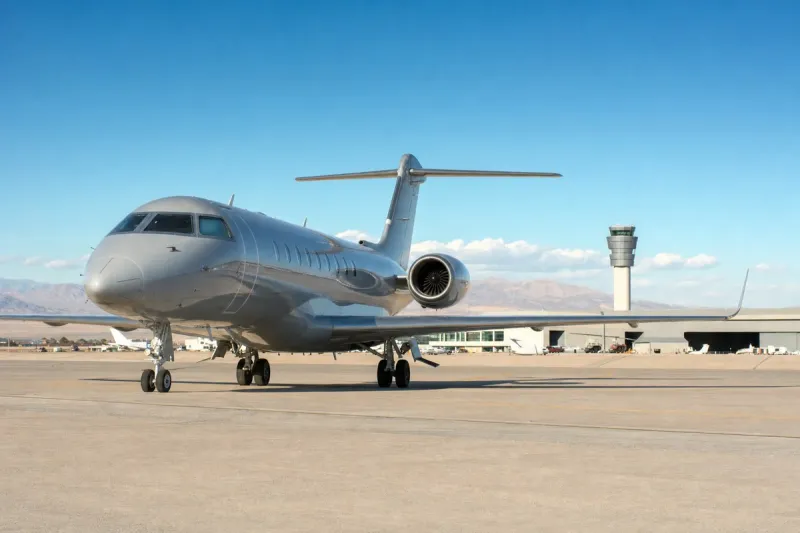
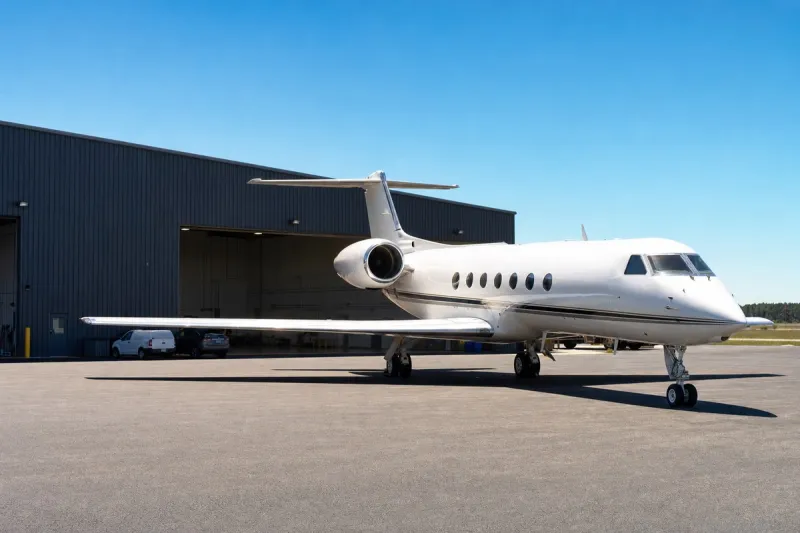
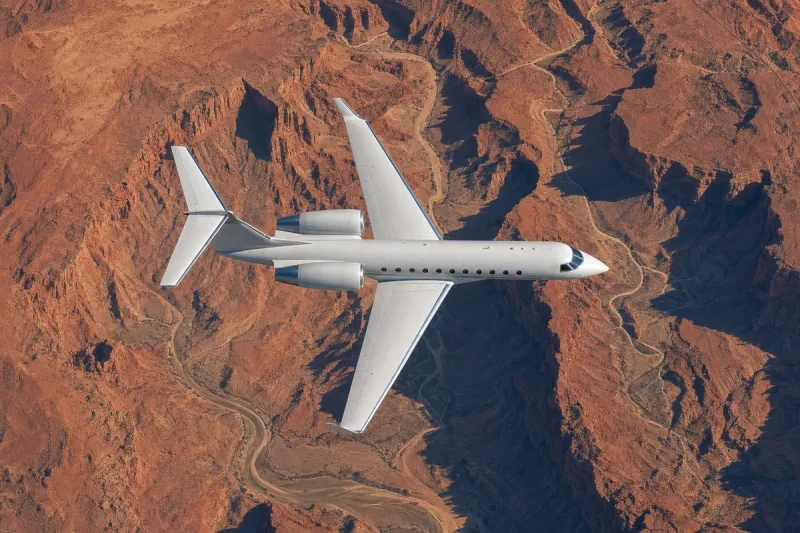
Business-jet marketplace data as of October 1, 2026 show the used turbine aircraft market posted an 11 percent gain in sales activity over the trailing twelve months compared with the prior twelve months, yet the third quarter of 2026 came in about 11 percent behind the same period of 2025, with large-cabin jets accounting for more than two-thirds of the shortfall. Large-cabin jets, the segment that had led the market's gains over the past year, sold roughly 25 percent fewer aircraft from July through September 2026 than in the same three months of 2025.

Despite the slowdown, large-cabin active listings held at 178, supply edged up only marginally to 6.0 months (a 0.1-month rise from August), and the segment still carries the shortest supply of any turbine class. Median days on market for large-cabin jets stands at 77 days, the fastest turnover among jets, and only 18 percent of large-cabin listings post an asking price. September's provisional figures showed large-cabin sales recovering to approximately the level of September 2025, but October–December 2025 was the strongest three-month stretch in two years of data, with December 2025 alone running 75 percent above the 2025 monthly average.
Across other segments as of October 1: very light jets held 43 active listings at 6.8 months of supply and a 119-day median; light jets had 149 listings at 6.5 months and 125 days; midsize jets had 100 listings at 6.7 months and 123 days; super-midsize jets had 87 listings at 9.4 months and 122 days; single turboprops had 54 listings at 6.2 months and 91 days; and twin turboprops had 69 listings at 8.0 months and 133 days. Within super-midsize, Gulfstream G200s and Falcon 50-series jets make up 50 of the 87 listings, carry a median of 204 days on market, and represent roughly two years of supply at the current selling pace, while the remainder of the class — including the Challenger 300 and 350, G280, Praetor 600 and Longitude — carries about five months of supply with a 77-day median. Twin turboprop listings fell to 69 from 77, supply contracted to 8.0 months from 8.9, and trailing-year sales ran 16 percent ahead of the prior year, while single-engine turboprop supply loosened to 6.2 months from 5.8 as listings rose to 54 from 50.
Of listings that reached a definitive resolution over the trailing twelve months, 74 percent ended in a sale, up from 70 percent in the prior year; by segment, jets sold at a 74 percent rate, single-engine turboprops at 77 percent, and twin turboprops at 68 percent. Sellers withdrew 8 percent fewer turbine listings over the trailing year than the year before, and Q3 withdrawals ran 27 percent below Q3 2025. The International Aircraft Dealers Association (IADA) reported that its accredited dealers closed 746 deals in the first half of 2026, up 21 percent from a year earlier, with 397 closings in Q2 2026 against 300 in Q2 2025, and logged 67 price reductions among accredited dealers in H1 2026, down from 76 in H1 2025.
In Q3 2026, large-cabin jets drew 37 percent of the 107 Aircraft Wanted buyer requests sent through the BrokerNet broadcast service from July 1 to September 30, yet accounted for 25 percent of Q3 sales (238 units out of a total turbine count) and 26 percent of active listings (180 out of 680). For September turbine sales by manufacturer, Cessna led with 22 sales, followed by Gulfstream at 17 and Bombardier at 13; Gulfstream's September count nearly tripled from six in August. CFS Jets led the broker leaderboard for the trailing 90 days with seven turbine aircraft sold, and Guardian Jet added 12 new turbine listings in September. Asking-price data cover only 31 percent of all turbine listings and 18 percent of large-cabin listings; among those, the median jet asks $3.6 million, the median single-engine turboprop $2.65 million, and the median twin turboprop $1.3 million, and across the entire turbine market one-third of listings have been posted for more than 180 days.
Super-midsize's two-speed market
The super-midsize class illustrates how a handful of aging types can distort an entire segment's headline numbers. Gulfstream G200s and Falcon 50-series aircraft account for 50 of the class's 87 listings and sit at a 204-day median with roughly two years of supply at current selling pace, while newer types in the same class — the Challenger 300 and 350, G280, Praetor 600 and Longitude — clear in 77 days against about five months of supply. The blended 9.4-month supply figure for super-midsize as a whole masks that split.
Industry impact & what to watch
A segment can lead the market's trailing-year gains and still post the sharpest single-quarter decline, because trailing-twelve-month figures smooth over a strong comparison quarter that a shorter window exposes directly. Large-cabin's Q3 2026 shortfall against Q3 2025 reflects in part that October–December 2025 was the strongest three-month stretch in two years of data, making the coming quarter's year-over-year comparison difficult regardless of underlying demand.
The gap between buyer interest and completed sales in large-cabin — 37 percent of BrokerNet buyer requests against 25 percent of Q3 sales and 26 percent of active listings — points to a market where demand signals and closed transactions move differently, a dynamic sharpened by the fact that only 18 percent of large-cabin listings disclose an asking price at all. Blended segment statistics such as super-midsize's 9.4-month supply figure can also conceal a two-speed market, where legacy types carrying roughly two years of supply sit alongside newer models clearing in about five months.
The next data points worth tracking are the full fourth-quarter sales figures against the unusually strong October–December 2025 base, and whether IADA's accredited-dealer closing pace — up 21 percent in H1 2026 over H1 2025 — holds through the back half of the year.