North America Private Jet Flights Rose 0.9% Year-Over-Year in September, Beating Forecast of –0.1%
Why It MattersThe divergence between fractional, Part 135 and Part 91 performance shows demand strength is concentrated in managed-access models while owner-flown large-cabin usage keeps softening.
What happened
Private jet flight activity in North America rose 0.9% year-over-year in September, ARGUS TRAQPak reported, beating the firm's own forecast of roughly a 0.1% decline — a result that would have marked 2026's first negative year-over-year reading. Travis Kuhn, Senior Vice President at ARGUS, said "September's results were surprising to us as all indicators showed a decline in activity when the month began. Fortunately, that forecast didn't turn out to be correct, and activity was positive. This continues to point to the strength and resiliency of the business jet market in North America and abroad. We do have concern areas, but overall demand has held firm heading into what is usually a busy Q4 season for activity."

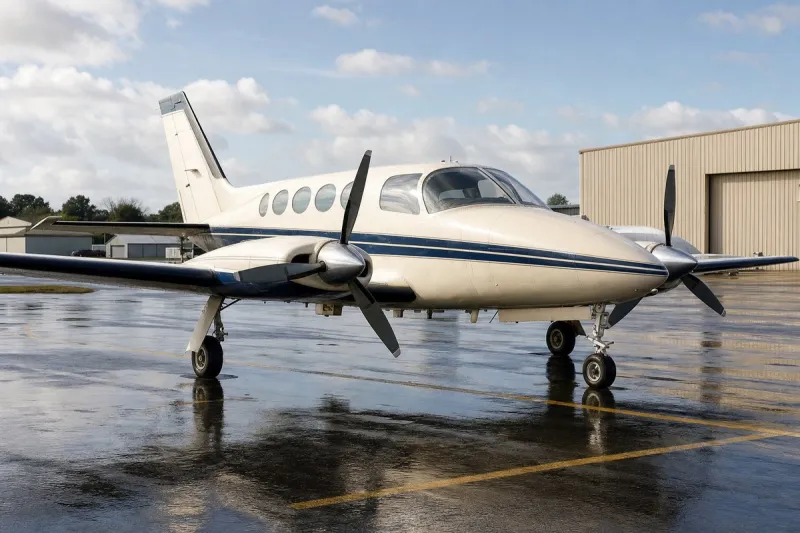
By aircraft category, turboprops led all segments with a 4.8% year-over-year increase, followed by small cabin jets at 3.6%. Midsize jets edged down 1.1%, while large cabin jets recorded the steepest decline at –7.0%. By operational segment, fractional operations saw the strongest year-over-year growth at 7.2%, driven primarily by large-cabin jets which were up 13.9%; midsize and small cabin jets in the fractional segment rose 7.1% and 6.8% respectively, while fractional turboprops edged up just 0.2%. Part 135 operations grew 3.0% year-over-year, with turboprops posting the largest gain at 7.5%, small cabin jets up 4.1%, midsize jets up 1.0%, and large cabin jets down 4.9%. Part 91 operations fell 3.4% year-over-year, with large cabin and midsize jets each declining 13.3%, while Part 91 turboprops rose 2.9%.
Compared with August, September flight activity rose 1.9% in absolute terms, translating to an average flights-per-day increase of about 5.3%, since September had one fewer calendar day than August. Six of eight major North American regions recorded a month-over-month increase; the Southwest and South each posted double-digit gains, while the Northeast saw the largest decrease at –16.9%, followed by the Caribbean at –14.4%. ARGUS TRAQPak analysts project the positive trend to continue, forecasting a 1.1% year-over-year increase for October.
Industry impact & what to watch
This result belongs to a broader story about how differently the ownership and access models inside business aviation are behaving even within the same month. Fractional programs, which pool aircraft across many owners and lean on scheduled utilization, posted the strongest growth across nearly every cabin size, led by large-cabin jets up 13.9%. Part 135 charter grew more moderately, while Part 91 owner-flown operations contracted, with large-cabin and midsize jets each down 13.3%. That spread suggests softening demand is concentrated among individual aircraft owners flying on their own account, not among those buying access through fractional shares or charter.
The category split tells a similar story: turboprops and small cabin jets are growing while large cabin jets are shrinking across most operational segments except fractional. That pattern is consistent with shorter-haul, lower-cost flying holding up better than long-range large-cabin trips booked outright by owners.
The next checkpoint is ARGUS's own October forecast of a 1.1% year-over-year increase, which will show whether September's upside surprise carries into the historically busy fourth quarter or proves to be a one-month deviation from the softer trend the firm's analysts had expected going in.