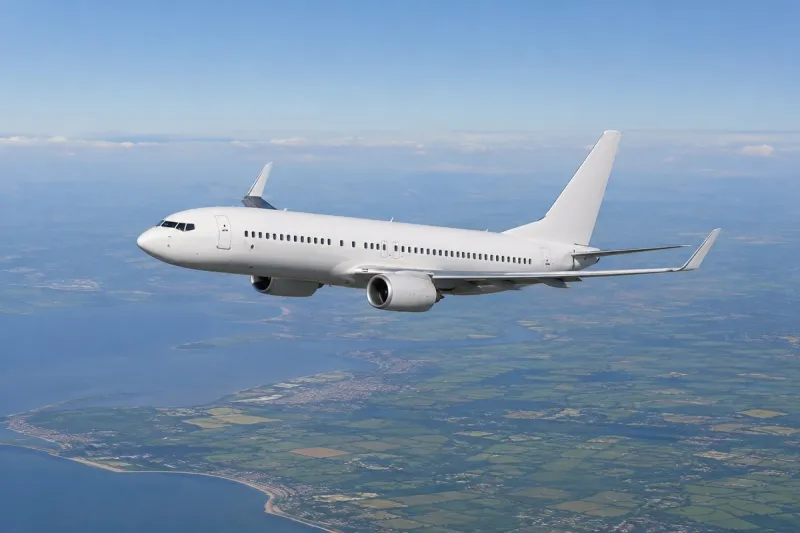
FAA Proposes AD Requiring Avionics Software 5.9 on Bombardier BD-700-1A10 and BD-700-1A11 Airplanes Over Heads-Up Display Fault
Why It MattersA software-only fix that still costs tens of thousands of dollars per aircraft shows how avionics updates on large-cabin business jets move from manufacturer service action into mandatory, fleet-wide regulatory compliance.
What happened
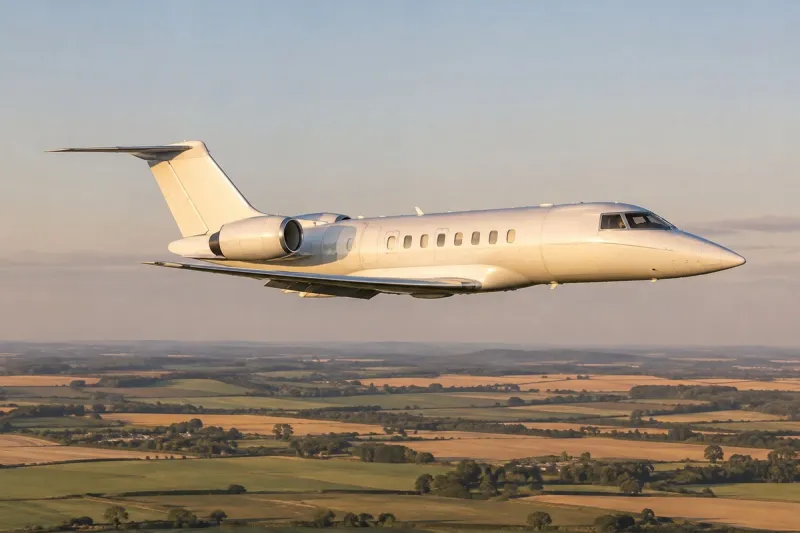
The FAA has proposed a new airworthiness directive (AD) covering certain Bombardier, Inc., Model BD-700-1A10 and BD-700-1A11 airplanes. The proposal was prompted by a report of an issue in the heads-up display application (HDA) software in avionics software version 5.8.

The issue could leave the HDA unable to read errors in the graphical engine chip (GE5) local and frame buffer memory during power-up. That in turn could leave it unable to blank the heads-up display when faults exist in the GE5 memory. If not addressed, the condition could lead to the display of misleading primary flight information, such as altitude, flight path vector on approach, air speed on takeoff, radio altitude, and lateral and vertical guidance. The FAA lists spatial disorientation, loss of control, and flight into terrain as possible results.
The proposed AD would require installing avionics software version 5.9 (integrated modular avionic applications part number 810-0311-1B0020) or a later approved software version. It would do so by requiring compliance with Transport Canada AD CF-2026-15, incorporated by reference, with exceptions set out in the proposed AD's regulatory text. Where the Transport Canada AD refers to its effective date, the FAA AD would use its own effective date, and the requirement to submit certain information to the manufacturer would not apply.
The FAA estimates the AD would affect 734 U.S.-registered airplanes. The estimated cost is 16 work-hours at $85 per hour ($1,360) plus $34,258 in parts, or $35,618 per product and $26,143,612 for U.S. operators. According to the manufacturer, some or all of the costs may be covered under warranty.
The FAA must receive comments by January 11, 2027, under Docket No. FAA-2026-15286; Project Identifier MCAI-2026-00322-T. Comments containing confidential business information should be marked "PROPIN" and sent to William Reisenauer, Aviation Safety Engineer, FAA, 1600 Stewart Avenue, Suite 410, Westbury, NY 11590.
Industry impact & what to watch
Avionics software on modern business jets is a safety-critical part of the airframe, so a latent fault in a display function can move from a manufacturer-level fix to a mandatory directive once the state of design acts. Here the sequence runs through Transport Canada first, with the FAA adopting that action by reference and adjusting only its dates and reporting requirements. For operators of in-service aircraft, that pattern means regulatory deadlines tend to follow the state-of-design authority rather than arrive independently.
The cost structure is typical of software-driven directives on large-cabin aircraft. Labour is small, at 16 work-hours, but the parts line of $34,258 carries most of the per-aircraft figure of $35,618, and warranty coverage can shift that burden back to the manufacturer for some or all affected aircraft. How much any individual operator actually pays therefore depends on warranty status and not on the headline estimate.
The next fixed milestone is the comment deadline of January 11, 2027. Whether a final rule changes the compliance language or the cost estimate will depend on what operators and maintenance providers file in the docket by then.