Rules Letting Manned Aircraft Fly Silently in Uncontrolled Airspace Create a Security Blind Spot, Author Argues
Why It MattersLow-altitude security built on spotting anomalies has a structural limit: lawful and unlawful silent flight look the same, so better sensors alone cannot close the identity and accountability gap across agencies.
What happened
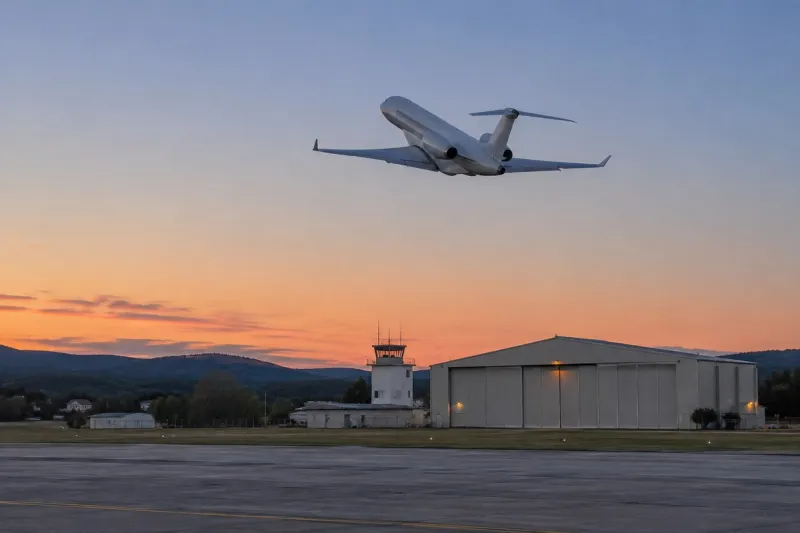
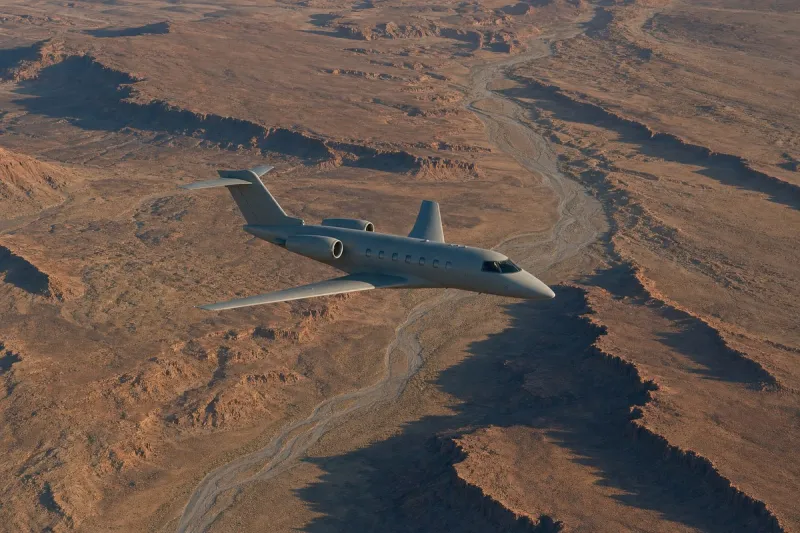
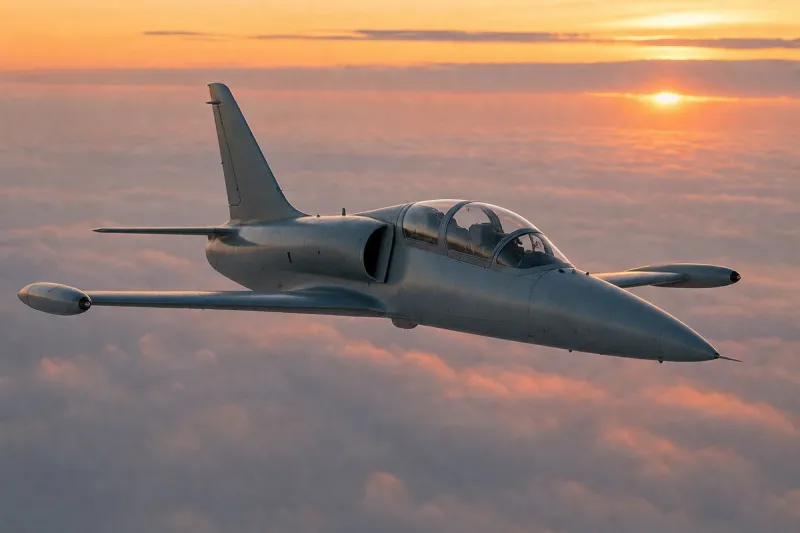
A Commercial UAV News opinion piece argues that current federal rules leave a security blind spot in America's low-altitude airspace. Manned aircraft flying under visual flight rules (VFR) in uncontrolled airspace, which is estimated to make up approximately 96 percent of America's low-altitude airspace, may operate routinely and silently: without ADS-B Out, the broadcast that automatically reports an aircraft's identity and position, and without filing a flight plan.

The author is a former Navy fighter pilot and former senior executive for aviation at the U.S. Department of the Interior (DOI), an agency responsible for approximately 500 million acres. The author says low-altitude air domain awareness is being designed to find the anomalous. An aircraft that looks and behaves like the lawful majority produces no anomaly to flag, so a system built to notice anomalies cannot, by itself, separate a lawfully silent manned aircraft from one that is silent for illegitimate reasons. Better drone detection does not change that.
The author describes domestic air defense and counter-unmanned aircraft systems (C-UAS) work as a technology and decision stack with 12 levels, from raw detection to iterative improvement. Levels 1 through 4 (presence, sighting validation, precise position, and vector and trajectory) are what most of today's sensors do well. The levels that matter most come next: technical identity and classification (Level 5), authorization and conformance status (Level 6), and operator identity and accountability (Level 7), followed by intent and threat discrimination (Level 8).
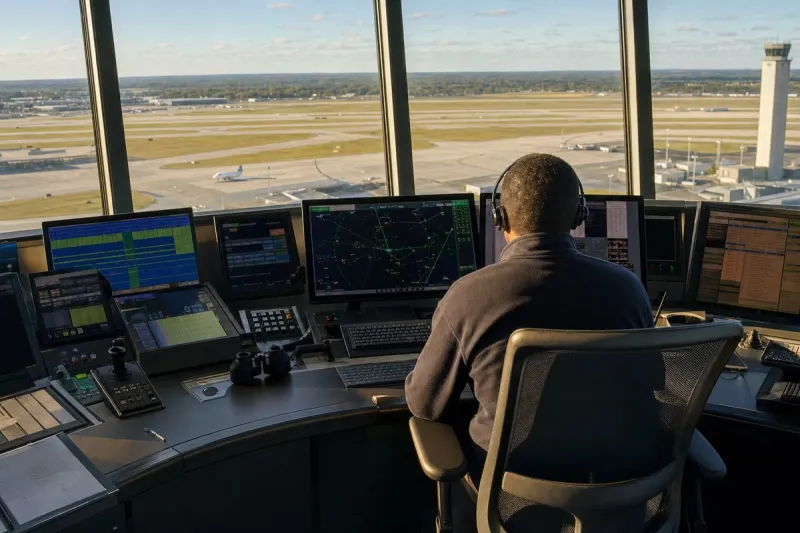
The article contrasts deployed combat operations, where the working assumption is often that all contacts are presumed hostile until determined otherwise, with the U.S. homeland, where the assumption is reversed and the vast majority of aircraft and operators in the low-altitude National Airspace System (NAS) are law-abiding and conforming. It notes that the organizations that might respond answer to different authorities: the FAA manages the airspace, the Department of War (DoW) defends it, and the Department of Homeland Security (DHS) and law enforcement protect people and infrastructure on the ground.
On the rule itself, electronic conspicuity (ADS-B Out) is required in Class A, B, and C airspace; above the ceiling and within the lateral boundaries of Class B or C airspace up to 10,000 feet MSL; within 30 nautical miles of the listed Mode C veil airports up to 10,000 feet MSL; in Class E at and above 10,000 feet MSL (excluding the airspace at and below 2,500 feet above the surface); and over part of the Gulf of Mexico. Outside those areas there is no ADS-B Out requirement, including much of the Class E airspace below 10,000 feet MSL and most uncontrolled Class G airspace.
Industry impact & what to watch
The argument is about a design limit rather than a sensor shortfall. Detection tools that excel at presence, position and trajectory still leave identity, authorization and operator accountability unresolved for aircraft that are not required to broadcast anything. For general aviation, that means the lawful practice of flying VFR in Class G or lower Class E airspace without ADS-B Out is exactly what makes those aircraft indistinguishable from a hostile one that behaves the same way.
The split of responsibility the author describes compounds this: airspace management, air defense and ground protection sit with different agencies, so any identification gap has to be closed across organizations with different authorities and different default assumptions about who is a threat. Counter-drone investment, in this reading, addresses only part of the problem.
This is an opinion piece, so the proposals that would follow from it are the author's argument and not a pending rulemaking. What would change the picture is a regulator or defense agency moving on the Level 5 through 7 questions: identity, conformance status and operator accountability for aircraft in uncontrolled airspace.