European Gulf Airspace Advisories Extended to 31 January 2027 as Houthi Warning Widens Saudi Risk
Why It MattersAdvisory-based risk regimes put the burden of Gulf flying decisions on operators' own assessments and insurers, so capacity there is set by airline caution and insurance acceptance rather than by formal closures.
What happened
European advisory bulletins covering Iran, Iraq, Lebanon, Jordan, Saudi Arabia and parts of the Persian Gulf and Gulf of Oman were revised on 16 November and extended to 31 January 2027, with no change to their underlying recommendations. The bulletins are advisory rather than closures, so the airspace remains legally usable subject to each operator's own risk assessment, insurer acceptance and state-of-registry guidance.
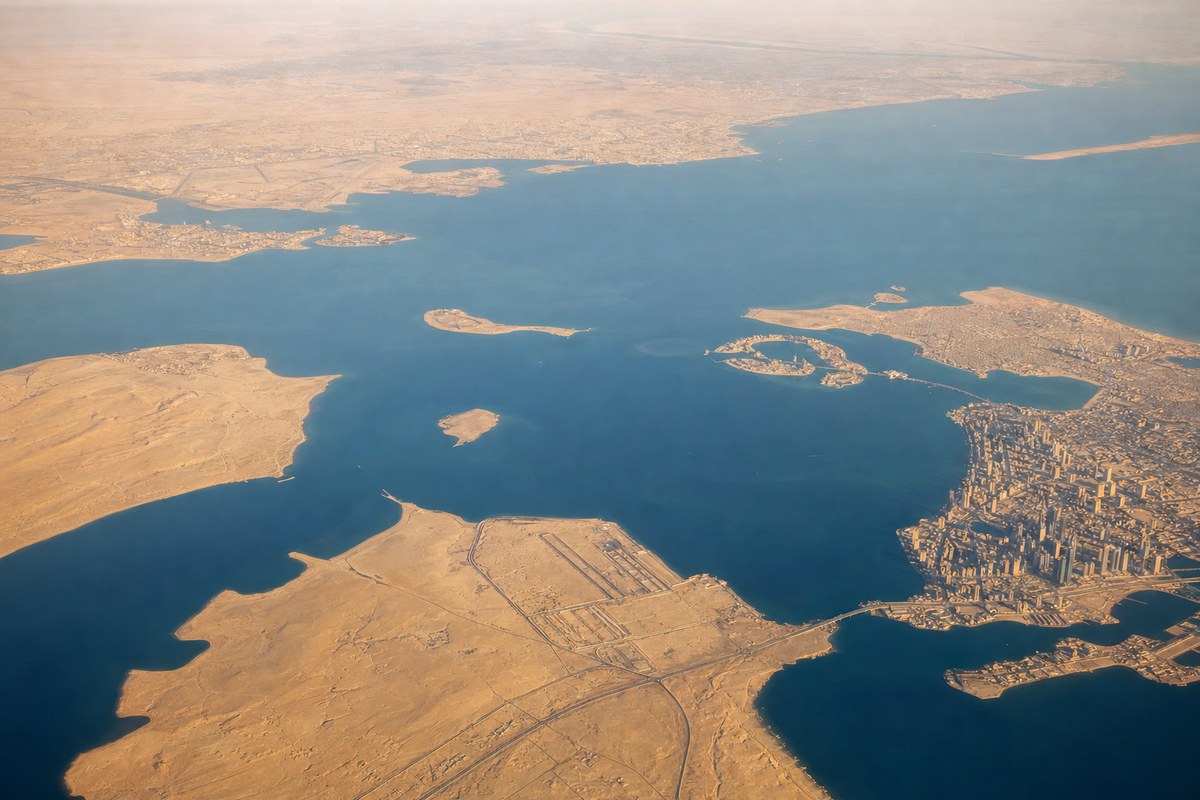
The Persian Gulf bulletin, CZIB-2026-07R4, applies within the Bahrain, Kuwait, Qatar, UAE and Oman (Muscat) Flight Information Regions. The Jeddah FIR bulletin, CZIB-2026-09-R2, was extended on 16 November without changes.
The war launched by the United States and Israel against Iran on 28 February 2026 continues without a negotiated settlement, and talks have stagnated despite intensified Qatari mediation. Iran has carried out a third round of strikes on Bahrain, with the Islamic Revolutionary Guard Corps claiming drone attacks there, and tankers have been struck near the Strait of Hormuz. At least 22 attacks were reported in November in the area covering the Strait of Hormuz, the Persian Gulf and the Gulf of Oman, the second-highest monthly figure since the war began, against a pre-October average of about ten.
On 20 November a Houthi military spokesperson warned that Saudi airspace could become an area of military operations, with the airspace over Mecca and Medina excepted, as the Saudi-led coalition reported intercepting missiles aimed at the kingdom. The warning does not by itself mean flights to Riyadh or Jeddah are cancelled. The US Mission in Saudi Arabia has advised of potential attacks on airports, airspace closures and flight cancellations.
Airline capacity and rerouting
Scheduled capacity into the Gulf continues to thin: KLM has suspended Dubai services until 27 March 2027, Finnair for the entire 2026/27 winter season, Korean Air until further notice, Luxair until at least February 2027 and ITA Airways until 30 November, while Virgin Atlantic plans no return before 2027.
In South Asia, Pakistan has extended its airspace ban on Indian aircraft until 04:59 on 24 December 2026, pushing affected traffic onto longer southern routings with extra fuel burn and intermediate refuelling.
Weather and travel conditions
Forecasts point to above-average warmth across Central Asia, including eastern Kazakhstan where daily maximums of 30C to 40C are forecast, 4C to 10C above average, with moderate to heavy precipitation across much of the region.
The World Meteorological Organization expects El Niño to peak by January with sea surface temperatures up to 3.7C above the 30-year average, with precipitation and drought effects expected worldwide through spring 2027. South Africa's Home Affairs ministry has reinstated temporary visa concessions until 30 November 2026 for foreign nationals affected by airspace disruption.
Industry impact & what to watch
Because the bulletins advise rather than close, the real gatekeepers for Gulf operations are each operator's own risk assessment, its insurer and its state of registry. That is why capacity can keep shrinking while the airspace stays technically open: carriers such as KLM, Finnair and Virgin Atlantic are making commercial and risk decisions, not complying with a closure order.
A Houthi warning that stops short of cancelling flights to Riyadh or Jeddah shows how threat statements feed into planning without immediately changing the legal status of the airspace. Rerouting caused by the Pakistan–India ban adds fuel and refuelling cost on top, so the burden is spread across several corridors at once.
The next dated markers are the 30 November ITA Airways suspension end date, the 24 December expiry of Pakistan's ban, and the 31 January 2027 advisory expiry.