Aviation Panel Warns Workforce Shortages Could Impact Safety Within 12 Months, Urges Operators to Rebuild Training Margins
Why It MattersAs staffing standards narrow across business aviation, safety margins increasingly depend on operators rebuilding training and monitoring systems internally rather than assuming inherited buffers still hold.
What happened
An informal survey by the National Business Aviation Association (NBAA) identified maintenance staffing gaps, pilot fatigue, and training bottlenecks as the safety risks most likely to affect business aviation over the next 6 to 12 months. Pilots and aviation maintenance technicians (AMTs) were named as the groups most affected by shortages in terms of safety impact. Despite that, 62% of respondents said they had not yet observed a significant safety decline.
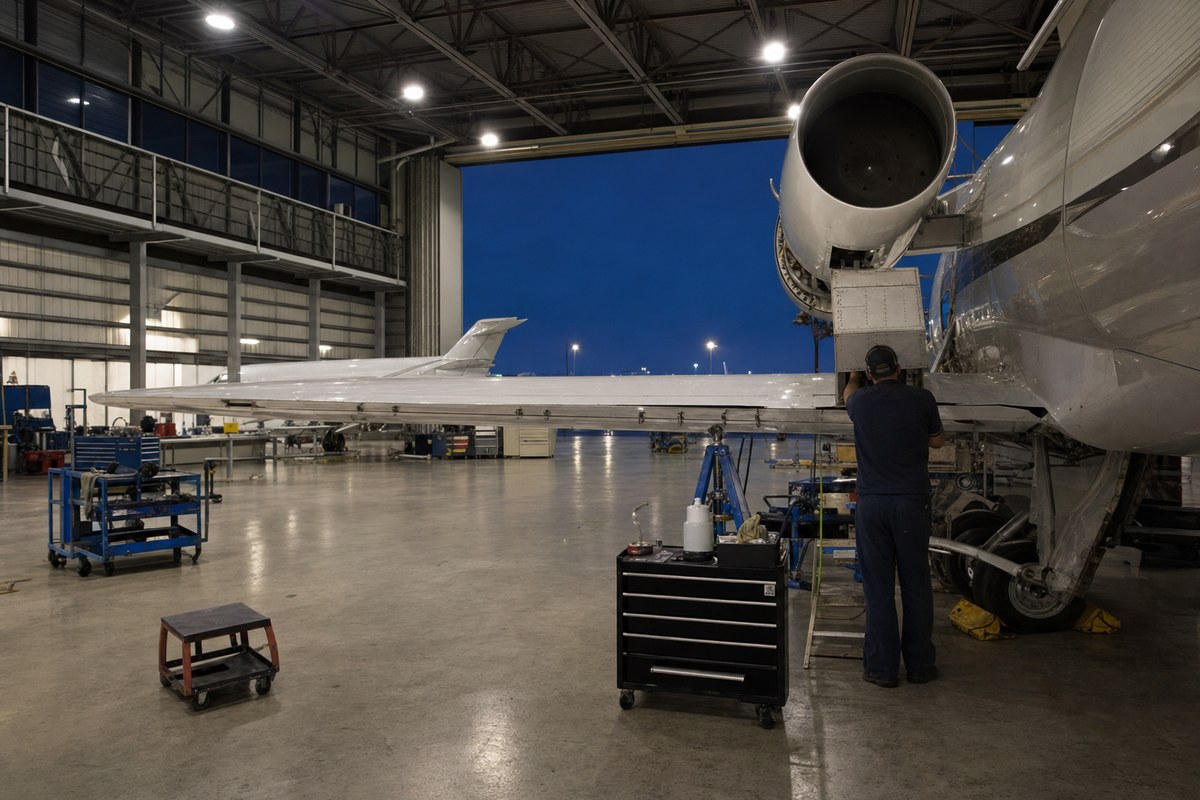
Walter Kraujalis, president of Safety Standup and a member of the NBAA Safety Committee, attributed that resilience partly to historically high hiring standards. "The airlines have had to lower entry requirements to address their own shortages. Now it's the same for business aviation," he said, describing the shift as "a narrowing of the margin between the experience we're used to hiring and what's actually adequate — a shift from highly qualified to medium qualified." He said operators can no longer assume that safety margin exists and must rebuild it deliberately through competency-based training and tighter standardization, and cautioned against over-reliance on external training providers, noting that major training centers are "just as stretched by workforce pressures" as operators themselves.
Recommended mitigation measures include adding redundancy to maintenance inspection sign-offs, increasing safety audits, implementing intentional crew pairing, and establishing captain-mentor training programs. Tony Foster, head of the Academics-Aviation Department at the University of Dubuque, advised reviewing standard operating procedures and flight risk assessment tools to account for new hires with varying backgrounds. Kraujalis also pointed to connecting workforce data — staffing levels, turnover rates, experience mix, and overtime — into the same risk-management processes used to track operational hazards, saying that correlating staffing metrics with FOQA exceedance trends or SMS hazard reports would give operators leading indicators before a near-miss occurs.
Industry impact & what to watch
This survey points to a structural shift rather than an isolated staffing complaint: as entry standards narrow across both airlines and business aviation, the buffer that once absorbed inexperience or fatigue is thinning at the same time demand for pilots and AMTs stays elevated. That combination changes how safety margin has to be produced — not assumed as a byproduct of high hiring bars, but built deliberately through training design and monitoring.
The segment has historically leaned on external training centers to deliver readiness, but Kraujalis's warning that those centers face the same workforce pressures as operators suggests that model is weakening precisely when it is needed most. That pushes more training responsibility, and more of the associated cost and oversight burden, back onto individual operators rather than shared training infrastructure.
What will show whether this warning translates into practice is whether operators start correlating workforce metrics — turnover, overtime, experience mix — with existing safety data streams like FOQA exceedances and SMS hazard reports. Kraujalis frames real-time AI monitoring of that combined data as the mechanism that could surface a staffing-driven risk weeks before it shows up as a near-miss. Whether operators adopt that correlation, and whether the 62% who see no decline yet still hold that view a year from now, will be the test of the panel's 6-to-12-month window.