Belarus Security Council Official Says National Aviation Is Adapting to Sanctions, Citing Belavia Network Expansion
Why It MattersBelavia's redirection toward Asia-Pacific, Africa, the Middle East and Russia, and Minsk's role in SJ-100 certification trials, show how a sanctioned carrier and airport can reorient around non-Western partners and components.
What happened
Aleksandr Volfovich, State Secretary of the Belarus Security Council, met with aviation industry representatives at Minsk National Airport on November 18. The agenda covered key items on the international and regional agenda and the national security strategy. He described the world as being at a stage of global confrontation and said Belarus is exposed to hybrid influence, information warfare, economic sanctions and political pressure.
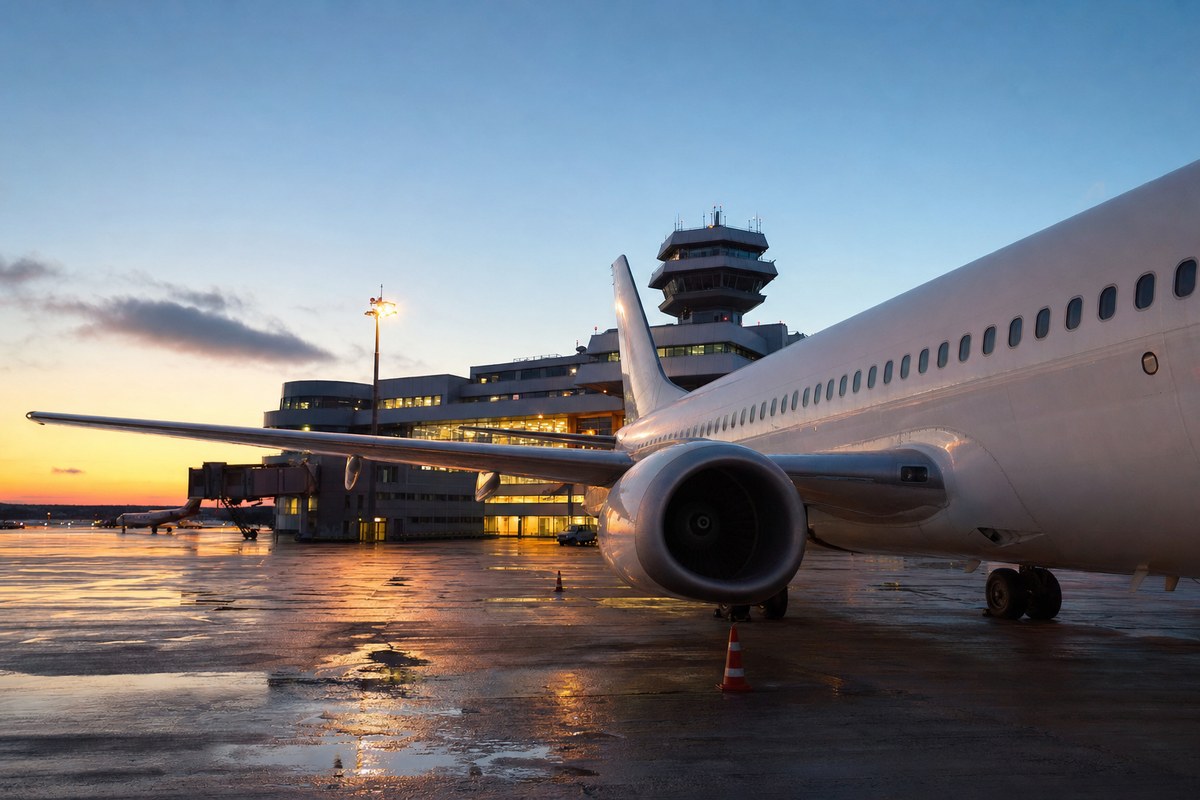
Volfovich said national carrier Belavia was the first to feel the economic sanctions, because European airspace and numerous routes became unavailable to its flights. According to him, the management of Belavia and Minsk National Airport found new opportunities, restructured operations and secured agreements with other countries. He said Belavia has entered the Asia-Pacific region, Africa and the Middle East, and has expanded its flight network across the CIS, including to Russia.
On performance, Volfovich stated that indicators for the aviation industry remain stable, with some figures showing growth. He listed increased passenger traffic, alongside growth in sales profitability, net profit and investment in fixed assets. No figures were attached to these statements.
He also noted that Minsk National Airport, certified to international standards, has been chosen to host certification trials for a prototype of the Russian SJ-100 aircraft. The model is powered by domestic engines and control systems and is designed for autonomous operation independent of foreign components.
Industry impact & what to watch
The case illustrates how an airline cut off from neighbouring airspace tends to rebuild its network. When the nearest large markets close, the remaining options are longer sectors to distant regions and deeper ties with partners that still allow access. Belavia's move into Asia-Pacific, Africa and the Middle East, together with wider CIS coverage, follows that logic, and it is the carrier's own leadership narrative that the restructuring has held up commercially.
The SJ-100 detail points to a second strand: aircraft supply. Hosting certification trials for a type built around domestic engines and control systems ties Minsk to an aviation supply chain designed to operate without foreign components. For carriers under sanctions, the practical question is always whether such types can be certified, supported and delivered at the volumes a fleet plan needs.
The performance claims are the part that cannot yet be checked. Passenger traffic, net profit and investment are described only as growing or stable, with no numbers attached, so independent assessment would need published results for Belavia and the airport. The next concrete marker is the progress of the SJ-100 certification trials at Minsk National Airport.