Robin Wood Campaign Seeks Private Jet Ban at Hamburg Airport; CE Delft Study Counts About 7,000 Movements a Year
Why It MattersCampaigns that single out private-aircraft movements at one airport test whether general-aviation traffic can be separated from other flights, a distinction the airport itself says it does not make.
What happened
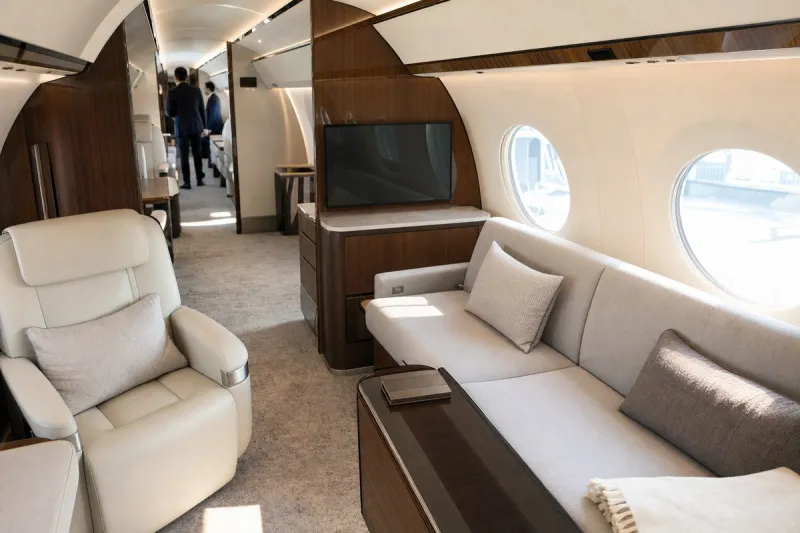
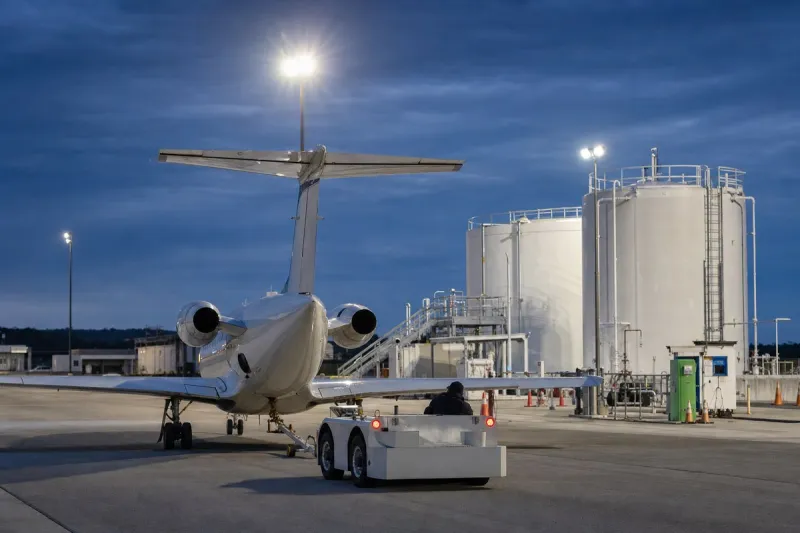
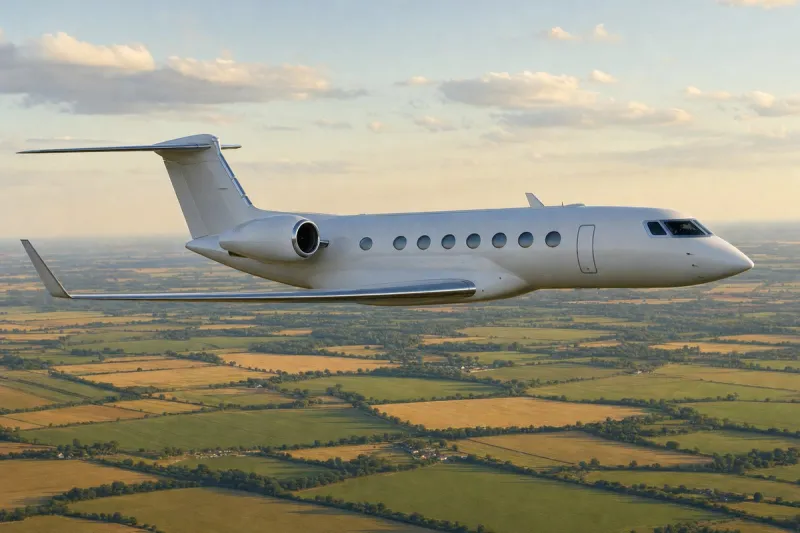
The environmental group Robin Wood is calling for a ban on private jet takeoffs and landings at Hamburg Airport. The campaign rests on a study it commissioned from the Dutch research institute CE Delft, which found that an average of about 7,000 private aircraft took off or landed in Hamburg per year over the past three years. According to Robin Wood, that consistently makes Hamburg the third most-used airport in Germany for private aviation. The 7,000 movements are a small share of the roughly 127,000 total takeoffs and landings at the airport.
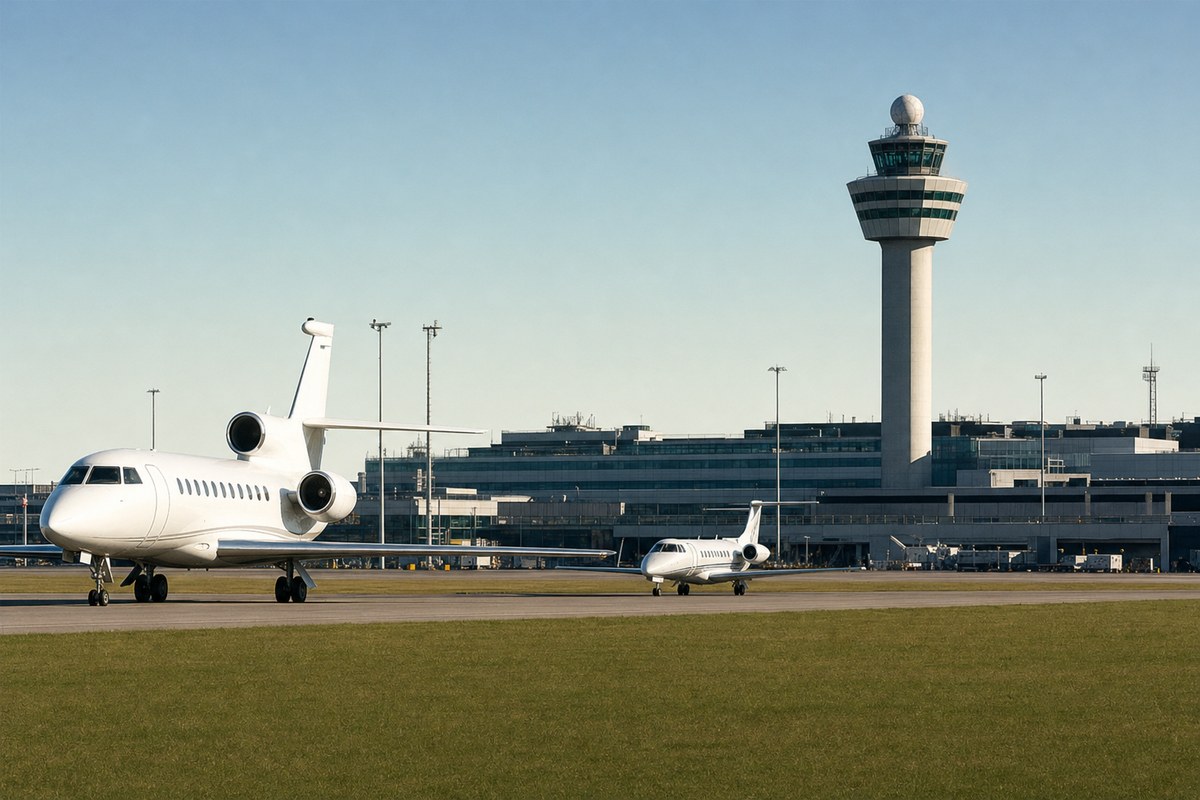
Between 2023 and 2025 the study recorded 448 departures to Palma de Mallorca, 441 to Sylt, 333 to Munich and 308 to Berlin. Sylt can be reached from Hamburg by train in about three hours, and Berlin in under two. The flights were identified using the tracking platforms Flightradar24 and the Private Jets Tracker, produced by the Institute for Policy Studies and the Tax Private Jets project. The category covers aircraft in general, not necessarily jet-powered ones.
CE Delft estimated that private aircraft movements at Hamburg generate roughly 40,000 tons of CO2-equivalent per year. Nearly a quarter of that comes from indirect effects of air traffic: contrails, soot and nitrogen oxides. The authors put an average private flight at six tons of CO2-equivalent, about what an average EU citizen emits in eight months. They also calculated that the 20,000 tons of CO2-equivalent from 3,000 private flights would match the emissions of driving from Hamburg to Berlin about 370,000 times.
Robin Wood campaigner Merle Riebandt said the luxury mobility of very few wealthy people comes at the expense of the public and the climate, and the group demands an immediate takeoff and landing ban for private jets. Hamburg voters moved the city's climate-neutrality target from 2045 to 2040 in October 2025, while preliminary figures showed the city's emissions rose again in 2025. Reported details of the campaign include a June 30 protest banner behind Hamburg's Rathaus and an open letter to the parliament's economic committee backed by Greenpeace Germany and NABU Hamburg.
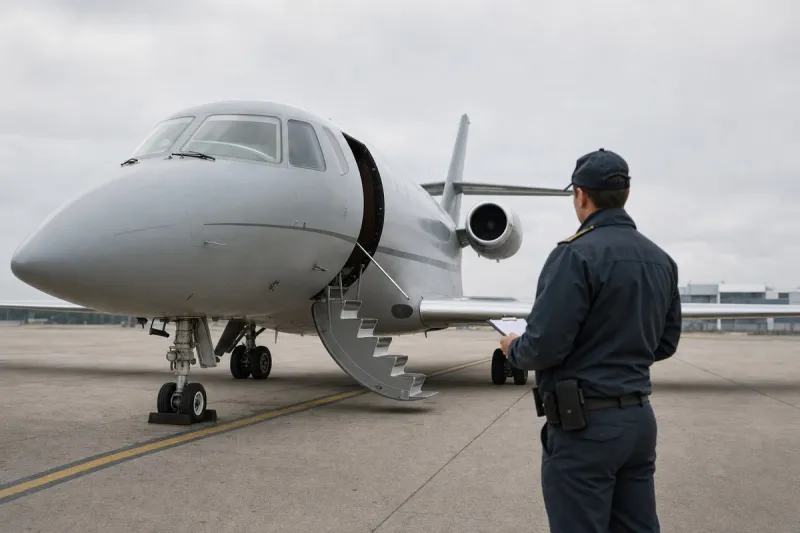
Martin Mosel of the anti-aircraft-noise association BIG Fluglaerm said private jets are also a noise problem and that business flights should be recorded separately, including flight times. Hamburg Airport said there is no separate private-jet category: general aviation flights are handled at its General Aviation Terminal alongside organ transports, rescue, military and training flights. According to the airport, excluding medical flights, only 85 such flights were handled this year in the noise-critical period of 10 to 11 p.m.
Industry impact & what to watch
The dispute exposes a measurement gap that shapes how private aviation can be regulated at any airport. Robin Wood's figures come from third-party tracking platforms and cover aircraft broadly, while the airport says its own records contain no private-jet category at all. A ban aimed at one class of flight is difficult to define when the operator groups that class together with medical, rescue, military and training movements.
The 7,000 movements are a small share of the roughly 127,000 total takeoffs and landings, so the case for action rests on emissions per flight and on destinations reachable by train, not on traffic volume. That framing is the one the campaign has chosen, and it ties the issue to Hamburg's moved climate-neutrality target of 2040.
The next test is the open letter to the parliament's economic committee, which is where the demand for an immediate ban would first meet a formal response. BIG Fluglaerm's call to record business flights separately, with flight times, points to a narrower step that would give both sides the same dataset to argue from.