What Early U.S. Aircraft Registration Prefixes Such as NC and NX Meant
Why It MattersRegistration marks evolved from status codes into purely national identifiers, showing how aviation regulators gradually replace type-specific signals with uniform identification once oversight and aircraft categories become standardized.
What happened
The "N" in U.S. aircraft registrations began under the Air Commerce Act of 1926. In older registrations, the "C" indicated that an aircraft had met commercial or civil-airworthiness standards, while "X" denoted experimental status.
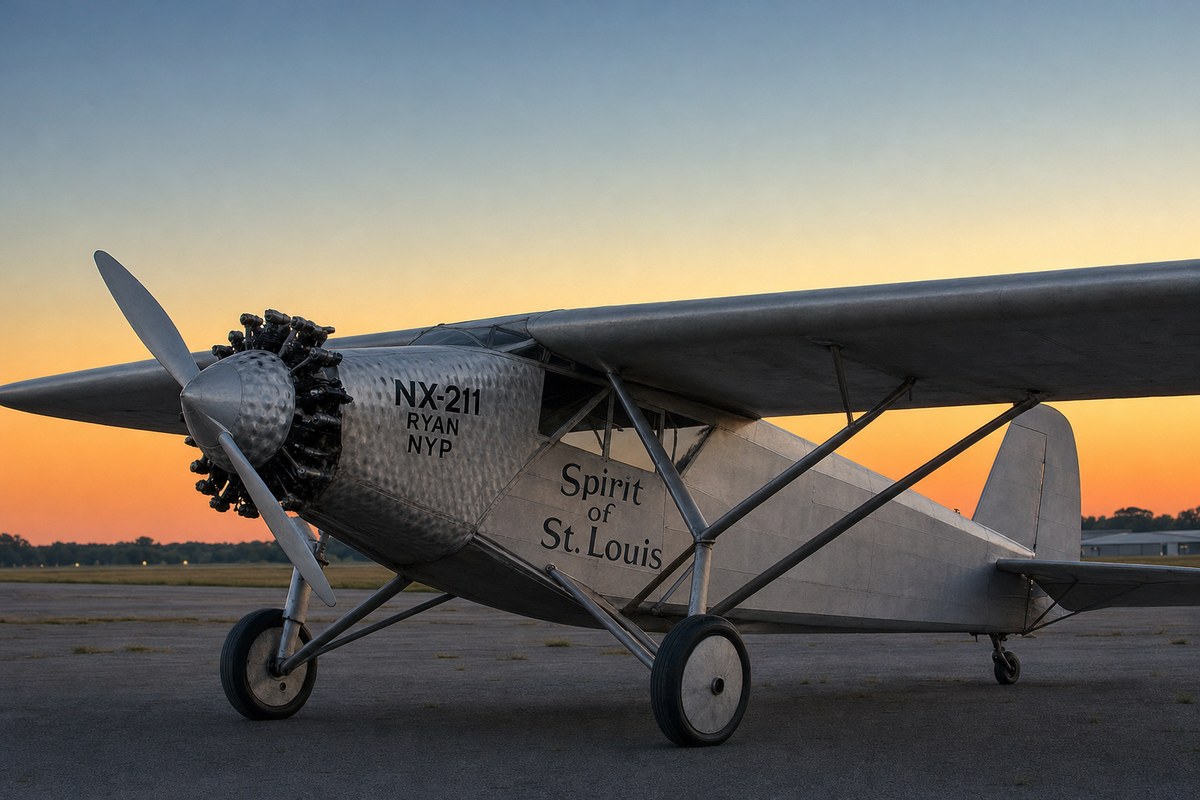
The custom-built Ryan NYP, known as the Spirit of St. Louis, which Charles Lindbergh flew from New York to Paris, carried the number NX211. Here, "N" stood for the U.S., "X" for experimental, and "211" was a specific government-issued registration number. Older aircraft also used "R" for "restricted" and "L" for "limited," both often applied to aircraft under development.
The large numbers and letters on the underside of the wings are sometimes called "buzz numbers," because they made it easy to identify an airplane and track down a pilot who did something foolish such as buzzing someone on the ground. They were often used on military aircraft. The "NC" prefix was phased out in December 1948. In 1958 the FAA began phasing out the large under-wing numbers and moving them to the fuselage and tail, where they remain today. Today, the first letter of an aircraft's designation represents its nation of registration, for example "N" for North America and "C" for Canada.
Industry impact & what to watch
The history of these prefixes shows how registration systems work in practice. Early marks carried information about an aircraft's regulatory status, so an inspector or an observer on the ground could tell whether a machine was certified for commercial work or still experimental just by reading its tail or wing.
Over time that information moved out of the registration mark and into separate certification records, leaving the mark itself as a nation-and-number identifier. The 1948 end of the NC prefix and the 1958 shift of large numbers from the wings to the fuselage and tail mark two steps in that simplification.
For anyone handling older aircraft, historical documents or restoration projects, the lesson is that a prefix such as NC or NX describes the regulatory conditions of its era rather than the present status of the airframe, so period markings should be read against the dates when each convention was in force.