Collins Aerospace Breaks Ground on Propeller MRO Facility in Bengaluru, India
Why It MattersIn-country OEM-authorised propeller overhaul shifts turboprop and military transport support in the region away from overseas shops, tying fleet availability to local capacity that takes years to build.
What happened
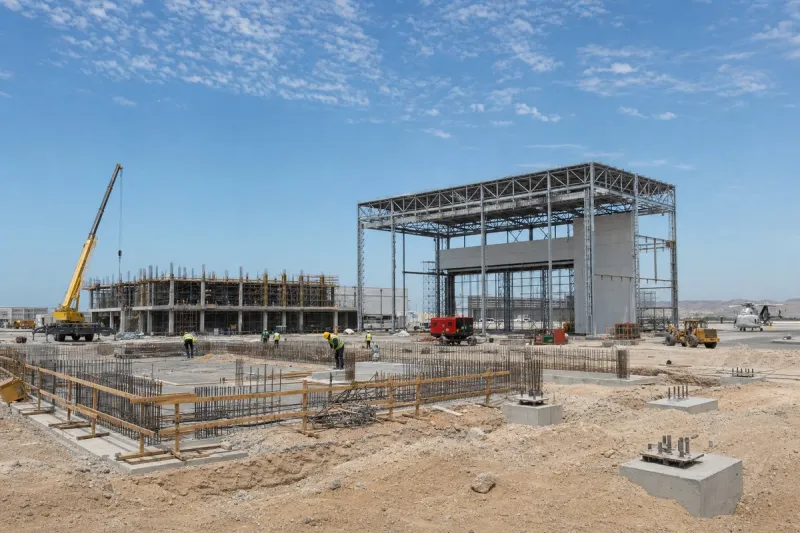
Collins Aerospace has broken ground on a new propeller maintenance, repair and overhaul (MRO) facility in Bengaluru, India, as it expands aftermarket support across the Asia-Pacific region. The facility sits at the Collins India Operations Center (CIOC) and will be the country's first propeller MRO operation authorised by a foreign aerospace original equipment manufacturer (OEM).

It will specialise in propeller systems fitted to ATR 42/72 regional aircraft and Airbus C295 military transport aircraft. The stated aim is to give operators regional maintenance capability intended to reduce turnaround times and aircraft downtime.
The facility is expected to begin operations in early 2029, initially employing up to 50 specialist technicians and engineers, with further workforce expansion planned as maintenance volumes increase. The investment is described as multi-million-dollar and builds on more than $200 million that Collins Aerospace has invested in India over the past five years across engineering, manufacturing, testing and aftermarket services.
Ajay Mahajan, president of advanced structures at Collins Aerospace, said the groundbreaking represents the company's commitment to strengthening India's aviation ecosystem and meeting customer demand. He said that as regional connectivity expands across India, maintaining high fleet availability for operators is critical, and that in-country propeller MRO capability brings aftermarket expertise closer to customers.
The 26-acre manufacturing complex produces more than 70 aerospace products, including mechanical, electromechanical and electronic systems, and incorporates technologies such as artificial intelligence (AI), additive manufacturing and robotics.
Industry impact & what to watch
Propeller overhaul is a narrow, OEM-controlled corner of the MRO market. Operators of turboprop regional types and military transports have generally had to route propellers through a limited number of authorised shops, so every removal carries shipping time, spare-pool demand and out-of-service days. An OEM-authorised shop inside the country where the fleet flies changes that arithmetic for operators of the two types named here.
The pairing of ATR 42/72 and C295 work is also a useful signal about how aftermarket capacity gets justified. Civil regional connectivity and military transport support are different customers with different procurement rhythms, and a single propeller line serving both spreads the fixed cost of the facility across demand streams. That is the logic behind locating capability near fleets rather than concentrating it at a few global hubs.
The timeline is the main constraint on near-term effect: operations are not expected until early 2029, and a start with up to 50 technicians and engineers is a ramp, not a finished capacity. The next milestones that would show how quickly it scales are the first propeller induction, the workforce expansion tied to maintenance volumes, and any announcement of which operators sign on for in-country support.