New Jersey Regulators Open Second Investigation into Severed Fiber-Optic Line That Shut Newark Airport
Why It MattersThe incident shows how a single excavation error far from an airport can cascade into airspace-wide disruption when backup communications links share physical corridors with active construction.
What happened
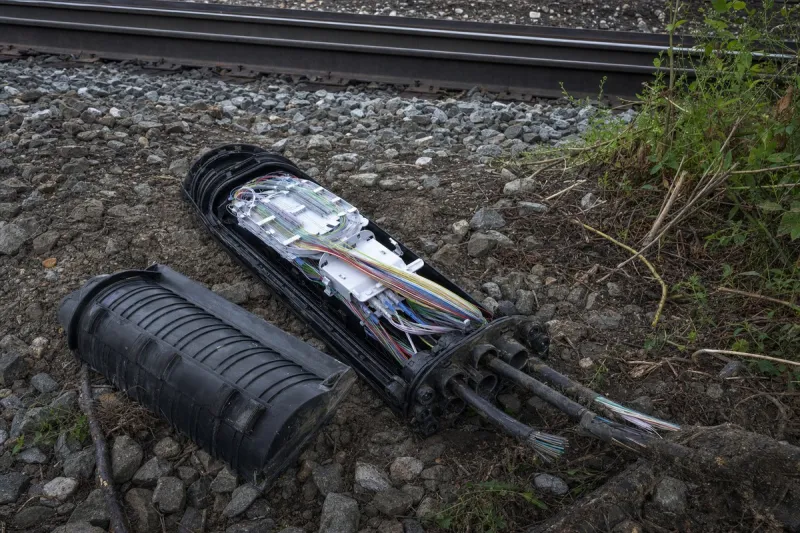
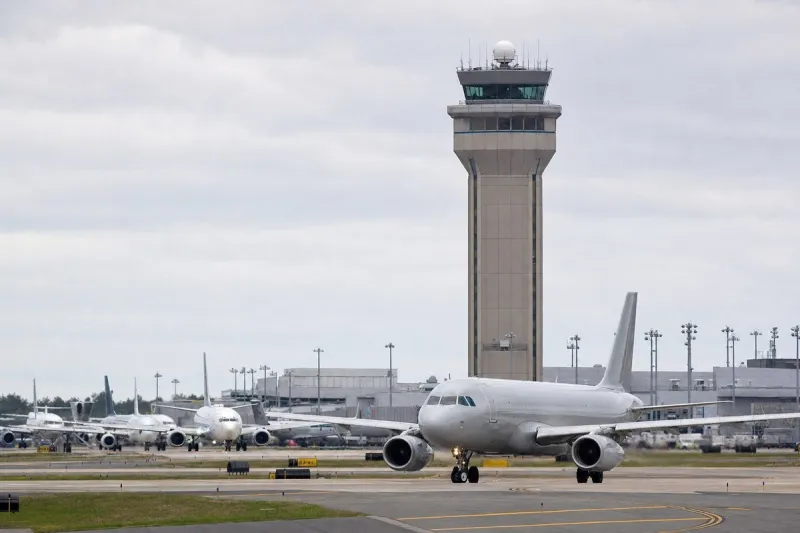
New Jersey's Board of Public Utilities has opened its own investigation into the cutting of a fiber-optic data line that shut down Newark Liberty Airport on Monday, adding a second inquiry alongside an existing Federal Aviation Administration probe. BPU spokesman Alonza Robertson confirmed the state investigation, citing the agency's authority under New Jersey's Underground Facility Protection Act, which requires operators of underground facilities to mark their lines before excavation. Robertson said the BPU "cannot comment on the facts, potential responsibility, or any review associated with a specific incident while those matters are being assessed," but added that the board can pursue corrective measures and reporting requirements if a regulated telecommunications provider is found to have failed to meet its obligations.
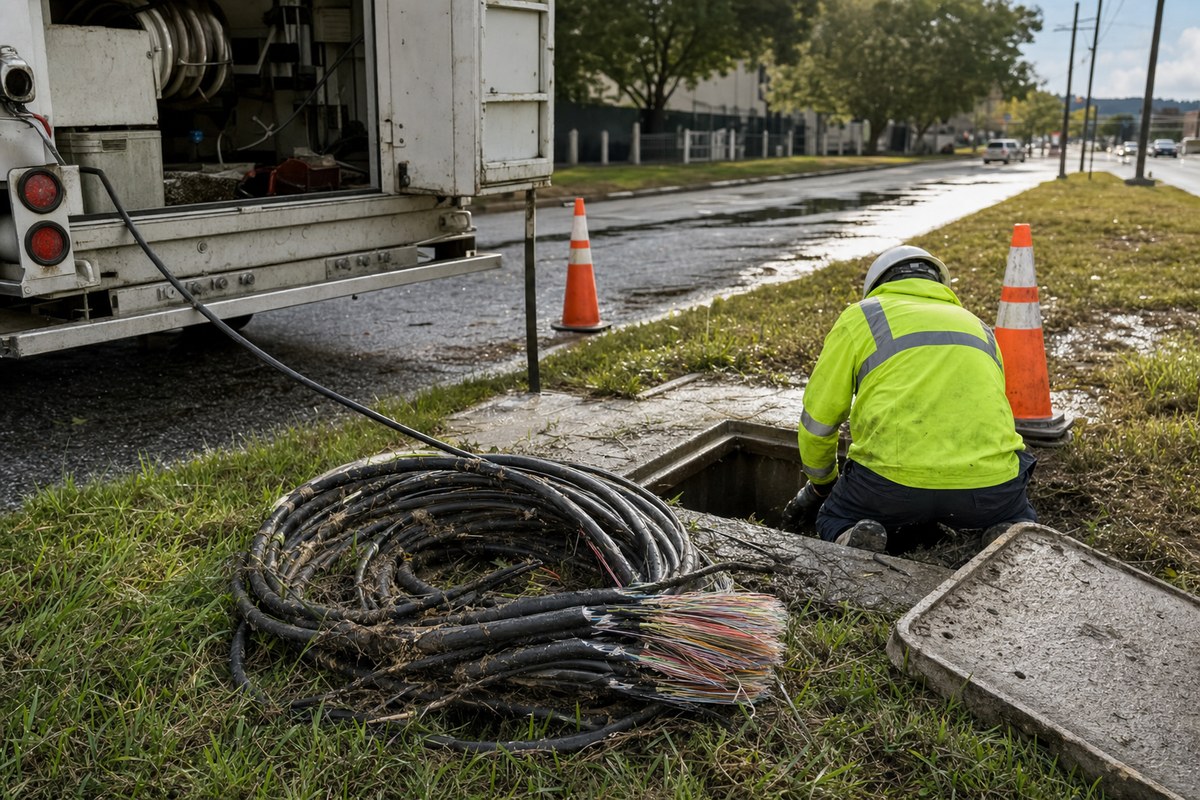
The severed cable was a backup Verizon fiber-optic line connecting Newark Liberty Airport with FAA air traffic control facilities in New York and Philadelphia. It had been installed after a communications failure in April 2025, when a single copper data cable with no backup — linking the Philadelphia Terminal Radar Approach Control center to radar processing equipment in Westbury, New York — failed and blacked out radars and radio frequencies for 90 seconds. Verizon subsequently committed to installing the new high-speed fiber-optic line between Philadelphia and New York.
On Monday morning, a construction crew at a NJ Transit work site accidentally cut the data line at a rail yard between New Brunswick and North Brunswick along the Northeast Corridor tracks, more than 21 miles southwest of the airport. NJ Transit identified the crew as contractors working on its Delco Lead Project, which involves construction of emergency storage tracks and inspection facilities to protect rail cars and locomotives during severe weather. NJ Transit said preliminary information indicates the crew was operating approximately 10 feet from the utility markings.
The loss of the line forced Newark Liberty to shut down for hours, resulting in the cancellation of 629 flights, according to FlightAware. Cancellations and delays continued into Tuesday as airlines rescheduled flights, and the line has since been repaired, with operations at Newark Liberty appearing near normal by Thursday. Greg Finkle, a licensed professional engineer and owner of Trinity Subsurface, a Delaware-based utility locating and mapping firm, said active construction environments present significant challenges for utility marking, noting that paint wears off under traffic and weather, stakes get knocked over, and marks go stale as projects extend over time. He added that electromagnetic locating equipment can be misled by interference from nearby metal, overhead power lines, rail infrastructure, and congested buried utility corridors. Finkle noted that New Jersey law requires hand digging or other non-destructive methods within two feet on either side of a marked utility, but a crew working 10 feet from the marks would fall outside that mandatory zone, saying "when marks are inaccurate, the safety net built into the law doesn't catch it."
Industry impact & what to watch
This case belongs to a category air traffic control has faced repeatedly in recent years: a single point of physical failure, far removed from an airport itself, propagating into airspace-wide disruption because ground infrastructure and aviation communications share the same buried corridors. The April 2025 Philadelphia-Westbury outage prompted a fix meant to eliminate exactly this vulnerability by adding a backup line — yet the replacement was severed within months by unrelated construction, showing that redundancy only holds if the new path is routed and protected differently from the one it replaces.
How airport-to-TRACON links are protected depends heavily on ordinary utility-marking practice, which this incident exposes as fragile in active construction zones. Finkle's account of paint wearing off, stakes shifting, and electromagnetic locating equipment being confused by rail infrastructure describes a system where the two-foot hand-digging buffer New Jersey law mandates only functions if the marks themselves are accurate — and a crew working ten feet away, as NJ Transit's preliminary information indicates here, falls outside that buffer regardless of whether the marks were right or wrong.
What happens next runs on two separate tracks: the FAA's inquiry into the aviation-communications exposure this created, and the BPU's inquiry under the Underground Facility Protection Act into whether marking obligations were met. Robertson said the board can impose corrective measures and reporting requirements if a regulated provider is found at fault, which would bear on how Verizon and NJ Transit approach future work near shared corridors carrying FAA links.