Trump Administration Expands ATC Modernization Plan to Include Airport Terminals, Raising Cost by $10 Billion
Why It MattersBundling terminal rebuilds into an air traffic control funding package shows federal aviation money being pooled across infrastructure categories, with medium hubs that lack other funding sources the intended beneficiaries.
What happened
The Trump administration has broadened its Brand New Air Traffic Control System (Bnatcs) modernization effort over the last two months by attaching a pilot grant program to rebuild passenger terminals at medium hub airports. The expansion has raised the price of the modernization by $10 billion. Transportation Secretary Sean Duffy unveiled Bnatcs in May 2025 as a fast-track, three-year overhaul of the nation's aging air traffic control (ATC) infrastructure, originally expected to cost about $32 billion. Congress appropriated $12.5 billion to start the work.

New legislation, the Modern Skies Act, would raise $30 billion more from Congress for the second phase of Bnatcs and for airport terminal rehabilitation, bringing the total price to about $42 billion. Sen. Eric Schmitt was chosen to spearhead the bill. Robert Poole, Director of Transportation Policy at the Reason Foundation, wrote in the October edition of Aviation Policy News that the act in total would provide $18 billion for airports, because it leverages another $5 billion to continue the airport terminal improvement program of the 2021 Bipartisan Infrastructure Law.
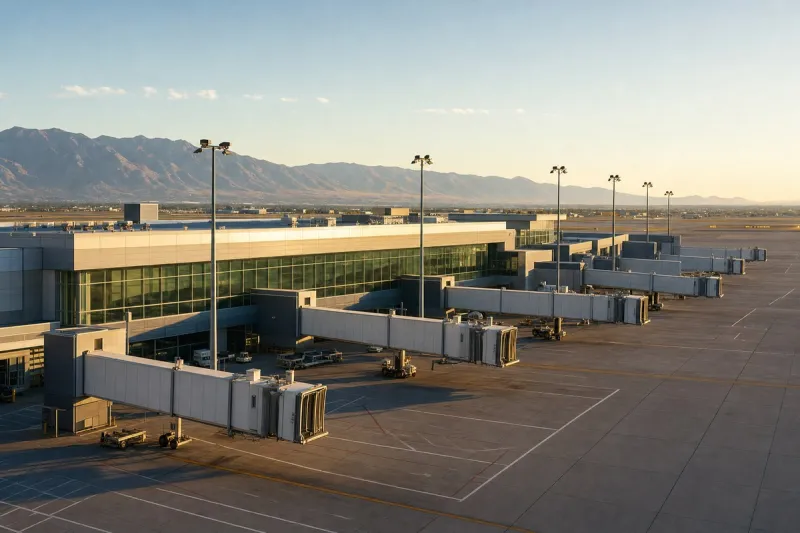
For ATC, the legislation seeks $10 billion to complete a reliable digital architecture for Bnatcs, according to the Transportation Department (DOT), including $7.2 billion for a Common Automation Platform and a common controller workstation. Another $10 billion would fund replacement of aging ATC towers and facilities. Under the bill, the transportation secretary, not the FAA administrator, would issue grants to the sponsors of up to three "transitional hub airports," defined as airports the FAA classifies as medium hubs with a terminal building constructed before 1990.
FAA Administrator Bryan Bedford told Aviation Week that the Secretary knows the $10 billion is needed to finish modernizing air traffic control, but also sees a huge need for ATC towers and a massive renovation of some airport terminals. He said medium hub airports lack the ability to get funding through other sources, and that Duffy is seeking a more holistic solution that addresses infrastructure needs beyond modernization.
Separately, Bedford declined to comment on an Oct. 15 Politico report that the FAA may acquire an ownership stake in Air Space Intelligence, the software firm selected to provide the Strategic Management of Airspace, Routing and Trajectories system, an AI-enabled decision-support tool for controllers. Asked to confirm or deny the report, Bedford said there was nothing today.
Industry impact & what to watch
Folding terminal rebuilds into an air traffic control modernization bill changes what the money is competing against. Airport capital programs and ATC system upgrades have usually been argued as separate funding questions; here they share one appropriation request and one set of political sponsors. For airports, that makes the case for terminal funding partly a case about the overall Bnatcs program, and for the ATC program it adds a constituency of airport sponsors with an interest in the bill passing.
The design of the grant program also matters. Limiting awards to up to three transitional hub airports, defined by medium hub status and a pre-1990 terminal, makes this a narrow pilot rather than a broad entitlement, and placing grant authority with the transportation secretary rather than the FAA administrator concentrates decisions at the department level. Which airports qualify under that definition, and how many of them compete for three slots, will shape how much of the $18 billion airport figure Poole cites reaches any one community.
The next dated checkpoint is congressional action on the Modern Skies Act itself, since the additional $30 billion is a request, not an appropriation. Separately, the FAA's position on the reported Air Space Intelligence ownership stake is unsettled: Bedford said there was nothing to report on it when asked.