Gulf Conflict Risk Becomes a Winter Planning Constraint as Overflight Politics and a Strong El Nino Squeeze Operating Margins
Why It MattersFor private and charter flying, the binding limit has moved from outright closures to the cost of using open airspace: longer routings, thinner alternates, harder insurance questions and tighter crew duty margins.
What happened
The main risk to private and charter aviation at the end of November is not widespread airspace closure but a widening band of airspace that remains legally usable while carrying materially elevated risk. Little commercially significant airspace is closed outright. The cost of using it has risen through longer routings, thinner alternate options, harder insurance questions and tighter crew duty margins, with the pressure concentrated in the Gulf.

Nine months after the Iran war began with US and Israeli strikes at the end of February, the conflict has not stabilised. Iranian retaliation has drawn in Lebanon, Yemen and Iraq, and Arab officials warn of a possible return to full-scale fighting between the United States and Iran. Attacks in the maritime reporting area covering the Strait of Hormuz, the Persian Gulf and the Gulf of Oman reached at least 22 in November, the second-highest monthly figure since the war began and roughly double the pre-October average of about ten.
Houthi forces have claimed attacks on the financial district of the Saudi capital and on the Ras Tanura refinery, and a drone attack in Riyadh injured 11 people on November 24. On November 26, international passenger flights were rerouted around Kuwaiti airspace after Kuwaiti air defences intercepted multiple drones targeting a critical facility. Accounts of the toll differ: one report cites four people injured by falling debris, another states that two Italian nationals were killed. Traffic between Europe, the Middle East and Asia was pushed through neighbouring states.
The regulatory status differs by country. The Kuwaiti restrictions on November 26 were temporary and reactive. EASA bulletins are advisory rather than mandatory. The FAA has a caution notice on Saudi airspace in force through at least December 10, and Safe Airspace maintains a Level 1 "do not fly" recommendation for Saudi airspace, citing Houthi missile and drone activity.
Elsewhere, Pakistan's airspace ban on Indian aircraft runs to December 24, and several Lahore flight information region routes were closed on the mornings of November 25 and 26 for stated operational reasons. Nepal has pressed India for additional airspace access. Washington has asked the UN aviation agency to examine the withdrawal of overflight permissions for Taiwan's president en route to Africa, after Mauritius and Seychelles imposed restrictions and the trip proceeded only aboard another head of state's aircraft.
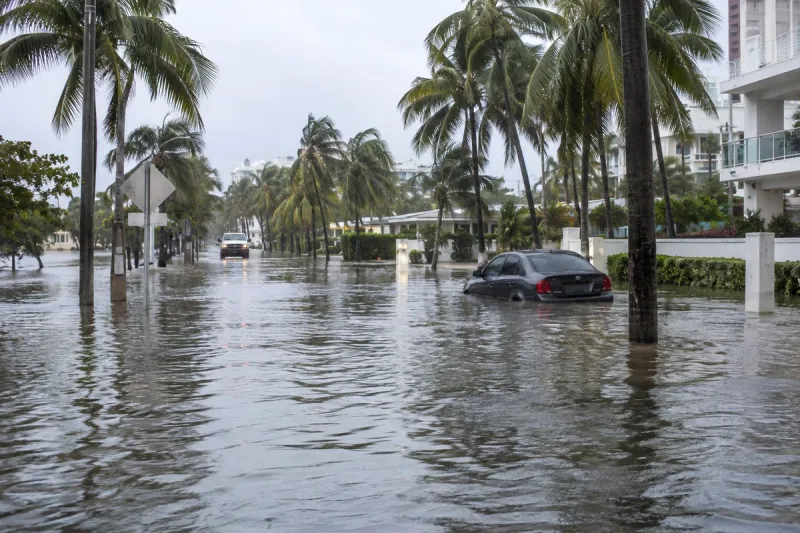
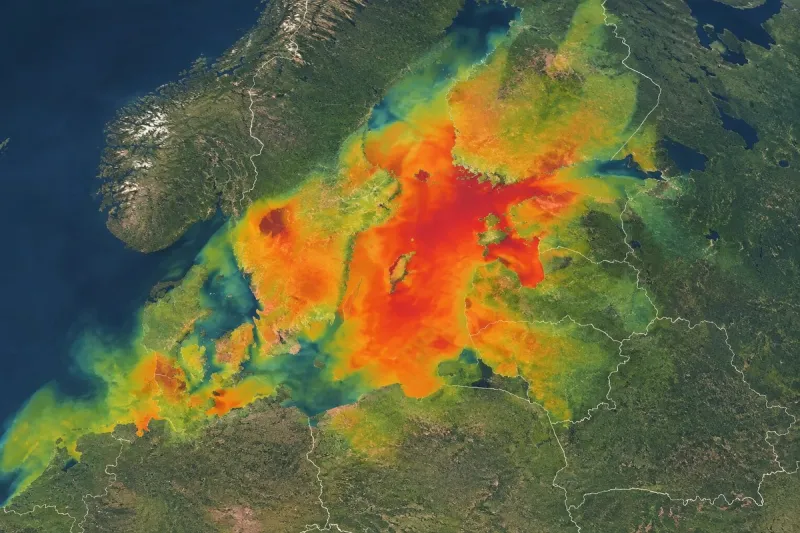
On weather, the World Meteorological Organization describes the current El Nino as beyond the monitoring charts of the past four decades, with tropical Pacific anomalies projected near 3.8 degrees Celsius above average through January. NOAA puts strong-to-very-strong conditions through March at above 79 percent probability. Expected effects include coastal flooding in California, wetter conditions in the southeastern United States and parts of South America, and drought and wildfire risk in Southeast Asia, Australia and southern Africa.
Industry impact & what to watch
The shift described here changes where the constraint sits. A closed airspace is a clean planning fact: a route is either available or it is not. Airspace that is open but dangerous is harder, because the limit shows up in secondary decisions: which alternates are credible, how much fuel a longer leg demands, and how much duty time is left once a detour is flown. In the Gulf, overwater alternates in the southern part of the region become planning liabilities, which forces longer legs and more conservative fuel and crew planning.
Advisory instruments carry weight beyond their legal status. EASA bulletins are not mandatory, yet European operators treat them as de facto constraints, and underwriters are likely to do the same. For charter and fractional operators this means insurance questions can bind before any regulator does, and an unusually strong El Nino winter stacks weather-driven schedule risk on top of the geopolitical routing cost.
Several dated milestones will show whether the squeeze tightens or eases: whether the United States resumes strikes after the new year and how Iran responds; whether EASA extends or widens its bulletins beyond January 31; whether the FAA's Saudi caution is renewed after December 10; and whether Pakistan's ban lapses on December 24 or is rolled over. The ICAO review of withdrawn overflight permissions may also set a precedent for how such restrictions are handled.