Synthetic aviation fuel projects advance across Europe, Africa, US and China
Why It MattersThe parallel progress of eSAF projects across multiple continents signals broadening industrial commitment to synthetic fuel pathways as an alternative aviation decarbonisation route.
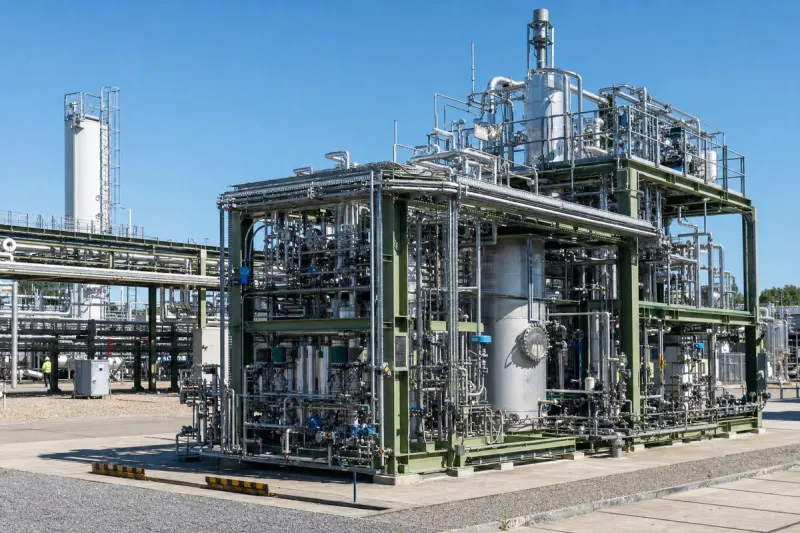
Metafuels opened its Aerobrew methanol-to-jet demonstration facility at the Paul Scherrer Institute in Villigen, Switzerland, in August, and has signed a collaboration agreement with Hamburg-based MB Energy on market access, blending, infrastructure, logistics and certification for its Turbe commercial-scale eSAF project at the Port of Rotterdam, targeting production from 2030. Also in Switzerland, Synhelion signed a memorandum of understanding with three Moroccan ministries and the country's Investment and Export Development Agency to build a synthetic fuel plant in the Guelmim-Oued Noun region, planned to produce 100,000 tonnes of renewable jet fuel, diesel and gasoline annually; the company has opened a Moroccan branch and gained Casablanca Finance City status, while its DAWN plant near Cologne, Germany, has produced solar synthetic fuels since summer 2024.
In South Africa, the Phelan Green Group announced a Final Investment Decision on the first phase of its 35,000-tonne Hopefield eSAF project near Saldanha Bay, following family board approval of a R12 billion ($73 million) investment within a R47 billion ($2.9 billion) three-phase project; construction is expected to start in early 2027 with production targeted from 2029, using licensed technologies from Johnson Matthey and Honeywell UOP. In Denmark, Arcadia eFuels signed a 10-year-plus offtake agreement under which Uniper will purchase 40,000 tonnes of eSAF annually from Arcadia's Project ENDOR facility in Vordingborg, which received EU Innovation Fund grant support in March 2025 and awaits Final Investment Decision, with supply foreseen from the early 2030s.
In the United Kingdom, Carbon Neutral Fuels signed a memorandum of understanding with Australian company Energy Estate's subsidiary BioNQ Developments to evaluate a SAF project in North Queensland using sugarcane waste, alongside its separate Project Starling and Project Osprey developments. In the United States, Twelve secured a $45 million refinancing credit facility, led by Endurance Capital and Nomura, for its AirPlant One facility in Moses Lake, Washington, which uses power-to-liquid technology powered by Columbia River hydropower. In China, Carbonology, founded by former Tesla executive Robin Ren, began construction of a 1,000-tonne direct air capture to eSAF pilot plant in Ningdong, following its earlier Shanghai R&D center and 100-tonne-scale test line.