Embraer E175 Meets Noise Rules but Trails Newer Regional Jets Because of Its Late-1990s CF34-8E Engines
Why It MattersRegional-jet noise performance now tracks engine generation: geared high-bypass fans set a new benchmark, so the large installed base of older-engine aircraft sits increasingly behind the newest types in its class.
What happened
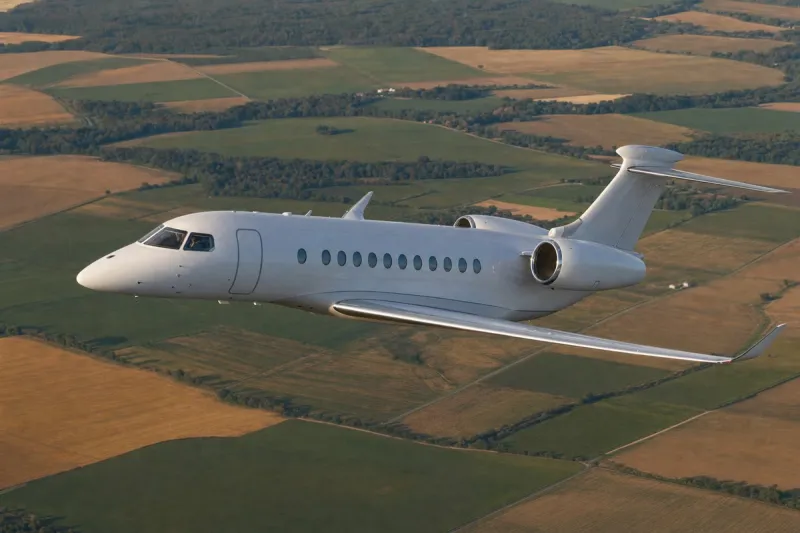
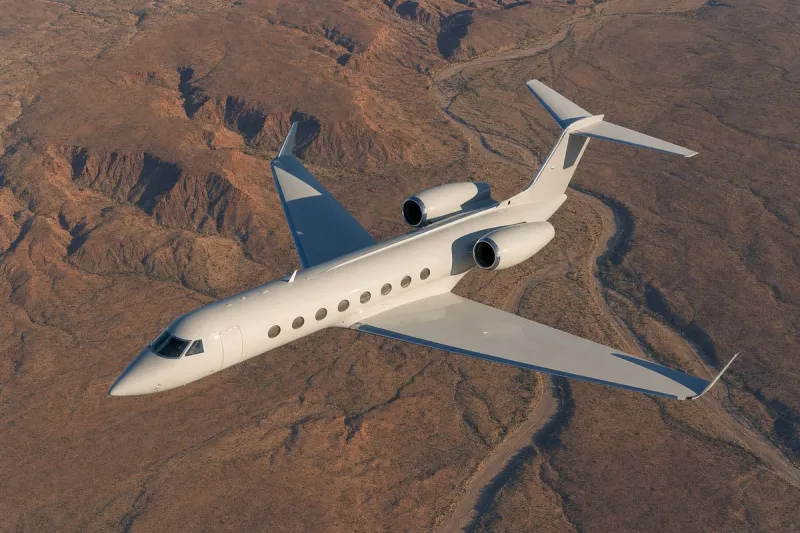
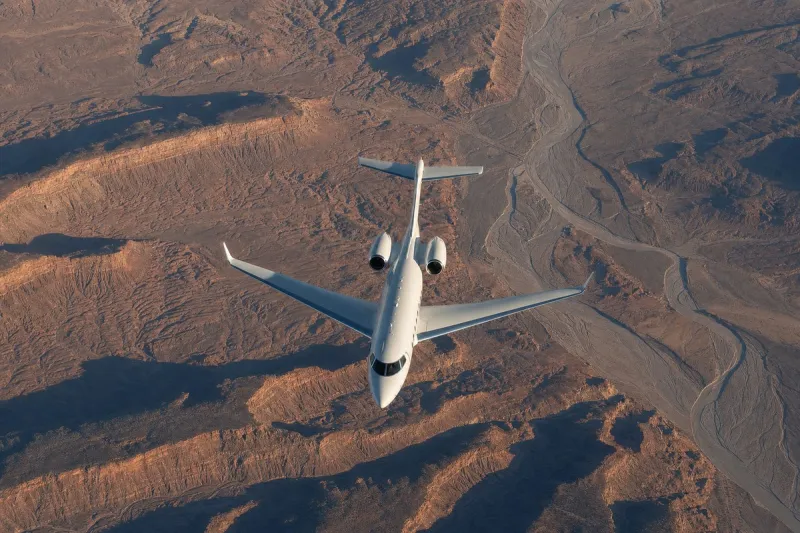
The Embraer E175, which launched in 1999 and entered commercial service with Air Canada in 2005, complies with current noise regulations. Newer aircraft in its class are outperforming it on noise.

The E175 is the most popular member of the E-Jet family. Over 1,700 E-Jets had been built as of last December: 196 E170s, 805 E175s, 570 E190s and 173 E195s. At that point 781 E175s remained in active service, against 144 E170s, 399 E190s and 129 E195s. The type remains in production, driven by demand in the US, where it holds an approximate 80% share of the regional jet segment, according to the Ready For Take-Off Book.
According to European Union Aviation Safety Agency type certification documents, an E175 weighing 85,517 lb (38,790 kg) at takeoff was measured at 84.4 effective perceived noise decibels in a 2025 flyover. A CRJ900 of similar weight recorded 83.9 decibels, based on documents from two years earlier. Research from US Credit Card Guide puts the E175's average cabin noise at 66.9 dB, louder than the Airbus A380 (56.0 dB), A350 (60.8), Boeing 787 (61.9), Airbus A330 (63.2), Boeing 777 (65.7) and Boeing 757 (65.8), but quieter than the Boeing 767 (67.4), Airbus A320 (68.5) and Boeing 737 (69.6).
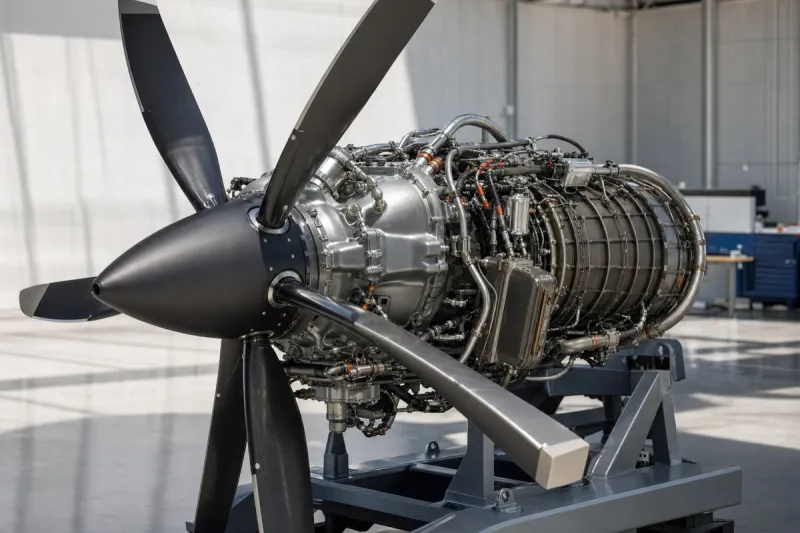
The E175 is powered by two GE Aerospace CF34-8E engines, whose development began in the late 1990s. The engine has a bypass ratio of 5:1 and produces up to 14,500 lbf (64.5 kN) at takeoff. The Pratt & Whitney PW1500G on the Airbus A220, by comparison, has a 73-inch fan and a 12:1 bypass ratio, and uses a gearbox that lets the fan turn slower, reducing noise. Airbus says the A220's noise footprint is as much as 50% smaller than previous-generation aircraft.
Embraer's E2 family, launched in 2013, is also considered among the quietest commercial aircraft, according to AirInsight. The E190-E2 and E195-E2 use the PW1900G (73-inch fan, 12:1 bypass ratio). The planned E175-E2 will use the PW1700G, with a 56-inch fan, a 9:1 bypass ratio and 14,000 to 17,000 lbf (62.28 to 75.62 kN) of thrust, and should be quieter than the original E175. Noise varies with seat location and flight phase; takeoff is among the loudest phases because engines run at high thrust. Embraer and GE Aerospace were approached for comment.
Engine generations and the noise gap
The comparison comes down to fan size and bypass ratio. The CF34-8E runs a 5:1 bypass ratio; the PW1500G and PW1900G run 12:1 with 73-inch fans, and the gearbox on the geared designs lets the fan turn slower, which is where the noise reduction comes from. The PW1700G planned for the E175-E2 sits between the two at 9:1 with a 56-inch fan.
That places the current E175 in an unusual position: compliant with the rules, popular enough to dominate its segment in the US, and still measurably behind types designed around newer engine architecture.
Industry impact & what to watch
Noise certification sets a floor, not a ranking. An aircraft can meet every current requirement and still compare unfavourably with types built around a later engine generation, which is the situation the E175 is in. For regional operators the practical effect is that noise performance becomes a fleet-composition question rather than a compliance one, because the installed base of 781 active E175s is large and will not turn over quickly.
The US regional market shows why that matters. With the E175 holding roughly 80% of the segment, the type's noise profile effectively defines what many communities hear from regional service, and any shift toward quieter equipment depends on whether the E2 line, and the E175-E2 in particular, reaches that customer base. The E175-E2 is still a planned variant, so its PW1700G figures are design targets rather than measured results.
The next concrete milestone is the flyover noise data an E175-E2 would generate once it is certified; until then, the gap between the E175 and the A220 and E190-E2 rests on engine specifications and the figures already published by EASA, Airbus and AirInsight.