Privé Jets Launches Jet Card With Fixed Hourly Rates, 10-Minute Taxi Allowance, and Non-Expiring Deposits
Why It MattersJet card pricing is increasingly differentiated not just by hourly rate but by how ancillary costs like taxi time and de-icing are structured, shaping total mission economics for buyers.
What happened
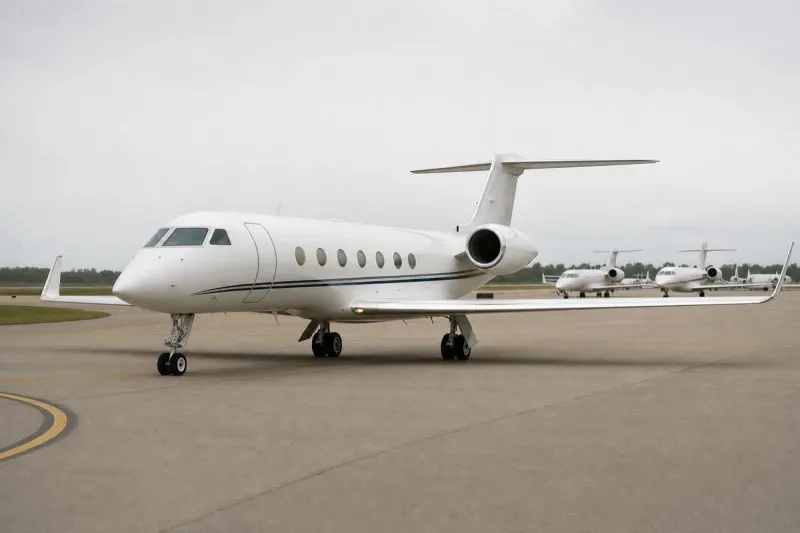
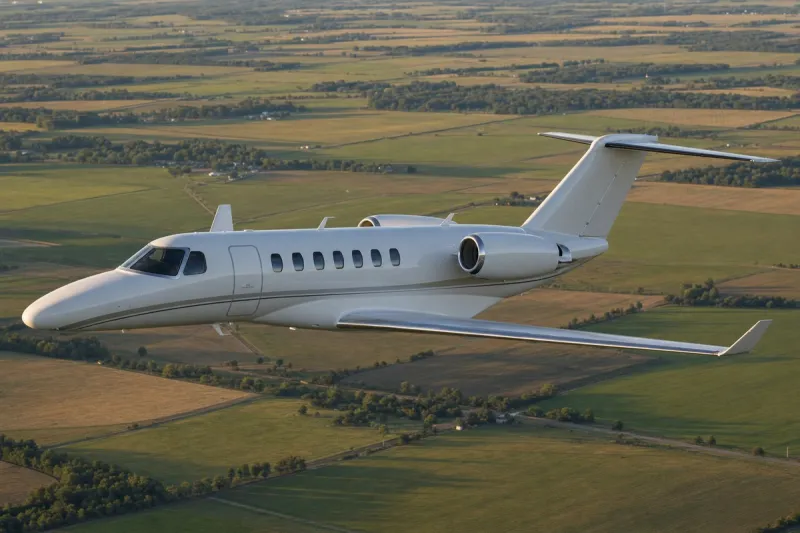
Privé Jets, the private aviation company founded in Miami in 2007, announced a new Jet Card program on October 3, 2026, aimed at corporations, aviation departments and frequent private flyers. The program locks in fixed hourly rates for 12 months: $8,882 per hour for Midsize jets, $9,882 per hour for Super Midsize, and $12,882 per hour for Heavy Jets. Membership requires a $199,882 deposit, and deposited funds do not expire.

A core feature is a fixed 10-minute taxi allowance, which Privé Jets says delivers greater cost predictability than competing programs that bill actual taxi time or apply higher fixed allowances. Flights are otherwise billed on actual flight time, subject to program terms and applicable minimums, and de-icing is included in the program. Clients can move between Midsize, Super Midsize and Heavy Jet categories depending on mission requirements, and the company positions the card as supplemental lift for corporate flight departments when an in-house aircraft is unavailable due to scheduled maintenance, unexpected downtime, simultaneous executive travel, or a mission requiring a different aircraft category.
Privé Jets published representative route pricing: Houston to New York is estimated at $30,938 (Midsize), $34,257 (Super Midsize) or $42,081 (Heavy Jet); New York to Aspen at $41,893, $46,116 or $56,036 respectively; and Miami to Punta Cana at $25,076, $27,538 or $34,007. Federal Excise Tax is not included and will be added where applicable, and final charges may vary based on actual flight time, international charges, airport-specific fees and other mission-specific conditions. Andres Arboleda, co-founder and COO of Privé Jets, said: "Sophisticated private aviation clients aren't simply comparing hourly rates. They want to understand the complete economics of a mission — how time is calculated, what is included and what they can expect before they fly." Founded in 2007, Privé Jets has received multiple World Travel Awards across North America, South America and the Caribbean and has appeared on the Inc. 5000 list for six consecutive years.
Industry impact & what to watch
Jet card programs compete on more than the headline hourly rate, and this launch is built around that distinction: taxi allowance, de-icing inclusion and deposit expiry are all structural terms that shift total mission cost without changing the rate card itself. Framing a 10-minute taxi allowance as a differentiator only matters relative to what competing programs charge for the same line item, so buyers comparing cards need to price out a representative mission end-to-end rather than rate-shop by the hour.
The category-flexible structure, letting a single deposit move across Midsize, Super Midsize and Heavy Jet aircraft, also speaks to how flight departments use these cards: as a buffer against scheduled maintenance or downtime rather than as a primary lift source. That positioning depends on real-world availability matching the published rate card when a mission actually requires a category swap.
What remains to be seen is how the fixed 12-month rate holds up against fuel and market conditions over that period, and whether the non-expiring deposit structure changes client retention compared with jet cards that carry expiration terms.