Global Charter Jet Service Market Forecast to Reach $86.32 Billion by 2035, Growing at 7.9% CAGR
Why It MattersGrowth forecasts point to jet cards, fractional ownership and digital booking platforms as the structural channels absorbing rising demand rather than traditional on-demand charter alone.
What happened
Spheric Insights & Consulting has published a forecast projecting the global charter jet service market will expand from $43.06 billion in 2025 to $86.32 billion by 2035, a compound annual growth rate of 7.9% across the 2026–2035 period.

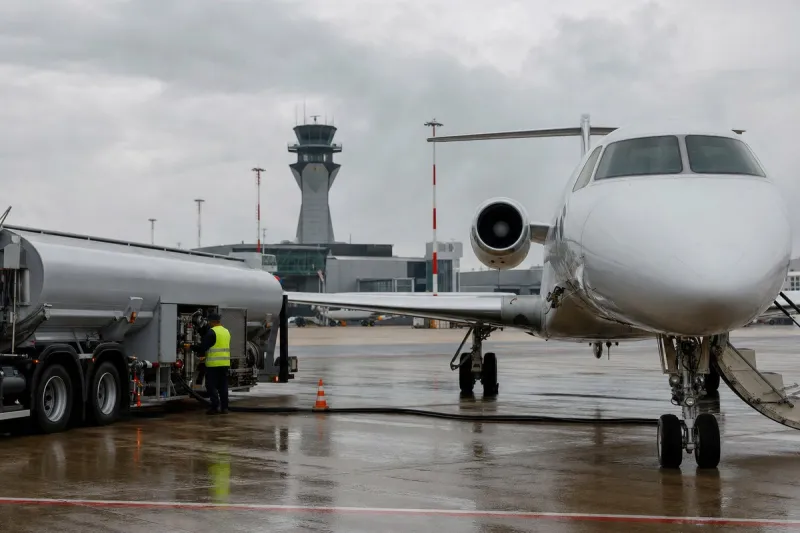
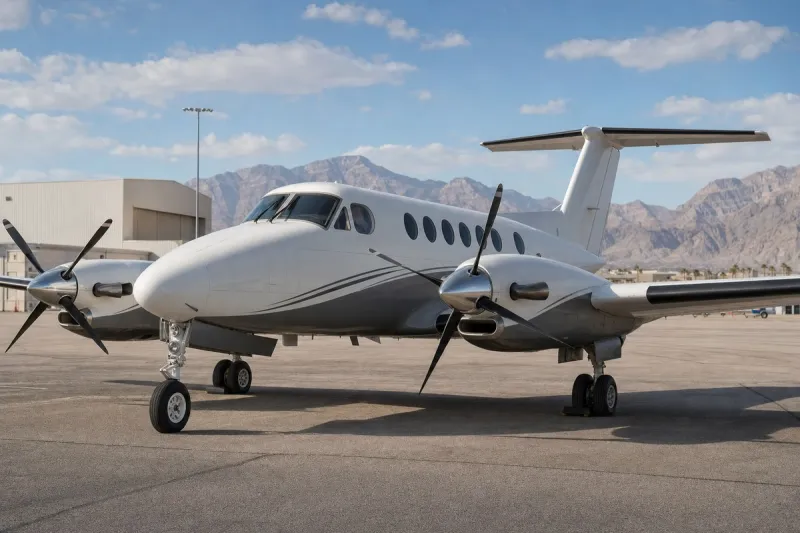
The report attributes the growth to rising demand from high-net-worth individuals and business travelers, a growing preference for flexible and time-efficient travel, expansion of fractional ownership and jet card programs, and increased investment in fleet modernization and digital booking platforms. It defines the market as covering on-demand and pre-arranged private flights that let individuals, corporations, and government entities charter entire aircraft for business, leisure, medical, or cargo purposes, with operators offering light jets, midsize jets, heavy jets, and turboprops through on-demand charter, fractional ownership, jet card programs, and empty-leg flights.
North America is expected to generate the highest revenue over the forecast period, citing established private aviation infrastructure, a large base of business and leisure travelers, extensive FBO networks, and strong adoption of fractional ownership and jet card programs, with NetJets, Flexjet, and Wheels Up named as operators reinforcing the region's position. Asia-Pacific is forecast to record the fastest growth rate, driven by expansion of high-net-worth individual populations, increasing cross-border business travel, tourism growth, and rising investment in private air infrastructure across China, India, and Southeast Asia. The report also lists trends including growing adoption of jet card and membership programs, expansion of digital booking and on-demand charter platforms, greater use of AI-driven dynamic pricing and fleet matching, rising uptake of sustainable aviation fuels, growing demand for empty-leg and shared charter flights, and increasing integration of predictive maintenance technologies.
Industry impact & what to watch
A ten-year forecast of this kind describes an industry betting on distribution innovation as much as raw flight volume: jet cards, fractional shares, and empty-leg matching are the mechanisms through which growth is expected to be captured, not simply more one-off charter flights booked the traditional way.
That has a structural implication for how charter economics work over the period in question. If digital booking and AI-driven pricing and fleet matching scale as described, the barrier to entering brokerage or light operator status could lower, since matching supply to demand becomes less dependent on manual network relationships and more on platform reach. Regional divergence also matters here: North America's growth is framed around already-dense FBO and fractional infrastructure, while Asia-Pacific's faster rate is framed around infrastructure still being built out, meaning the two regions may reach the same demand curve through very different operator and asset structures.
What would confirm or undercut this trajectory is whether fleet modernization investment and sustainable aviation fuel uptake actually materialize at the pace assumed, since both are named as growth drivers without separate figures attached. The next signal to watch is whether individual operators named in the region, such as NetJets, Flexjet, and Wheels Up, report fleet or program expansion that tracks the projected curve, or whether growth concentrates instead in newer entrants building out Asia-Pacific infrastructure.