MTU Aero Engines' Adjusted Operating Profit Tops €1 Billion After Nine Months for First Time; Revenue Guidance Updated
Why It MattersMTU's mix of maintenance-led growth and flat commercial engine sales shows how engine-maker earnings now rest on aftermarket volume, with margin held back by the shift toward shop visits.
What happened
MTU Aero Engines AG reported adjusted revenue of €7.1 billion for the first nine months of 2026, up 13% from €6.3 billion a year earlier. Adjusted operating profit (EBIT) rose 5% to €1,042 million, against €995 million in the same period of 2025. Adjusted net income rose 4% from €720 million to €751 million. CEO Johannes Bussmann said demand for the company's products and services remains consistently high.
The company updated its 2026 guidance. Adjusted revenue is now expected to reach €9.5 billion to €9.7 billion, narrowed from the previous range of €9.2 billion to €9.7 billion; the update reflects strong demand and a more favorable U.S. dollar/euro exchange rate. Organic revenue growth in commercial maintenance is now expected in the mid-teens percentage range, previously low- to mid-teens, and the same applies to the spare parts business. Growth in the commercial series business is now seen in the mid to high single digits, originally mid to high teens.
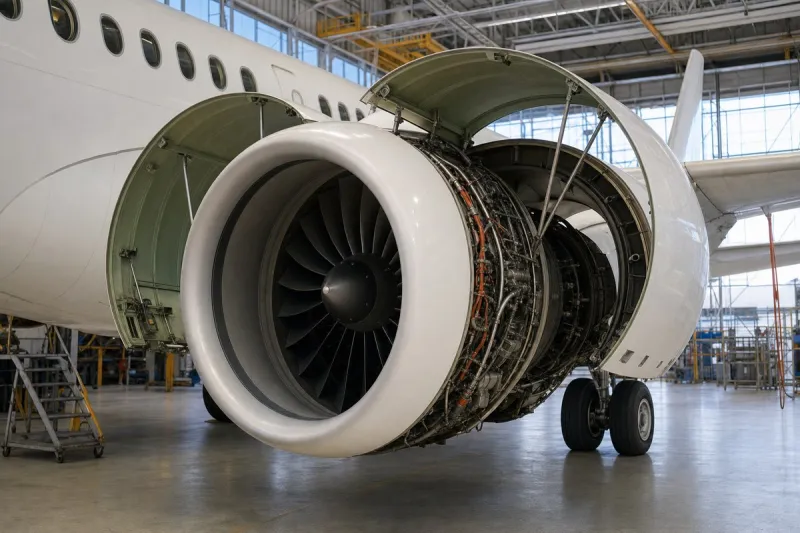
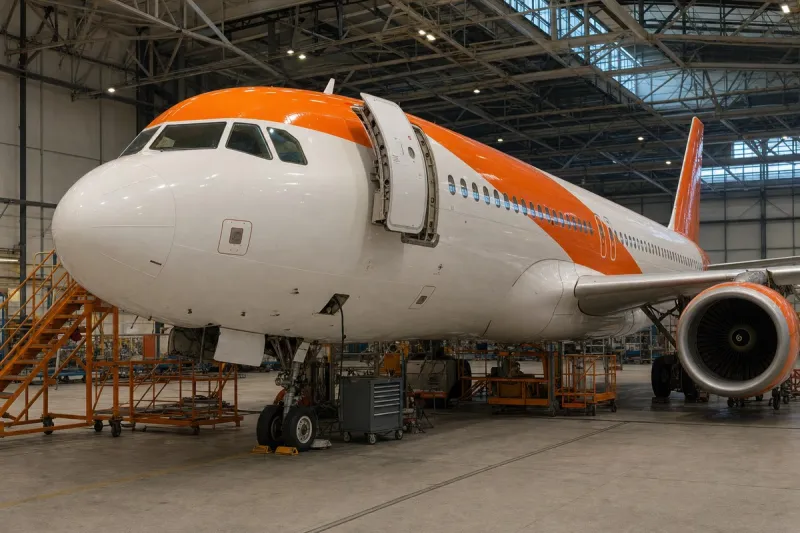
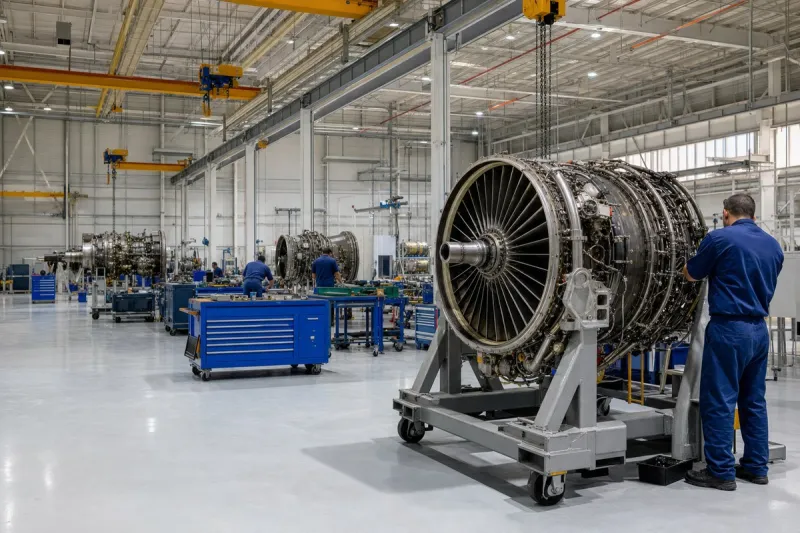
Commercial maintenance (MRO) adjusted revenue rose 19% to €5.1 billion, or 23% in U.S. dollar terms, with geared turbofan MRO accounting for around 45% of the segment. Military adjusted revenue rose 13% to €472 million, driven by the EJ200 and TP400-D6 engines. Commercial engine business revenue was €1.6 billion, similar to the prior year, and total OEM revenue rose 2% to €2.1 billion. The order backlog stood at €29.8 billion at the end of September, compared with €29.5 billion on December 31, 2025.
Adjusted EBIT in commercial maintenance rose 15% from €355 million to €408 million, a margin of 8.0% against 8.3% a year earlier. OEM adjusted EBIT was €633 million, down from €640 million, a margin of 30.3% against 31.1%. Research and development expenses rose 8% to €296 million. Free cash flow increased 67% from €279 million to €466 million. Net capital expenditure on property, plant and equipment rose 82% to €280 million, mainly for capacity expansion in Germany and at the Fort Worth site in the U.S. MTU had 14,242 employees at the end of the quarter, 4% more than at year-end 2025, when it had 13,674.
Industry impact & what to watch
The split between segments shows where engine-maker earnings are being made. Maintenance revenue grew 19% while commercial engine revenue stayed level at €1.6 billion, and the maintenance business carries a margin of 8.0% against 30.3% in the OEM segment. Growth is therefore coming from the lower-margin side of the portfolio, which is why group EBIT rose 5% on 13% more revenue. For operators and lessors, the practical consequence is that shop capacity and spare parts supply for in-service engines are where the money and the pressure sit.
The geared turbofan share is the clearest sign of that. Around 45% of maintenance revenue comes from that engine family, so an engine type's installed base and its shop-visit cycle feed directly into a provider's reported growth. The 82% rise in net capital expenditure, aimed at capacity in Germany and Fort Worth, points the same way: providers are spending to add repair throughput rather than only to produce new engines.
The next dated milestone is the full-year result, which will show whether revenue lands inside the narrowed €9.5 billion to €9.7 billion range. The guidance change leans partly on a more favorable dollar/euro rate, so the reported figure will depend on exchange movements as well as shop volume.