New-Generation Airline Engines Fall Short of Reliability Promises as Maintenance Costs and Groundings Mount
Why It MattersPersistent engine-durability and spare-parts shortfalls are pressuring airline margins and could push carriers toward evolutionary rather than radically new propulsion designs for future aircraft.
A new IATA report finds that modern fuel-efficient turbofan engines have delivered fuel savings but higher-than-expected maintenance costs are offsetting those gains, citing engine durability problems, spare-parts shortages, limited spare-engine availability, and constrained aftermarket access. IATA CEO Willie Walsh said airlines have incurred roughly $11 billion in additional costs from supply-chain disruptions while engine manufacturers posted strong financial results over the same period, calling the divergence a paradox that needs to be called out. IATA projects airline net profits will fall from $45 billion in 2025 to $23 billion in 2026, with net margins contracting from 4.2% to 2.0%, attributing much of the decline to higher fuel prices linked to Middle East conflicts rather than engine issues alone.
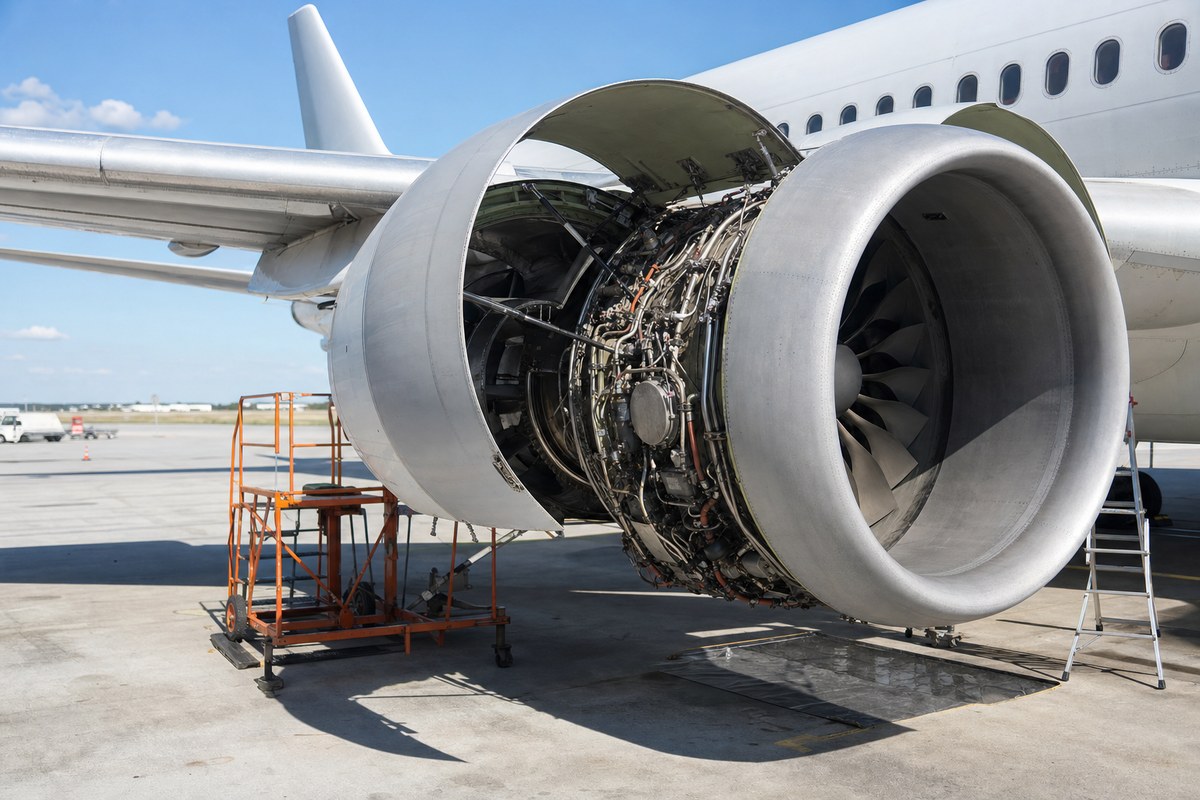
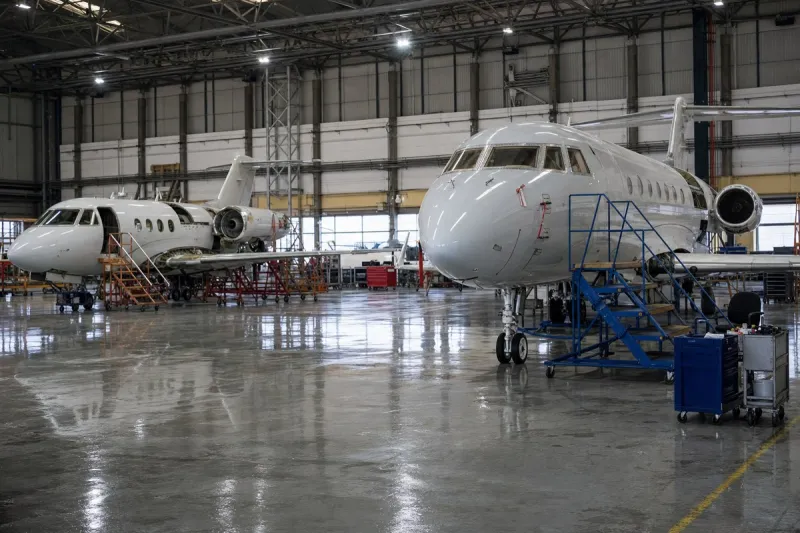
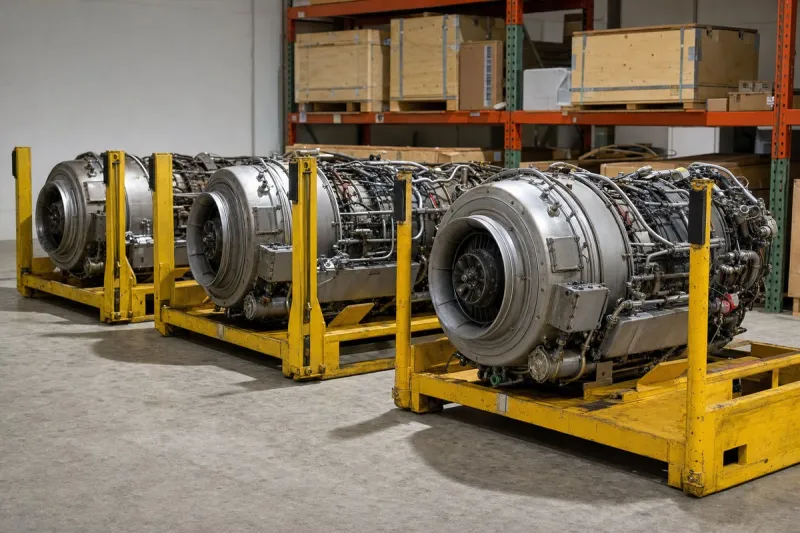
The two most prominent reliability cases involve the Pratt & Whitney GTF series, which powers the Airbus A220, A320neo family and Embraer E-Jet aircraft, and the Rolls-Royce Trent 1000, which powers the Boeing 787 Dreamliner. GTF-powered aircraft groundings peaked in March 2025, when 648 aircraft, representing 28% of the GTF fleet, were not flying while awaiting engine shop visits, spare engines or parts. Rolls-Royce's Trent 1000 problems caused Boeing 787 Trent 1000 sales to collapse, and some industry analysts had forecast the engine line would go out of production by around 2030.
At IATA's annual meeting in Rio de Janeiro in June, airline CEOs warned grounded aircraft and elevated repair costs could persist for years. LATAM Brasil CEO Jerome Cadier measured his dissatisfaction by the number of aircraft grounded, while United Airlines CEO Scott Kirby said engines will remain the industry's biggest constraint for at least the next five years, singling out Rolls-Royce as the manufacturer with which he has the greatest concerns.
Both manufacturers have introduced improved variants. Pratt & Whitney's GTF Advantage, which applies to the PW1100G-JM powering A320neo aircraft, offers up to double the on-wing time, 4-8% higher take-off thrust, and improved fuel burn versus the current GTF, alongside a Hot Section Plus retrofit providing 90-95% of the Advantage's durability benefit. Rolls-Royce is delivering the Trent 1000 XE, which it says offers triple the on-wing durability of its predecessor, and is upgrading around half of the high-pressure turbine. Rolls-Royce's market capitalisation fell to approximately $7.5 billion in mid-2022 but has since recovered to around $160 billion, aided by growing European defence budgets, and the company says it is again winning competitive Boeing 787 campaigns against GE Aerospace and its GEnx engine.
The supply-chain strains trace primarily to manufacturing capacity lost during the COVID-19 pandemic, compounded by strong aircraft demand, supplier attrition and specialised-capacity shortages, with Trump administration trade policies, Russian titanium supply issues and China's control of rare-earth processing as secondary factors. Kirby and Azul CEO John Rodgerson have both noted that engines are simply not lasting as long as promised. Looking further ahead, CFM International is developing its RISE open-fan programme targeting a 20% fuel-burn improvement over the CFM LEAP, which is itself already 15-20% more efficient than the CFM56, implying a cumulative 32-36% improvement over the CFM56 baseline, while Rolls-Royce is pursuing a scaled derivative of its UltraFan demonstrator to re-enter the narrowbody market. The reliability difficulties of recent years may make airlines more cautious about radically new propulsion architectures, potentially favouring more evolutionary geared-turbofan designs.