Centrum AI Launches Platform Tracking 20 Billion Records to Help MROs Cut Supply Chain Costs
Why It MattersIndependent, cross-source visibility into supplier tiers could let MROs quote against quantified parts risk instead of padded margins, changing how inventory and delivery commitments are priced across the sector.
What happened
Centrum AI, a U.S.-based start-up, has introduced an artificial-intelligence platform that draws on around 20 billion global and corporate records — including import/export records, shipping data and statutory financial filings — to give maintenance, repair and overhaul providers a fuller view of parts availability beyond what manufacturers supply. The platform builds what Centrum calls a "probabilistic bill of material" and an "inferred supplier graph" that incorporates OEM data alongside factors such as raw-material availability.
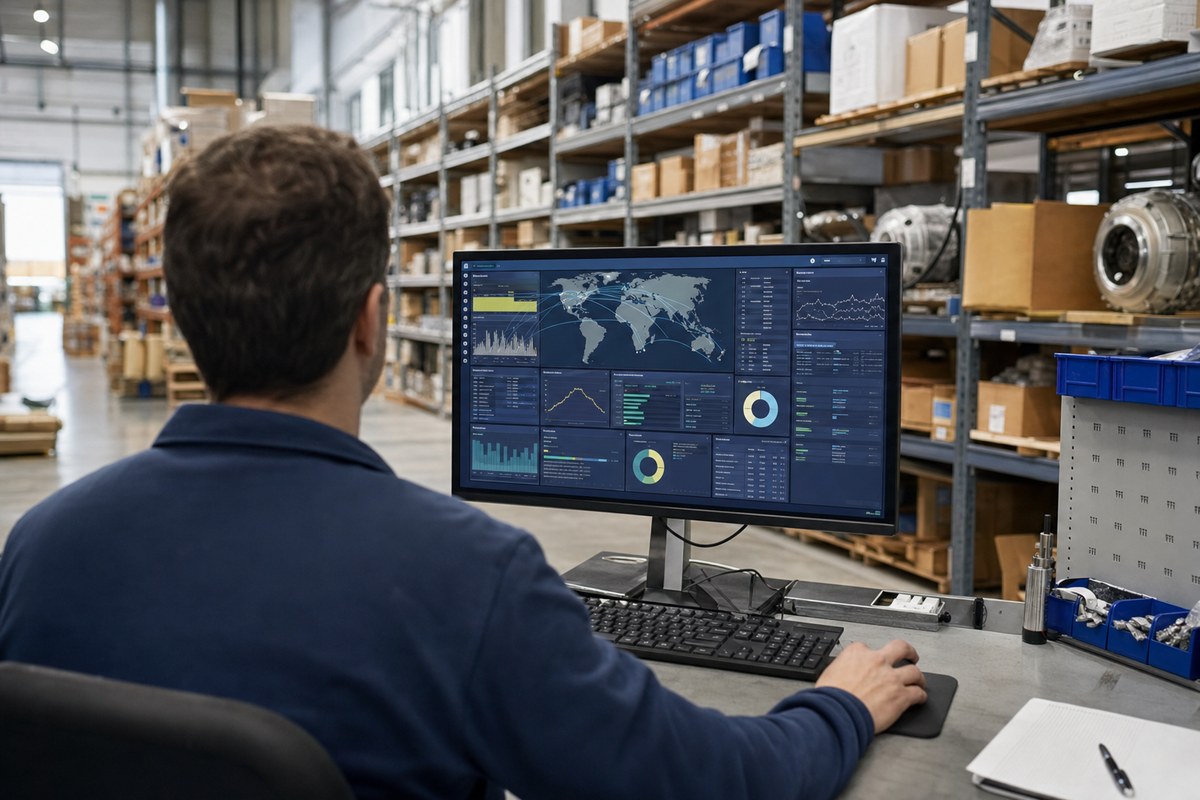
Co-founder and CEO Stefan Groschupf said MRO providers lack full supply-chain visibility because manufacturers often withhold or lack complete information about their lower-tier suppliers. "The OEM itself is often neither fully informed about its lower tiers, nor forthcoming about what it does not know," he said. He said the true cost of a missing part extends beyond its list price, citing idle engines, expedited freight, leased spares and repeated schedule delays as compounding costs. Centrum estimates some MROs are currently holding three times the parts inventory they carried before the Covid-19 pandemic, and Groschupf said lead times for parts and repairs have lengthened every year since the pandemic.
The platform monitors specific materials such as the single-crystal nickel superalloy used in high-pressure turbine blades, tracking cobalt and rhenium supply to detect anomalies signaling delivery problems. Centrum validates its forecasts by comparing supply projections against each customer's enterprise resource planning data for the preceding 12 months, measuring predictions against actual planner decisions and results; on that basis it says the platform is approximately 48% more accurate than clients' own planners at predicting material arrival times, and it generates documentation to support audits. Groschupf said the platform holds particular value for business aviation operators, whose fleets are geographically dispersed, who have less commercial leverage with OEMs than major airlines, and for whom a single aircraft-on-ground event affects a larger share of the fleet. Centrum also cited CFM International's durability improvements to LEAP 1A high-pressure turbines, based on research using engineered dust to reproduce desert operating conditions, as an example of how actual operating-environment data can be relevant to maintenance planning.
Industry impact & what to watch
This launch is an example of AI-driven data aggregation being applied to a supply chain where information asymmetry between OEMs and their customers has become a direct cost driver. MROs holding three times pre-pandemic inventory, as Centrum estimates, reflects an industry response to lengthening lead times by stockpiling rather than by gaining better forecasting — an expensive substitute for visibility.
Supply-chain forecasting in MRO has traditionally relied on OEM-supplied data and internal planner judgment, both of which Centrum's comparison methodology suggests can be improved on when cross-referenced against import/export, shipping and financial-filing data. Business aviation operators are singled out as particular beneficiaries because their fleets are dispersed and their commercial leverage with OEMs is thinner than that of major airlines, making a single grounded aircraft proportionally more costly.
What remains to be seen is whether the claimed 48% accuracy improvement holds up across a broader base of MRO customers beyond the ERP comparisons Centrum has run to date, and whether shops actually shift to quoting delivery dates against quantified parts risk rather than padded margins. The next signal will be whether MROs adopting the platform report measurable reductions in the excess inventory levels Centrum says have built up since the pandemic.