EMAS Systems Have Stopped 26 Aircraft and Saved Nearly 500 Lives, with 150–160 Installations Worldwide
Why It MattersThe record shows arresting-bed technology functions as a practical substitute for full runway safety areas where land constraints make the FAA-recommended distance impossible to build.
What happened
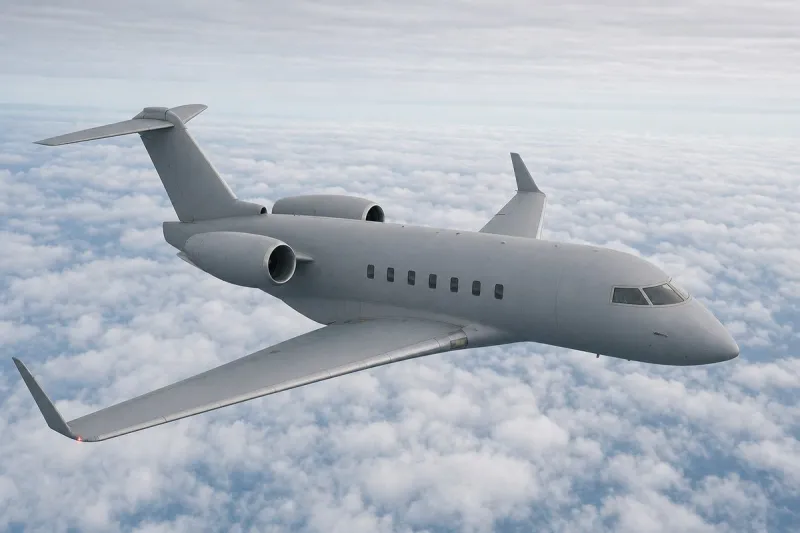
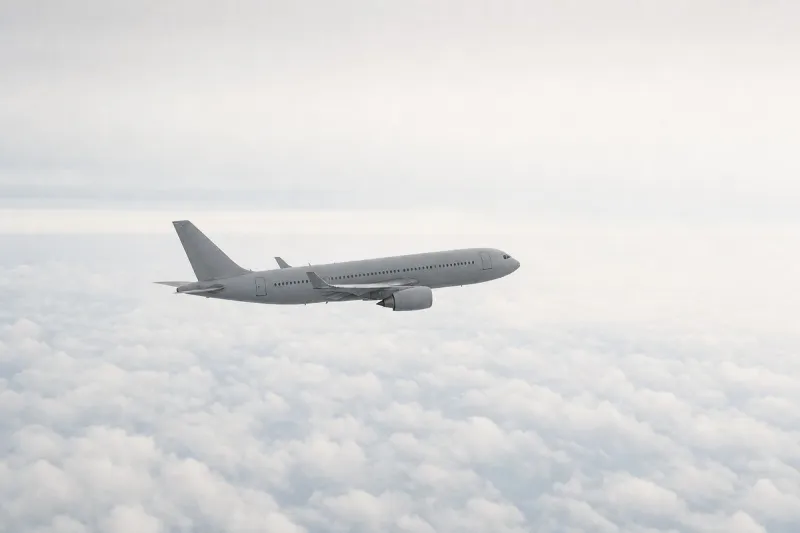
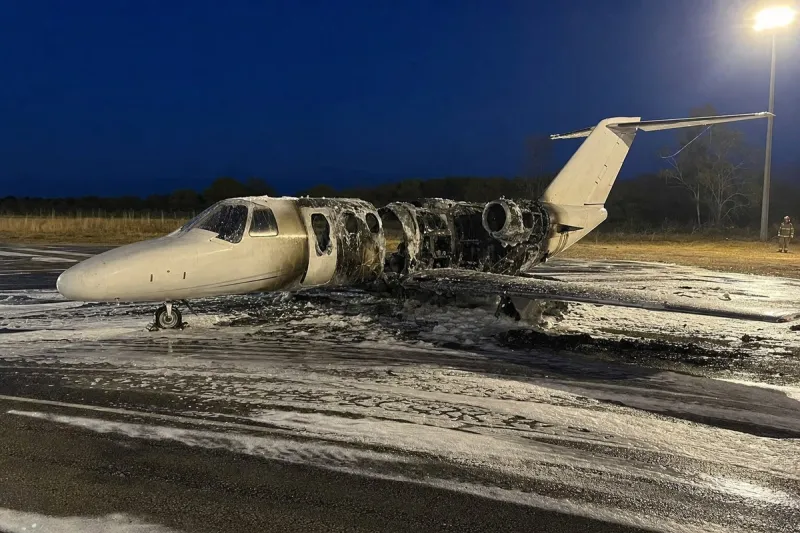
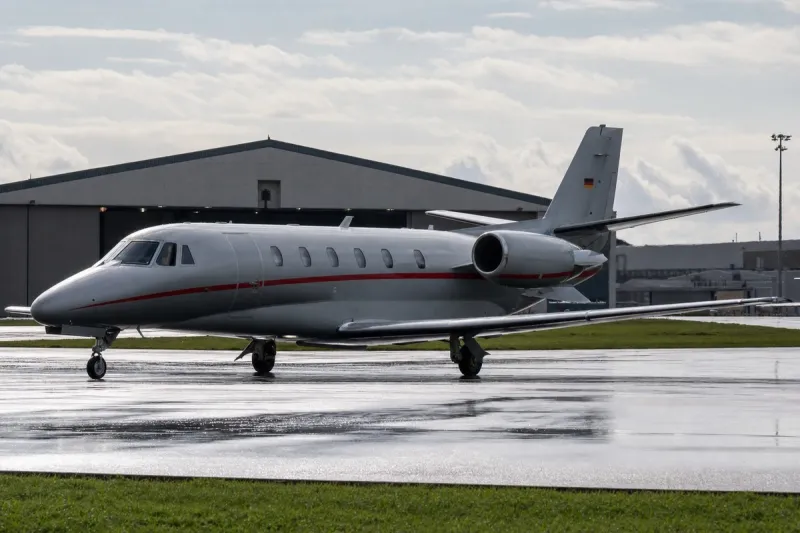
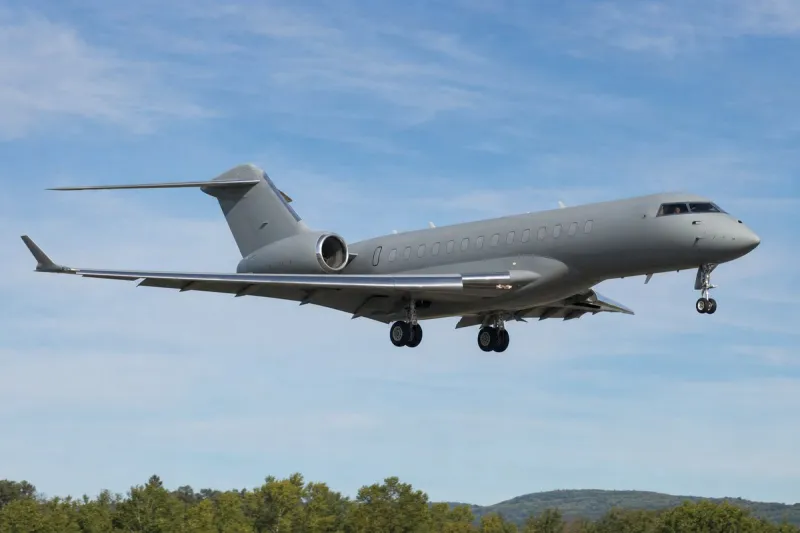
Engineered Material Arresting Systems (EMAS) installed at airports around the world have safely stopped 26 aircraft to date, ranging from small business jets to a Boeing 747, with no fatalities among the nearly 500 individuals on board those aircraft. Between 150 and 160 EMAS installations have been completed globally.
Swedish company Runway Safe, headquartered in Gothenburg, is currently the sole manufacturer of EMAS products meeting FAA standards under Advisory Circular 150-5220-22B. The company acquired Engineered Systems Co (ESCO), which originally partnered with the FAA to develop the technology following the 1984 overrun of SAS Flight 901, a McDonnell Douglas DC-10, at New York's JFK International Airport — an incident that ended without loss of life but prompted an NTSB Safety Recommendation calling for research into soft ground arresting systems.
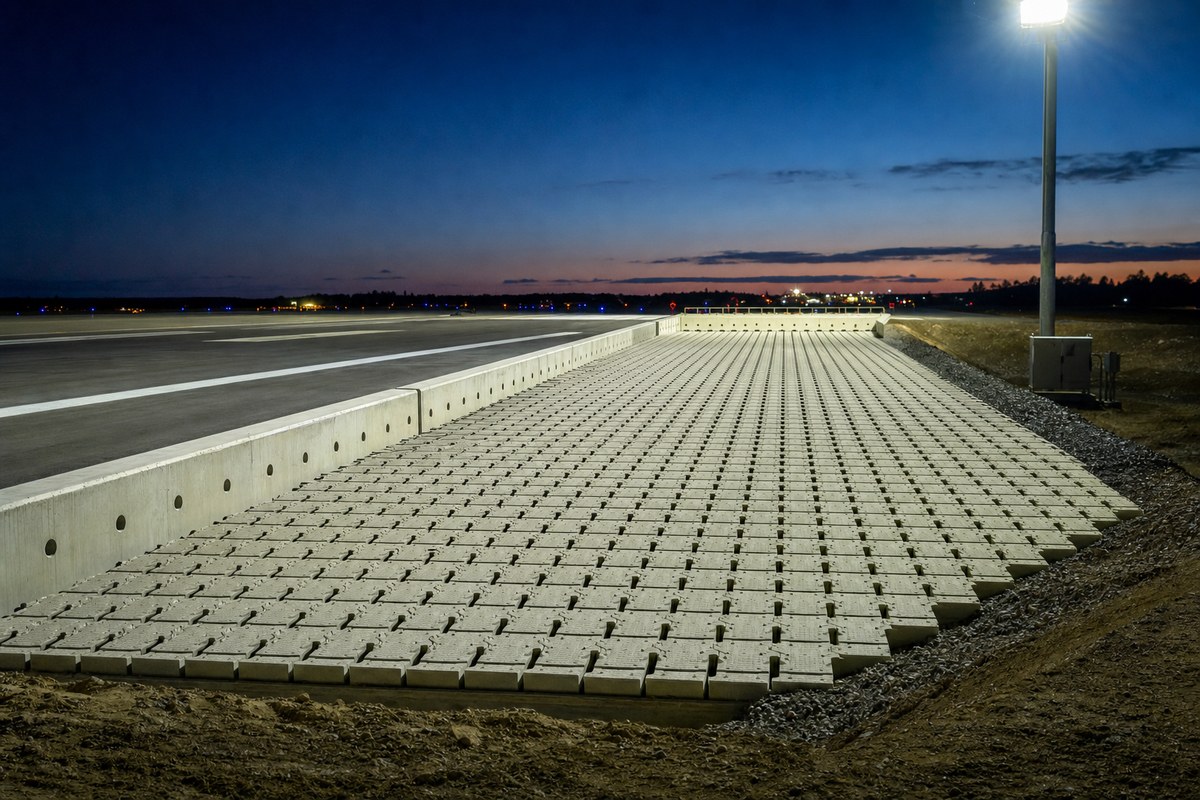
EMAS works using a bed of lightweight, crushable cement blocks that absorb an aircraft's kinetic energy and bring it to a controlled stop as its wheels sink into the material. Three concrete strengths are available: business aircraft typically sink around 3 inches into the surface, while large widebody airliners can embed up to 28 inches. The standard EMAS Max system uses modular 4-foot-square blocks, with each installation typically featuring between 2,000 and 5,000 units, manufactured at Runway Safe's Philadelphia factory. Installations typically last at least 20 years. A newer product, Green EMAS, uses foam-glass blocks made from recycled bottles in place of traditional cellular cement, developed with a Norwegian company. Runway Safe Director and former airline captain Mikael Larsson MRAeS said EMAS Max is probably slightly more optimised for smaller aircraft, while Green EMAS's greater advantage is its environmental credentials.
The system is guaranteed effective for aircraft speeds below 80 knots. In March 2026, Wellington Airport in New Zealand announced that its new EMAS installation effectively extends usable runway length by 143 metres for landing and 37 metres for take-off. EMAS beds are currently established in all world regions except Russia and Africa, with European installations at London City Airport and RAF Northolt in the United Kingdom, plus sites in Switzerland, Spain and Norway, and installations at Queenstown and Wellington airports in New Zealand.
Where the space runs out
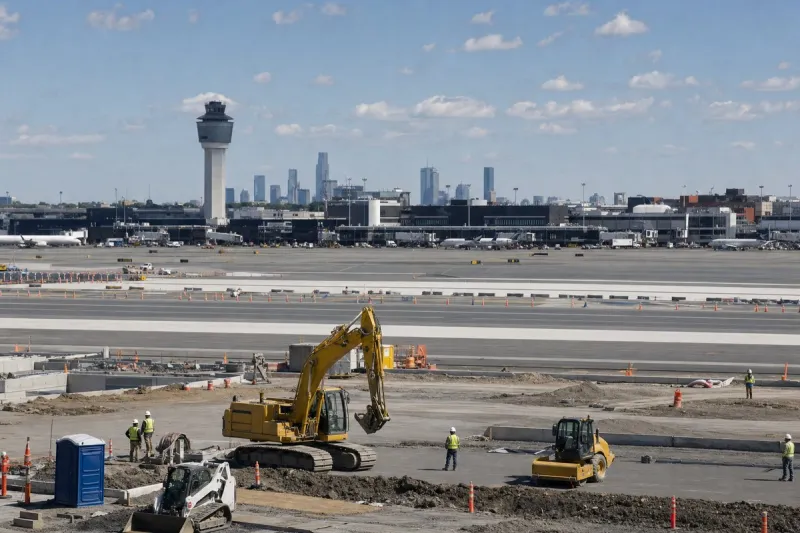
EMAS is particularly valuable at airports where space constraints prevent the FAA-recommended 305-metre Runway Safety Area (RSA). In the United States, if the recommended 457-metre RSA cannot be achieved at a pre-existing airport, the FAA covers 90% of the EMAS installation cost. The FAA's Office of Airports estimates it has helped facilitate RSA improvements at more than 500 commercial service facilities, with practicable improvements — including EMAS technology — made at around 1,000 runway ends.
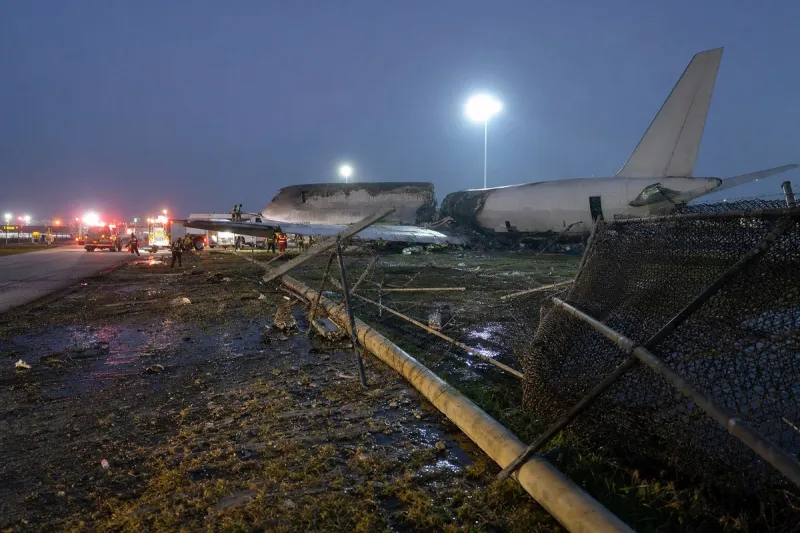
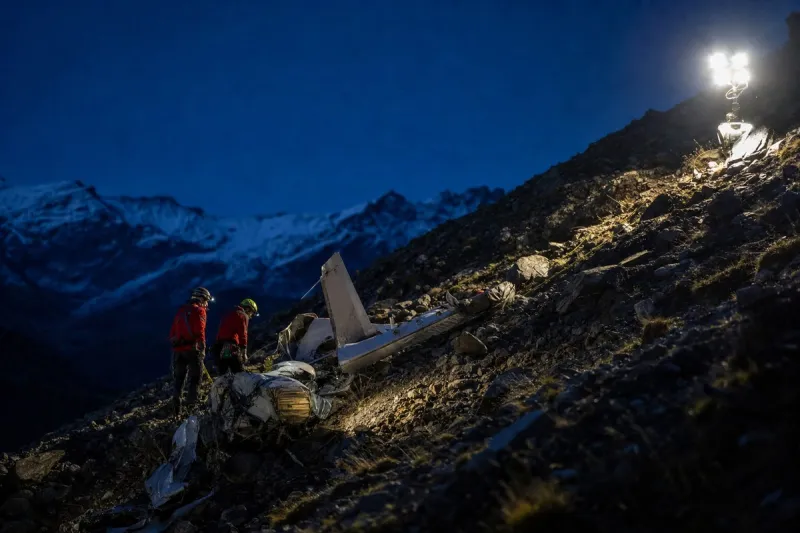
On 29 December 2024, Jeju Air Flight 2216, a Boeing 737-800, landed gear-up at Muan International Airport in South Korea and struck a concrete berm, killing 175 passengers and four of the six crew members. Larsson said that while EMAS would not have guaranteed stopping the aircraft completely, it could have decelerated it enough for more people to survive.
A notable earlier case involved a Southwest Airlines Boeing 737 that overran a runway at Burbank, California, in 2000, coming to rest on a suburban street beside a petrol station. A subsequent EMAS installation at Burbank has since successfully stopped another Boeing 737 and a Cessna 750 Citation.
Industry impact & what to watch
The Burbank and Muan cases sit at opposite ends of the same problem: one shows what an arresting bed does when it is in place, the other what happens when a runway end has no equivalent margin at all. Runway overruns are a recurring category of accident, and EMAS exists specifically for airports where geography, urban encroachment or cost rule out extending the paved safety area to the full recommended distance.
The economics behind that gap matter as much as the engineering. A 90% federal cost share in the United States has pushed adoption toward airports that could not otherwise justify land acquisition or runway relocation, which is why installations cluster at older, space-constrained fields rather than at greenfield airports built with full safety areas from the start. Runway Safe's position as the only FAA-compliant manufacturer also means the pace of installation depends on one company's production capacity in Philadelphia and its two product lines, cellular cement and foam-glass.
The geographic gap is the clearest open question: EMAS is established across most world regions but absent from Russia and Africa, leaving airports there without the same fallback where safety-area distance cannot be met. Whether Muan or comparable Asian airports move toward retrofitting arresting beds, and how quickly Green EMAS is adopted alongside the cement-block standard, will show whether the technology's reach keeps pace with where overrun risk is concentrated.