Kylie Jenner's Bombardier Global 7500 Flies from Van Nuys to Thunder Bay Area During Ontario Wildfire Season
Why It MattersTail-tracking of celebrity-linked private jets routinely outruns confirmed purpose, showing how public flight data can surface unusual routings long before any operator, owner or charter party explains them.
What happened
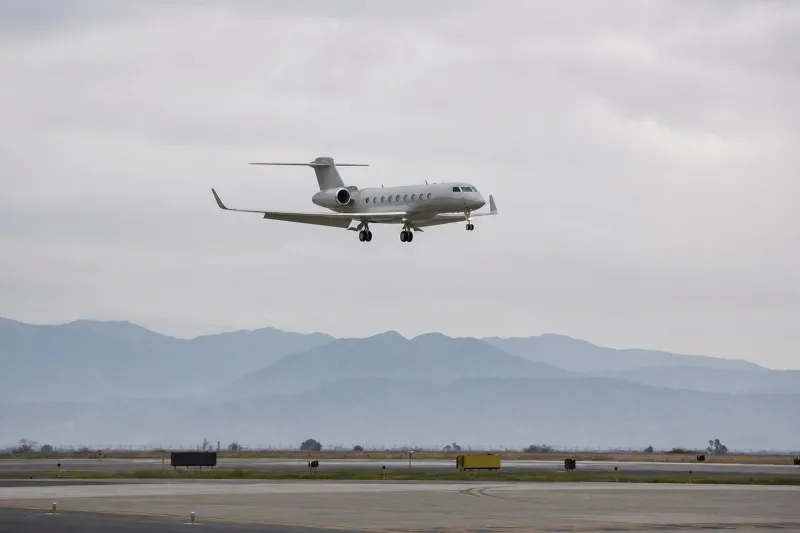
A Bombardier Global 7500 registered N810KJ, linked to Kylie Jenner, was tracked flying from Van Nuys Airport (KVNY) to a private airstrip near Thunder Bay, Ontario, on September 16, 2026. The flight departed at 2:59 PM Pacific and landed just after 9 PM local time, a duration of 3 hours and 5 minutes, touching down at coordinates 50.701, -88.712, a short drive from Thunder Bay International Airport.
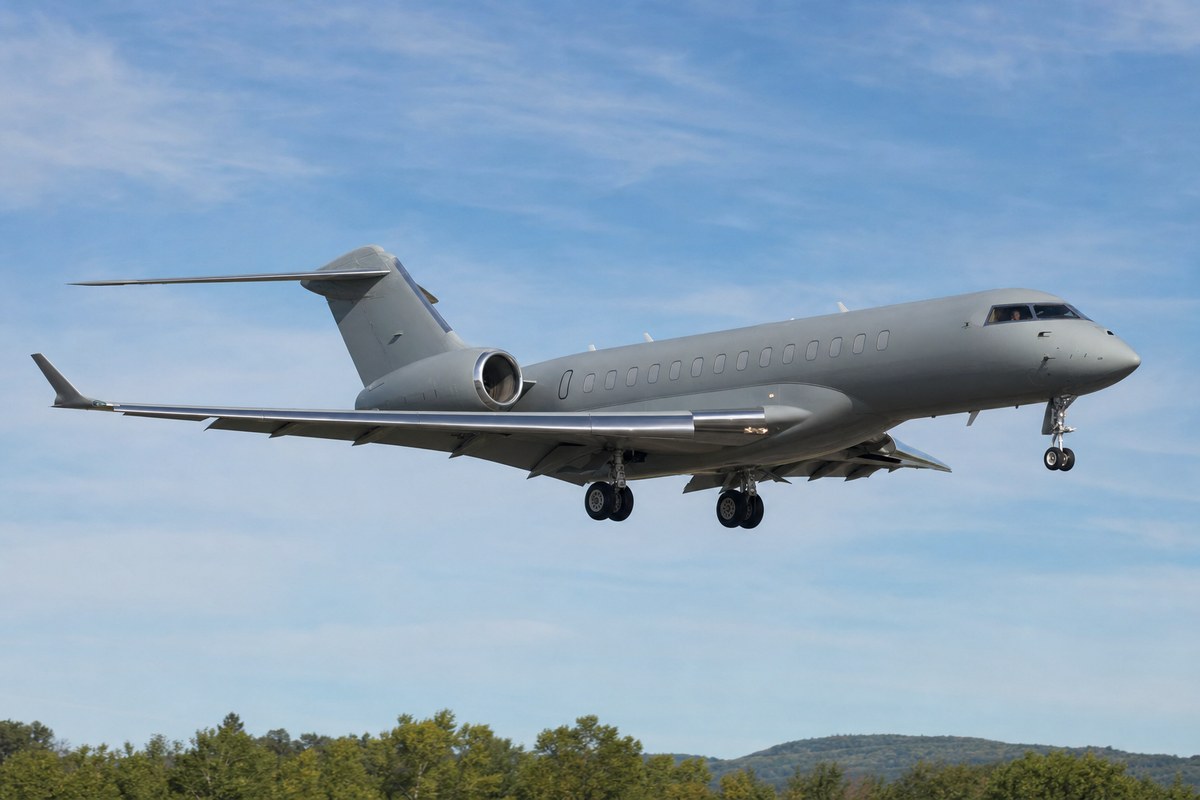
During the flight the aircraft climbed to 45,000 feet and reached a maximum ground speed of approximately 610 knots. Business-jet flight-activity records show N810KJ's recent movements had consisted of short hops around Los Angeles, a trip to Hawaii in mid-August, and a New York visit in early August, with the aircraft's last departure from the contiguous United States prior to this flight occurring on August 14, a return leg from Kailua-Kona to Van Nuys.
The Thunder Bay region was contending with an active wildfire season at the time of the flight, with the city serving as a staging ground for air tankers and ground crews battling blazes in northwestern Ontario, according to the Canadian Interagency Forest Fire Centre. The aircraft landed at a private airstrip rather than a commercial terminal. Whether Jenner was aboard has not been confirmed, and no statement has been issued by Jenner or her representatives. N810KJ previously drew public criticism in 2023 for a 10-minute flight between two Los Angeles-area airports.
Industry impact & what to watch
This case sits in a familiar category for high-visibility tail numbers: a routing that departs sharply from an aircraft's normal pattern gets flagged by public tracking data well before anyone confirms who was aboard or why. The destination's proximity to an active wildfire staging area invites plausible explanations — a relief or supply movement, a crew repositioning, or a third-party charter — but none of these is established by the flight data alone.
Private aviation tracking works by inference from transponder data: altitude, speed, route and landing point are verifiable, while passenger manifest and purpose are not, unless the owner, operator or a relevant authority discloses them. A private-airstrip landing instead of a commercial terminal typically signals a pre-arranged arrival, which narrows the range of explanations without confirming any single one.
What would resolve the question is a statement from Jenner's representatives, the aircraft operator, or a relief organization confirming the flight's purpose, or subsequent tracking data showing a pattern consistent with either charter repositioning or wildfire-relief logistics in the days following.