Australia's Sydney, Brisbane and Melbourne Airports Hit by E-Gate Outage, Causing Major Queues at International Terminals
Why It MattersThe incident shows how a single shared e-gate system failure can simultaneously degrade border processing capacity across multiple major airports, exposing reliance on centralised automated clearance infrastructure.
What happened
Travellers faced significant disruption at Sydney, Brisbane and Melbourne Airports on Friday morning, September 18, after a technical outage knocked out e-gates used for processing both departing and arriving international passengers.
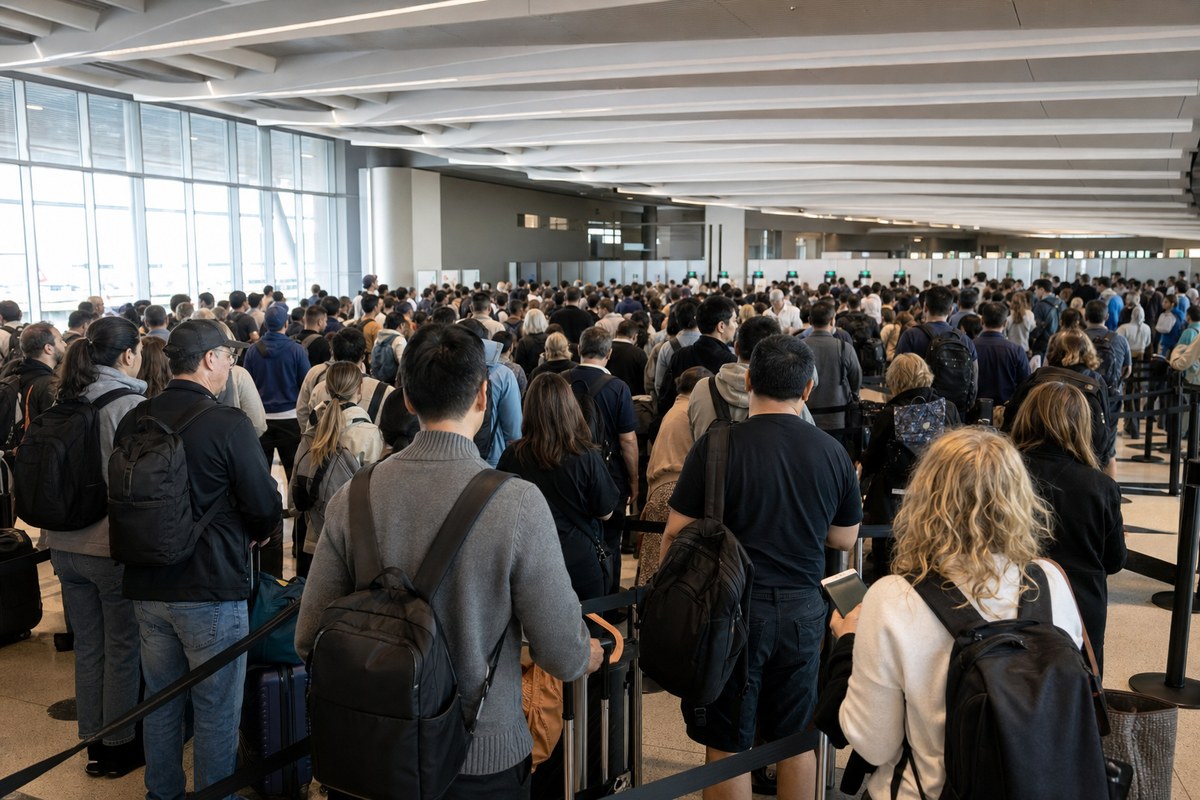
The Australian Border Force (ABF) confirmed the outage affected e-gates for outbound and some inbound passengers, resulting in massive queues building up at international terminals across all three airports. An ABF spokesperson said, "The Australian Border Force is aware of a technical outage impacting E-gates for outbound and some inbound passengers. Additional ABF officers are being surged into work areas to manually process passengers and provide as minimal disruption as possible. We appreciate travellers' patience as we continue to work through the issue."
The outage was resolved by 11am, with all backlogs cleared, according to an ABF spokesperson. Images circulating on social media showed lengthy queues winding through Sydney's international terminal during the disruption.
Industry impact & what to watch
This case illustrates how automated border-clearance systems, once relied upon as the default processing path at major international gateways, can turn a single technical fault into a multi-airport bottleneck within hours. When e-gates go down, the fallback is manual processing by border officers, a slower method that queues expose almost immediately at peak arrival and departure banks.
Border processing at hub airports depends on e-gate throughput to keep passenger flow matched to flight schedules; when that layer fails simultaneously across Sydney, Brisbane and Melbourne, the surge capacity of manually deployed officers becomes the only buffer against terminal congestion. The ABF has launched an inquiry into the incident, and its findings on the root cause will determine whether this was an isolated system fault or a vulnerability shared across the three airports' e-gate infrastructure.