FAA Issues Airworthiness Directive for Rolls-Royce Deutschland Trent Engines Over Low Oil Pressure Risk
Why It MattersThe case shows how a single component non-conformance in a widely shared engine family can force fleet-wide operational fixes ahead of a full parts redesign across twin-engine operators.
What happened
The Federal Aviation Administration has adopted a final airworthiness directive covering all Rolls-Royce Deutschland Ltd. & Co. KG Model RB211-Trent 875-17, 877-17, 884-17, 884B-17, 892-17, 892B-17, and 895-17 engines, citing a risk of dual in-flight engine shutdown on twin-engine aircraft. The AD was published in the Federal Register on September 18, 2026 as Document 2026-19171, 91 FR 59048, and follows Emergency AD 2026-18-52, issued September 5, 2026, which took effect upon actual notice to known U.S. owners and operators.
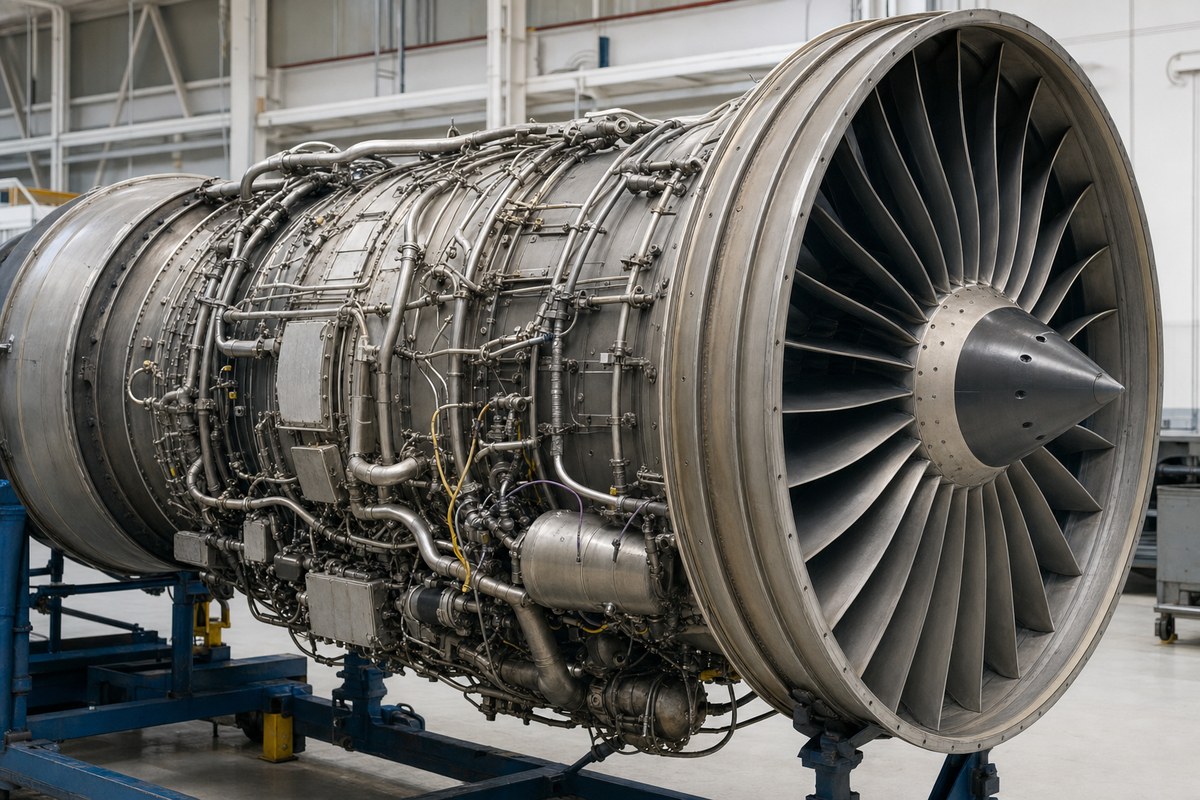
The directive was prompted by reports of non-conformances leading to low oil pressure events on low-life oil pumps. A subsequent investigation identified a potential failure mode affecting the oil pump input coupling shear neck, which, if left unaddressed, could result in a dual in-flight shutdown on aircraft equipped with two affected engines, reducing control of the airplane. The AD requires de-pairing of engines on airplanes with two affected engines installed, so that no more than one affected oil pump is present on any twin-engine aircraft.
The FAA action mirrors the European Union Aviation Safety Agency's Emergency AD 2026-0173-E, dated September 4, 2026, which served as the mandatory continuing airworthiness information basis for the FAA's directive. The FAA docket number is FAA-2026-8815, and the FAA must receive public comments on the AD by November 2, 2026.
Industry impact & what to watch
This case follows the standard pattern for a component-level safety finding on a widely used engine family: an emergency directive addresses the immediate risk, then a final AD with a public comment period formalizes the fix and lets the process run its course. Mirroring an EASA emergency AD shows how closely the FAA and EASA coordinate on shared type certificates, with one regulator's finding becoming the mandatory continuing airworthiness information basis for the other's action.
For twin-engine operators running affected Trent variants, de-pairing is an operational workaround rather than a parts fix — it manages exposure by ensuring only one low-life oil pump per aircraft rather than eliminating the underlying shear-neck failure mode. That distinction matters for fleet planning, since it constrains which engines can be paired together until a permanent remedy is developed.
What happens next depends on the comment period closing November 2, 2026, and on whether Rolls-Royce Deutschland issues a service bulletin addressing the oil pump input coupling shear neck itself. Operators and lessors with affected engines in their fleets will be watching for that permanent fix and any further FAA or EASA action tied to it.