Witnesses Tell NTSB Crashed Alaska PA-24 Was Flying Low and Fast on Approach, Killing All Four Aboard
Why It MattersPreliminary NTSB reports rely on witness accounts and published airport data to reconstruct approach and terrain factors long before a probable cause is determined.
What happened
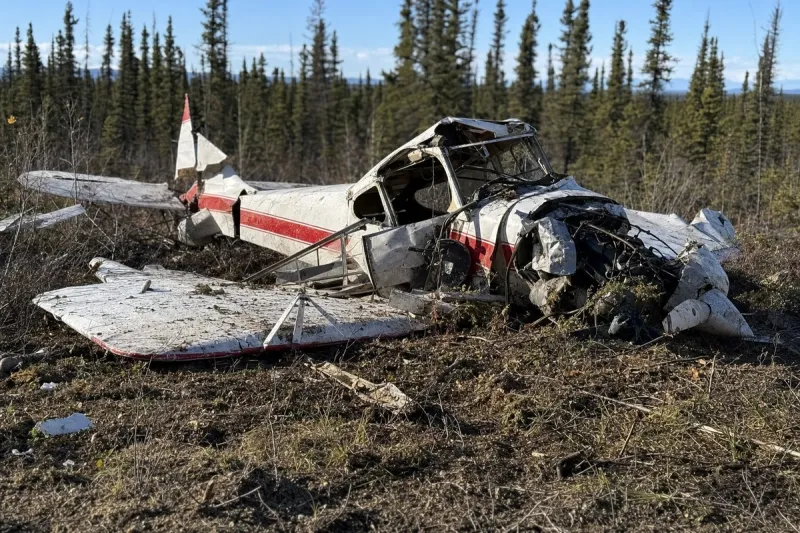
A Piper PA-24-260 Comanche crashed near Seldovia Airport (PASO) in Alaska last month, killing the pilot and three passengers, according to the NTSB's preliminary report published Wednesday. The aircraft had departed Anchorage's Merrill Field Airport (PAMR) on a Part 91 personal flight to Seldovia.

One witness told investigators the airplane bounced three times on Runway 16, that the engine went to full throttle, and that the aircraft pitched up very high and possibly struck the tail before going off the end of the gravel runway into the Seldovia Slough. Aerial photographs showed water off both the approach and departure ends of the runway. A second witness described the PA-24 as flying unusually low past the runway threshold while attempting to land in the opposite direction of other traffic. Multiple witnesses reported the airplane striking a tree before descending into the water. The NTSB cited the FAA chart supplement noting 158-foot trees approximately 1,735 feet from the threshold and 110 feet left of the centerline.
The Alaska Department of Public Safety's preliminary investigation in August found the aircraft had submerged completely in the water adjacent to the airport, and people at the scene attempted to rescue the four occupants but were unable to reach them. Seldovia Airport's Automated Surface Observing System recorded wind from 020 at 5 knots with gusts to 9 knots at the time of the accident, visibility of 10 statute miles, and a temperature of 55.4 degrees Fahrenheit. The accident occurred less than one week after a chartered Cessna 441 crashed in a remote area of Alaska, killing both pilots and all six passengers.
Industry impact & what to watch
Preliminary reports like this one assemble witness accounts, weather data and published obstacle information into a timeline before any cause is assigned, and that sequencing matters for how the industry treats early findings. The witness descriptions of a low, fast approach, a bounced landing, and a possible go-around gone wrong outline a chain of events without yet establishing why any of it happened.
Small-airport operations in Alaska routinely involve gravel runways, nearby terrain such as the 158-foot trees noted near Seldovia's threshold, and variable wind conditions, all of which the NTSB will weigh alongside pilot actions as the investigation proceeds. The recorded wind and visibility at the time were unremarkable, which puts more weight on the approach and landing sequence described by witnesses.
The investigation is ongoing, and the NTSB has stated the preliminary information is subject to change. A probable-cause finding, along with any factual updates on aircraft performance or pilot actions during the approach, would be the next milestone to settle how this sequence of events is ultimately explained.