Cessna Grand Caravan EX Cruises at Up to 185 KTAS, Trading Speed for STOL Utility
Why It MattersThe Grand Caravan EX shows that utility turboprops sell on short-field capability and payload flexibility, so cruise speed is a secondary figure for operators flying remote and short-sector networks.
What happened
Textron Aviation publishes a maximum cruise speed of 185 knots true airspeed (KTAS) for the standard landplane Cessna Grand Caravan EX, equivalent to roughly 213 mph or 343 km/h. The aircraft is powered by an 867-shaft-horsepower Pratt & Whitney PT6A-140 turboprop, up from the 675-shaft-horsepower PT6A-114A used on older Caravan variants.
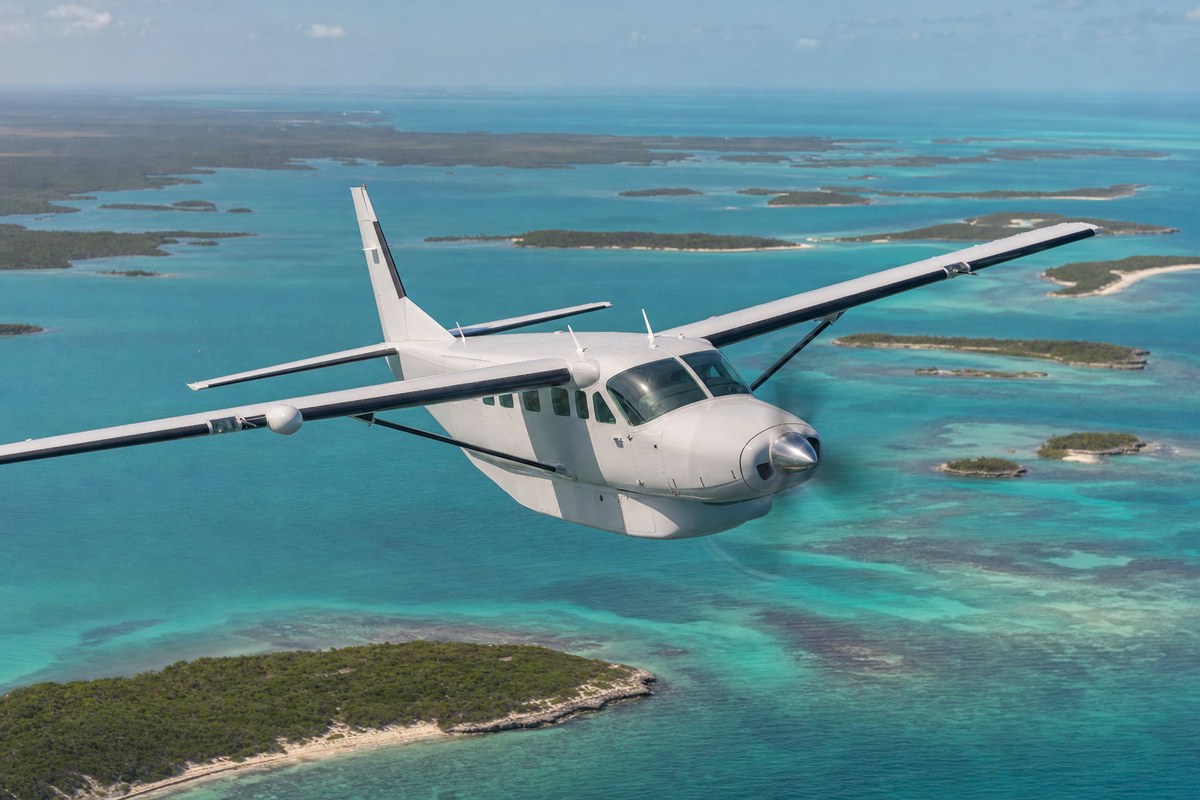
The published figure accounts for the standard ventral cargo pod, which adds drag. Without the pod, cruise can reach closer to 195 KTAS, though most commercial operators keep the pod for its baggage, freight and mail capacity.
At maximum takeoff weight the aircraft needs a takeoff ground roll of 1,399 feet. Its useful load limit is 3,532 pounds, and it can carry up to nine passengers. Approach speeds are typically between 75 and 85 knots. The high-wing, fixed-gear airframe creates drag at higher speeds, which limits efficiency at cruise.
Textron Aviation lists a maximum ferry range of 912 nautical miles under controlled ferry-mission conditions. In standard commercial configurations with full passenger or freight loads, the practical operating radius is typically 300 to 500 nautical miles before IFR fuel reserves. At high-speed cruise at 10,000 to 12,000 feet the engine burns about 55 gallons of jet fuel per hour, according to Craft Charter. Operators often fly long-range cruise at around 140 to 150 KTAS to save fuel on remote missions.
The avionics suite is the Garmin G1000 NXi, with dual primary flight displays, a central multi-function display and synthetic vision technology. The aircraft flies missions from humanitarian logistics in sub-Saharan Africa to scheduled island-hopping flights in the Maldives.
Industry impact & what to watch
The numbers describe an aircraft built around field performance and payload flexibility. A 1,399-foot ground roll and approach speeds in the 75-to-85-knot range are what make unprepared strips and short island runways usable, and that capability, not cruise speed, is what the type is sold on. The drag that a fixed gear, a high wing and a cargo pod add is the accepted price of that design.
For operators, the practical read is that the headline cruise figure and the figure flown on the line are different numbers. Fuel-conscious remote operations run at 140 to 150 KTAS rather than 185, and the 300-to-500-nautical-mile working radius, not the 912-nautical-mile ferry range, defines the networks the aircraft actually serves. Scheduled short-sector carriers and humanitarian operators plan around those figures, which is why the type turns up in such different corners of the market.
The cargo pod illustrates the trade-off most clearly: roughly ten knots of cruise are given up in return for baggage, freight and mail capacity that commercial operators generally value more. Any comparison with faster single-engine turboprops therefore has to be made on payload, field length and sector length together, since speed alone points the wrong way.