NTSB: Mercy Air Helicopter Touched Ocean Twice Before Fatal REACH Helicopter Crash off Catalina Island
Why It MattersBack-to-back departures from one unlit offshore helipad put two operators into the same night-vision, dark-water conditions, which makes shared-site departure practice a segment-wide question for overwater air medical flying.
What happened
A Mercy Air medical helicopter struck the ocean twice shortly after departing Santa Catalina Island, minutes before a REACH Air Medical Services helicopter crashed off the island and killed three people. The National Transportation Safety Board (NTSB) released its preliminary findings on Thursday.
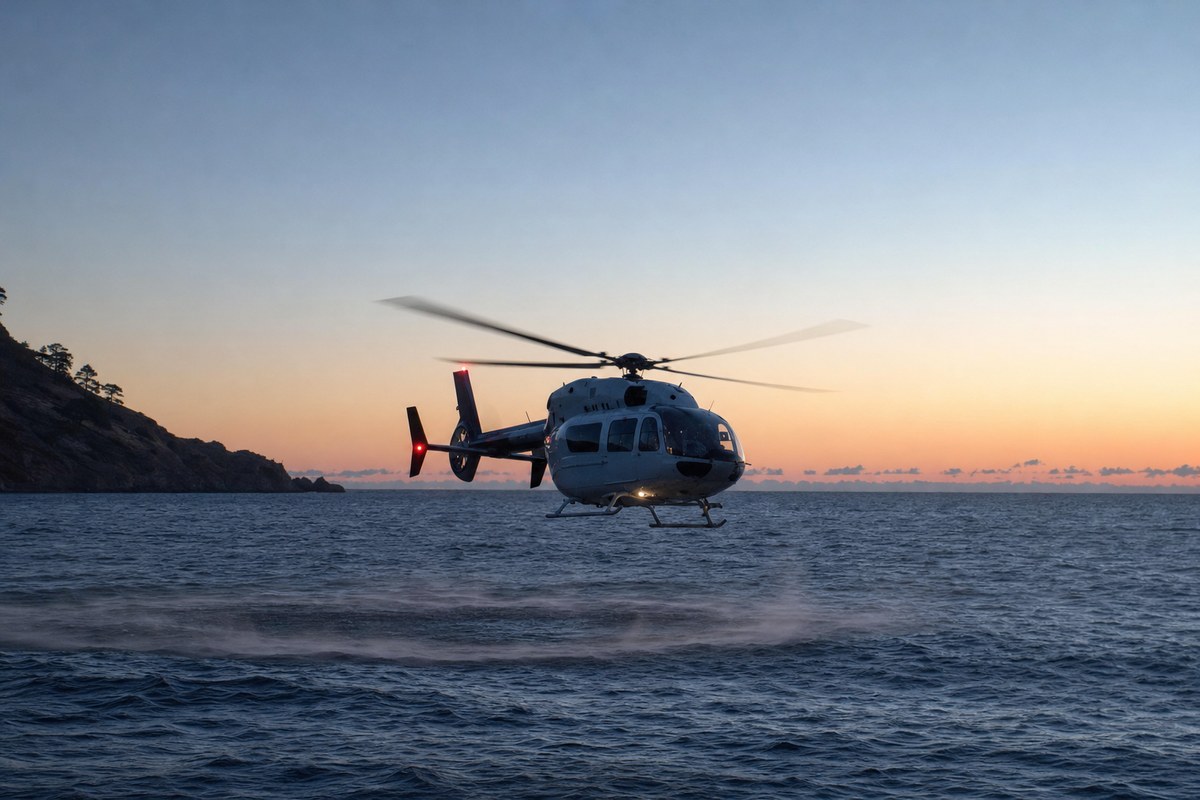
Surveillance footage reviewed by investigators showed the Mercy Air helicopter lifting into a hover, turning north and departing. About 13 seconds later it descended and touched the water twice, then climbed away and continued to Harbor-UCLA Medical Center in Torrance. The aviation website TheDoctorMedic.com obtained an internal Air Methods safety report on that earlier event. In it, the pilot wrote that he had difficulty maintaining visual references over the dark ocean while using night-vision goggles.
Moments after the Mercy Air departure, the REACH helicopter took off from the same helipad with five people aboard, also bound for Torrance. The NTSB preliminary report says it climbed slightly, then pitched nose-down and struck the ocean about eight seconds later. Flight-tracking data showed a maximum altitude of about 90 feet above sea level, a final groundspeed of about 65 knots (75 mph) and a descent rate of about 1,280 feet per minute. Witnesses described a dark, moonless night.
The crash killed pilot Steven Robinson, flight nurse Jessica DeVries and patient Catalina Hernandez. Robinson was a former U.S. Marine Corps helicopter pilot who had flown Marine One. Flight crew member Brad Sparks and another passenger survived and were hospitalized.
Los Angeles County sheriff's divers recovered the patient's body the following day. The helicopter was found about three-tenths of a mile north of the seaplane base, roughly 209 feet underwater, and the wreckage has since been recovered. The NTSB has not determined the cause of the crash.
Industry impact & what to watch
Two aircraft from different operators left the same helipad within minutes of each other, on a moonless night, bound for the same hospital. That sequence shows how a single island pad can concentrate overwater, night-vision departures into one narrow window, with each crew relying on goggles and instruments rather than a visible horizon.
Overwater departures into dark, featureless surroundings are among the harder profiles in helicopter emergency medical work. Margins at low altitude and low speed are thin, and an operator's internal safety reporting is often the first place a near-miss surfaces. Here, the earlier event came to light through a leaked Air Methods report rather than an official release, which is a reminder of how much of this segment's safety picture sits inside company systems.
The NTSB has not determined the cause of the REACH crash, and a preliminary report is not a finding of fault. The next milestone is the board's final report, which would show whether the two departures are treated as connected or as separate events.