Only 70 U.S. Airports Have EMAS Runway Overrun Arresting Systems After Fatal Miami Cargo Jet Crash
Why It MattersThe crash puts a costly, non-mandatory runway overrun safeguard under scrutiny, which could pressure airport operators and local governments to revisit how they weigh installation cost against overrun risk.
An Amazon cargo plane, a Boeing 767, overran the runway at Miami International Airport in September by 1,200 feet, according to the National Transportation Safety Board (NTSB). It crashed through a fence and hit two vehicles on a road bordering the airport, killing five people. NTSB Chair Jennifer Homendy called the aftermath "devastating" and said whether EMAS should be installed at every airport will be a key part of the investigation.
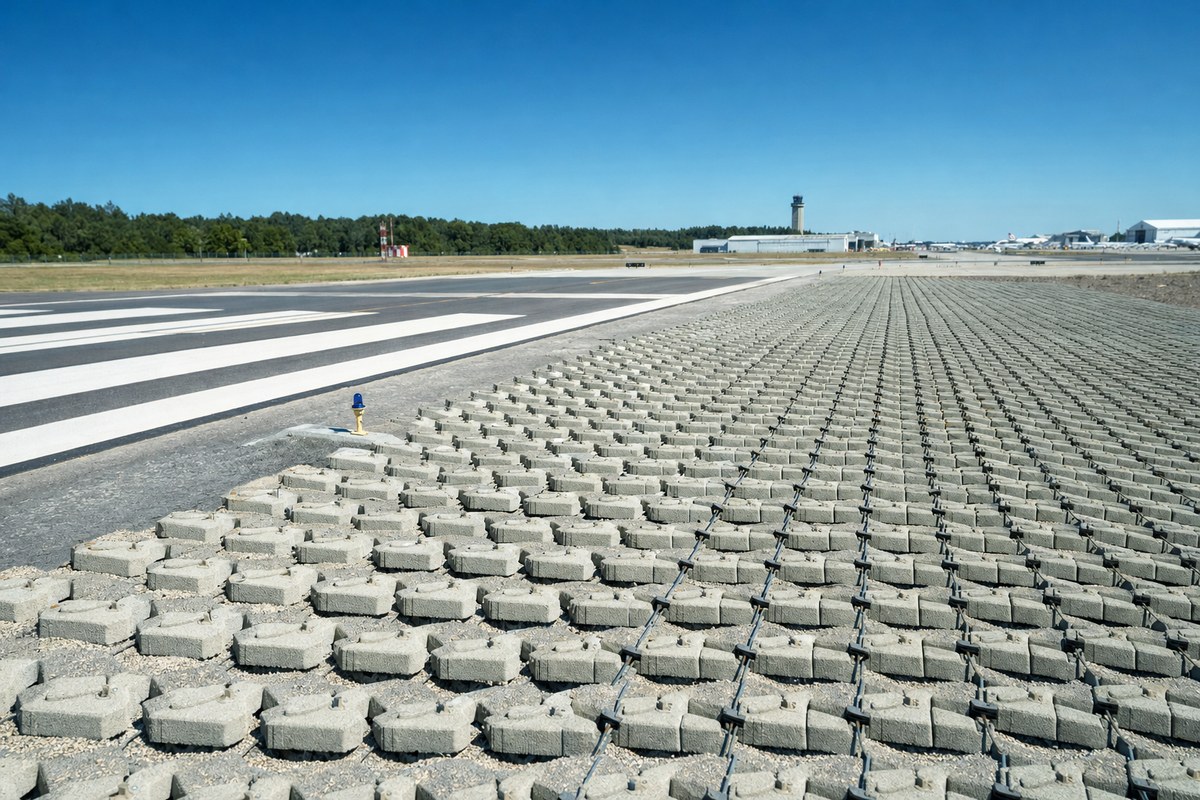
EMAS, the engineered material arresting system, consists of crushable concrete blocks stacked like stair steps at the end of a runway. The Federal Aviation Administration (FAA) developed it in the 1990s with several partners, including ESCO, now Runway Safe, the sole manufacturer of EMAS approved for use in the United States. A full bed typically requires about 3,000 to 3,500 blocks, and the energy used to crush them under the aircraft's wheels is what decelerates the plane, according to Runway Safe's Trip Thomas.
FAA data show EMAS has stopped aircraft in 26 overruns to date, involving both Boeing 737s carrying dozens of people and smaller Cessna aircraft. The FAA says only 70 U.S. facilities have EMAS installed, 12 of them at major airports including John F. Kennedy International, O'Hare International and Logan International. Smaller airports with commercial traffic, such as Hilton Head, DeKalb near Atlanta, Baton Rouge and Telluride, also have it.
Since the 1980s, federal rules have required commercial airports to have Runway Safety Areas extending 1,000 feet beyond the runway end. Airports lacking the space can reconfigure their layout, install EMAS, or functionally shorten runways. EMAS is strongly recommended but not required, and airports and local governments weigh its multi-million-dollar cost against risk.
The NTSB has investigated more than 3,000 runway excursions since 2008, and an InvestigateTV analysis of NTSB data found nearly one-fifth involved planes that went beyond the end of the runway, some with fatalities. InvestigateTV also mapped modeled overrun risk areas at more than 500 U.S. commercial airports with scheduled passenger service and, comparing them with U.S. Census street data, found hundreds of airports where at least one runway had an active public road running through the mapped area.