Piper J-3 Cub Trained Most US World War II Pilots, Estimated at Four in Five First Flights
Why It MattersThe J-3 Cub's role shows how a cheap, forgiving trainer paired with government-funded instruction can build a national pilot base, the foundation of general and business aviation talent.
It is estimated that of the more than 400,000 American pilots who flew in World War II, four out of five had their first flight in a Piper J-3 Cub, and historical analysis claims 75% completed their training in the same spruce-and-fabric taildragger. The J-3 was the debut model of the Piper Aircraft Corporation, launched in 1938, and was popular with the government-sponsored Civilian Pilot Training Program (CPTP), which trained college students to fly. President Franklin Roosevelt unveiled the CPTP on December 27, 1938, promising instruction for 20,000 college students a year. By 1944 the CPTP and military pipelines had trained over 435,000 pilots.
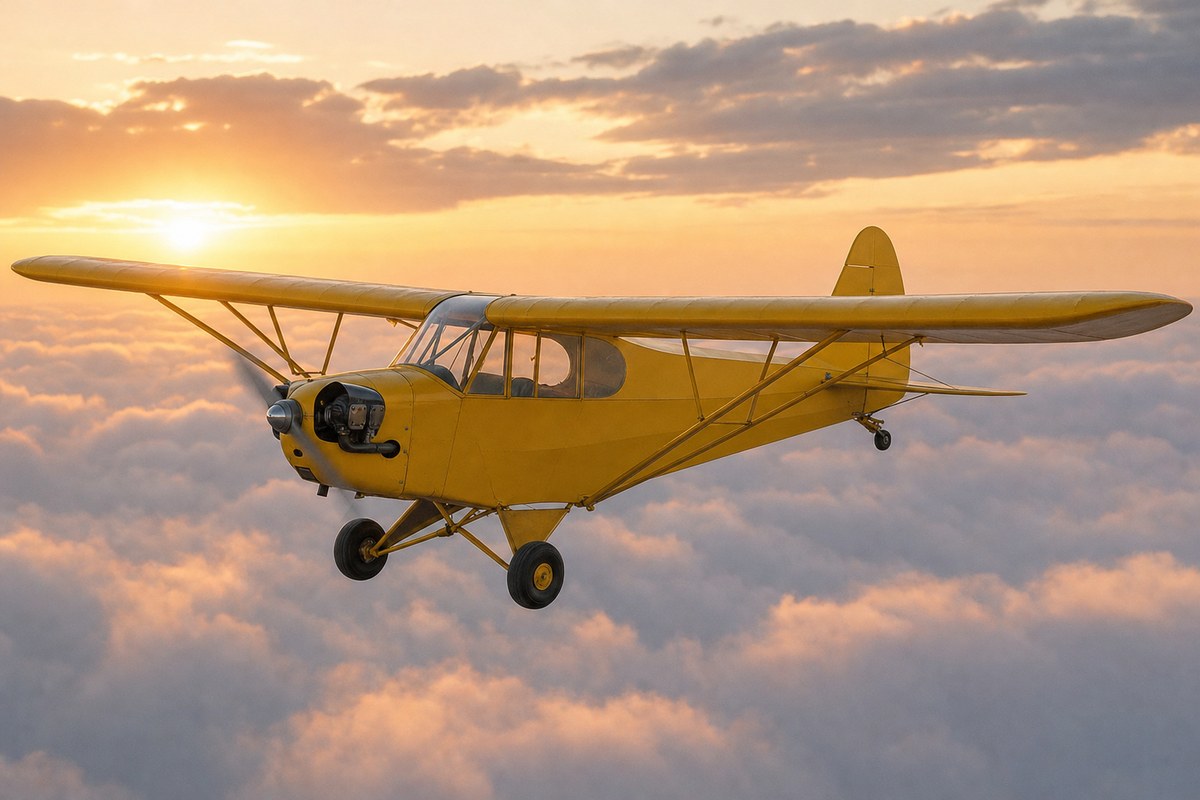
The Cub was chosen for its forgiving flight characteristics and low construction cost. According to Air & Space Magazine, its large wing and light weight made it feel like a powered glider, and it could touch down at under 40 mph (64 km/h). Power came from piston engines rated from 40 to 90 horsepower (30 to 67 kW), compared with the Stearman, the military's usual primary trainer, which carried an engine above 200 horsepower (149 kW) and weighed nearly a ton empty. The 65-horsepower Continental engine burned about 4 to 5 gallons of fuel per hour.
The Army Air Corps first ordered the type as the O-59 in 1941 for liaison and observation work, according to the National Museum of the US Air Force, and later designated it the L-4 Grasshopper. At the peak of wartime manufacturing, Piper rolled a completed Cub out of its Lock Haven, Pennsylvania, factory every 20 minutes. Besides training, Cubs were used for coastal reconnaissance patrols and supported programs such as the Tuskegee Airmen and the Women Air Force Service Pilots (WASP) ferry service. When the factory wound down in 1947, it had delivered roughly 19,000 to 20,000 examples.
The Tuskegee Institute in Alabama became one of the primary CPTP training sites, and the CPTP pipeline trained the first group of Black aviators who became the Tuskegee Airmen. Over 2,500 women learned to fly in the J-3 Cub's tandem cockpit, and the WASPs logged millions of hours ferrying military aircraft, towing targets and testing equipment. After the war the military sold surplus aircraft cheaply, and veterans used GI Bill benefits to continue flight education.